
On September 21, the Hanoi Newspaper and Radio and Television Authority organized an online seminar with the theme "Red River - New Symbol of Development of the Capital", with the participation of experts, scientists, and architects in many fields.
The river is the central axis for the development of the entire region
At the seminar, experts focused on exchanging views on the process of changing the mindset of Red River planning, requirements for ensuring flood prevention and control safety, organizing urban space, landscape and increasing the ability to connect people with the river.
Talking about the planning research process on both sides of the Red River, Architect To Anh Tuan - Chairman of the Hanoi Urban Planning and Development Association, former Director of the Hanoi Department of Planning and Architecture, said that making the Red River a central space has been raised through many planning stages.
According to architect To Anh Tuan, the vision for the Red River has now been raised, identifying this as a strategic axis, a vital axis and not just a green corridor or landscape space.
The Red River can become a new driving force, creating a new space for development. This is a very fundamental and very important structural change in the development process.
From an architectural and landscape perspective, Architect Pham Thanh Tung, Chief of Office of the Vietnam Association of Architects, said that the planning of the Red River subdivision has identified the river as the central axis for the development of both the North and South. This is an important basis for orienting and positioning the development process later.
For the Red River Landscape Avenue Axis, the important thing is not only the traffic route but also the riverbank space, the craft village area and the central beach. These are areas that play a role in flow, water absorption and adaptation to climate changes.
Organize a connected transportation network
Regarding traffic organization, Architect Tran Minh Tuan - Hanoi Water Surface Space Research Group believes that "turning to the river" does not only mean that the rows of houses are facing the river, but more importantly, it creates conditions for Hanoi people to come to the river, live, play, experience cultural space and feel the beauty of the Red River.
In addition, according to architect Tran Minh Tuan, it is necessary to study connecting corridors, including organizing a connecting traffic network, combining public transport, light motorized transport, bicycles and pedestrians. The goal is to form a connection between the two sides of the dyke, between the city and the river, thereby bringing people closer to the Red River space.
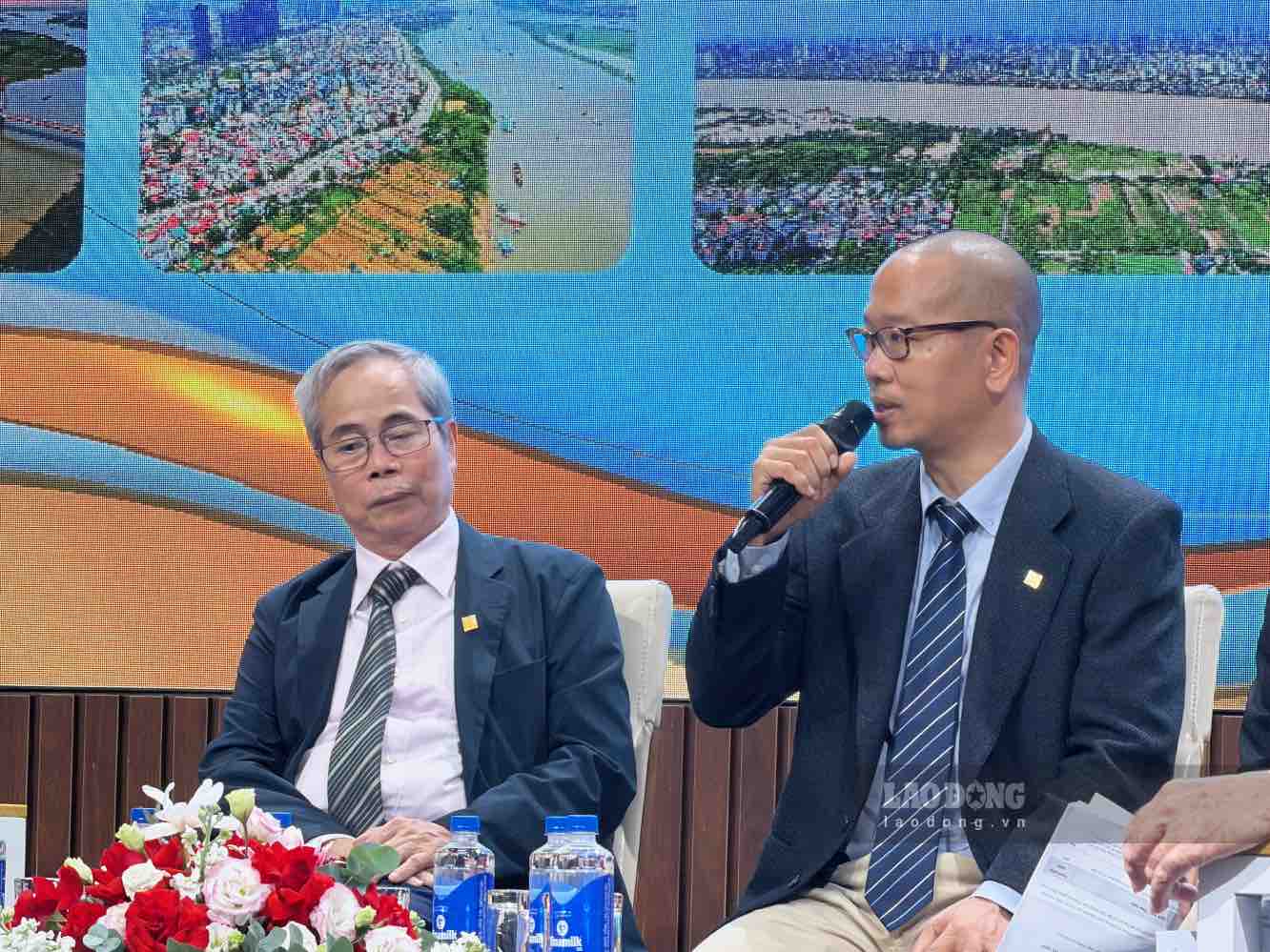
Meanwhile, Prof. Dr. Le Van Nghi - Director of the National Key Laboratory on River and Sea Dynamics, Vietnam Institute of Water Resources Science, said that the development, renovation and use of land in the riverbank area should be calculated on the basis of the overall Red River. In which, urban density, drainage capacity, impact of works and space organization plans should be calculated to assess whether urban development increases the risk of flooding or not.
According to Architect Tran Huy Anh - Member of the Standing Committee of the Hanoi Association of Architects, in the flood drainage space, there are 6 contents not to be implemented: Do not build works that obstruct the flow; do not cause flood obstruction, lose flood storage space; do not affect the flow or cause danger or unsafety; do not cause loss of life and property when there is a large flood; do not raise existing embankment dikes and do not build new embankment dikes.
The two requirements to be implemented are to comply with the Law on Dikes and maintain the position of existing dyke lines. These principles show that the development of riverside space cannot be separated from the requirement to ensure flood prevention and control safety. All ideas for organizing space, landscape exploitation or urban development must be placed within the limits of the flood drainage corridor and regulations on dykes.


