Diverse planning of tourist destinations
On July 8, the Department of Agriculture and Environment of Gia Lai province said that it had sent a report to the Provincial People's Committee on the project to develop ecotourism in Kon Ka Kinh National Park and Kon Chu Rang Nature Reserve.
For many years, these two areas have had high forest cover, rich biodiversity and are strictly protected by the forestry sector, minimizing the impact of human encroachment.
Forest trees, streams, waterfalls and diverse ecosystems in the forest are identified as natural resources of special value for tourism development.
According to the project, Kon Ka Kinh National Park will plan 5 eco-tourism locations with a total area of more than 1,086 ha and 12 tourist routes about 201 km long.
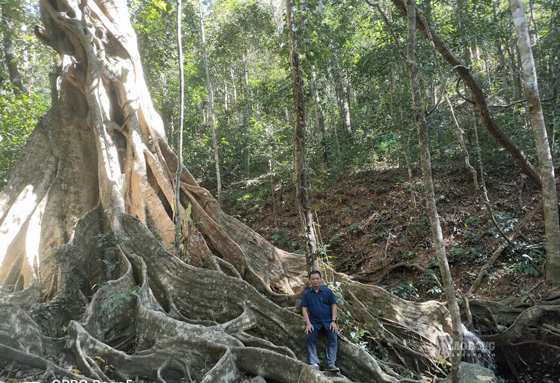
Expected products include: ecotourism, trekking to conquer Kon Ka Kinh peak, exploring waterfalls, observing animals, resorts combined with health care, community tourism, environmental education and scientific research.
At Kon Chu Rang Nature Reserve, the project plans 5 eco-tourism sites with a total area of 500 hectares, along with 8 tourist routes about 190 km long.
Prominent products include forest protection tours, wildlife observation, conquering K50, K40 waterfalls, kayaking, SUP on the Kon River, community tourism associated with Bahnar culture and eco-tourism.
The two projects have a total expected investment capital of nearly 1,000 billion VND, mainly from socialized capital sources.
The "gold mine" of tourism needs to be exploited reasonably and sustainably
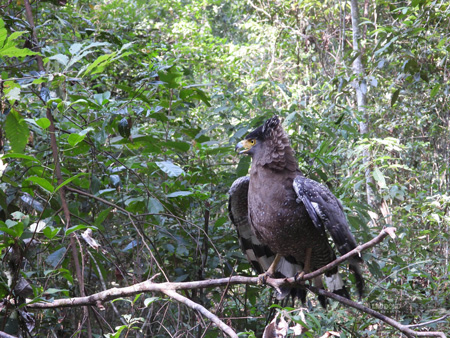
According to a representative of the Kon Chu Rang Nature Reserve Management Board, for many years, thousands of visitors have visited K50 waterfall and experienced mountain and forest tourism.
Different tourism products have attracted tourists from many localities across the country. Recently, the unit also discovered and recorded a cluster of new soil mountain kim giao trees with 4 large individuals.
This tree population is located in Kon Chu Rang Nature Reserve, belonging to the core area of Kon Ha Nung Plateau Biosphere Reserve. This is a rare tree species listed in the Vietnam Red Book, at risk of extinction.
According to the Vietnam Academy of Science and Technology, some units are researching the chemical composition of the mountain pine, promising to discover new active substances with high biological activity to treat some incurable diseases, especially cancer.
Kon Ka Kinh National Park has an area of nearly 42,000 hectares, of which more than 93% is natural forest. This place owns a rich primary forest ecosystem with many rare animal and plant species and typical natural landscapes of the Central Highlands region.
In 2003, Kon Ka Kinh National Park was recognized as the ASEAN Heritage Park and is one of the two important core areas of the Kon Ha Nung World Biosphere Reserve.
In 2025, the unit received, rescued and re-released 300 forest animal individuals to the natural environment. At the same time, nearly 19,000 hectares of forest were contracted to protect 29 household groups belonging to 18 buffer zone village communities, contributing to improving the efficiency of forest management, protection and development.
Mr. Ngo Van Thang - Director of Kon Ka Kinh National Park (Gia Lai province) - said that the Chairman of the Vietnam Association for Conservation of Nature and Environment has issued Decision No. 180/QD-HMTg, recognizing 6 banyan trees (Ficus glaberrima Blume) in Kon Ka Kinh National Park as Vietnam Heritage Trees.
Ms. Nguyen Thi Thanh Lich - Vice Chairwoman of Gia Lai Provincial People's Committee emphasized that the development of ecotourism must take the goal of forest protection and biodiversity conservation as the foundation; all investment and exploitation activities must comply with the provisions of law on forestry and environmental protection.
At the same time, it is necessary to choose typical tourism products, associated with rescue and relief work for tourists, protecting forest resources, preserving indigenous culture and improving community life, creating motivation for socio-economic development towards sustainability.