
Recently, the Ho Chi Minh City Department of Construction requested investors to study and apply solutions to build overpasses for expressway routes passing through weak soil foundation areas, locations that require deep excavation or high embankment.
This is considered a direction to simultaneously solve many problems related to material shortages, construction progress, site clearance compensation costs and adaptability to the specific geological conditions of the Southern region.
The actual implementation of the Ring Road 3 project in Ho Chi Minh City has shown a clear difference between the two construction options.
The eastern section is more than 14 km long, from the Ho Chi Minh City - Long Thanh - Dau Giay expressway to Tan Van intersection, built with a 4-lane elevated bridge. This is currently the section with the best progress in the entire project when it has been technically opened to traffic by the end of 2025 and asphalt paving work is being accelerated.
Meanwhile, the western section, about 32.6 km long, passing through the former Cu Chi, Hoc Mon and Binh Chanh districts, was built according to the foundation embankment plan. Due to the need for a very large volume of filling sand, this route section has repeatedly encountered difficulties in material sources, significantly affecting the overall progress of the project.
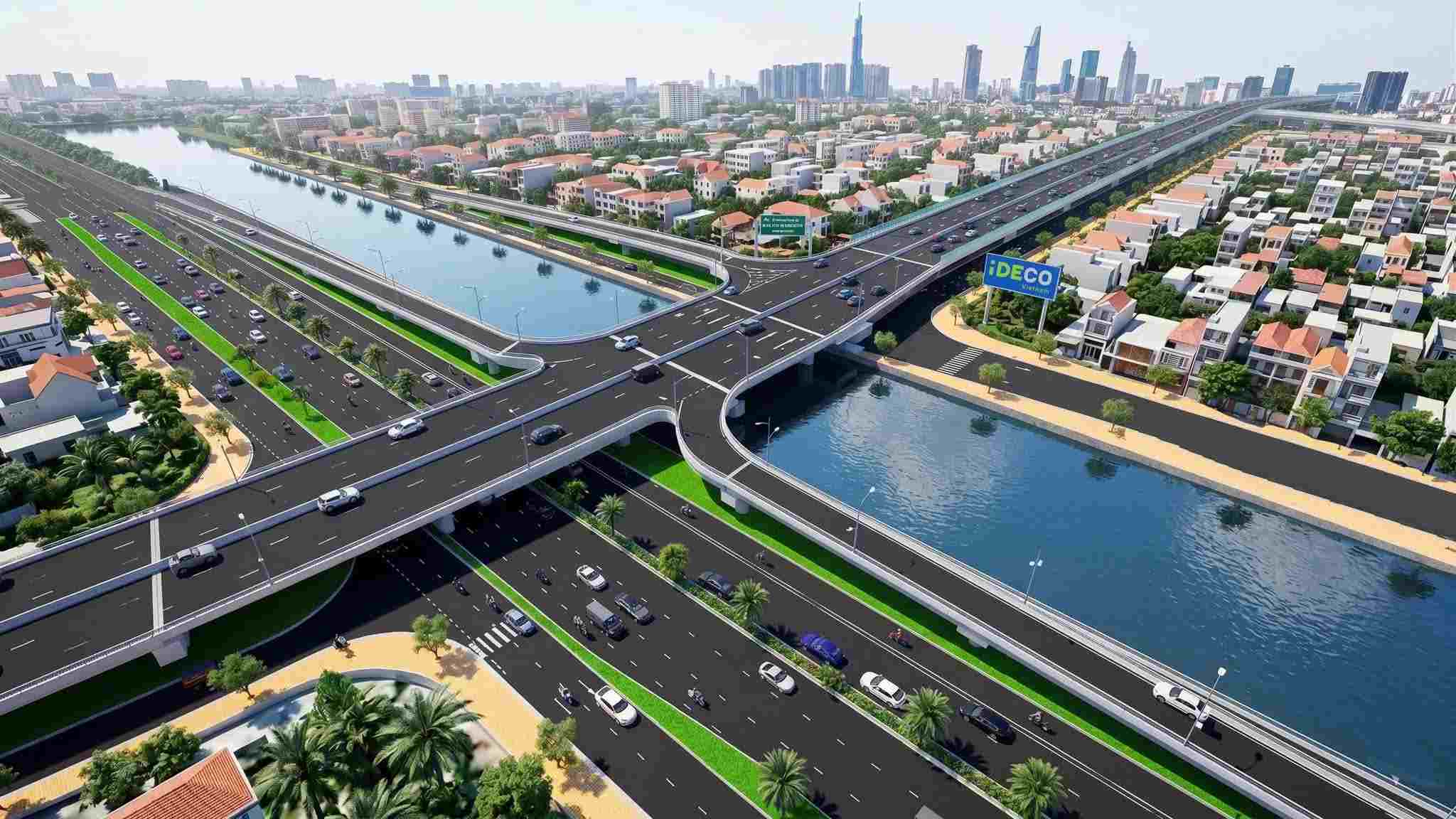
Experience from the Ring Road 3 project is becoming the basis for Ho Chi Minh City to expand the elevated bridge model for many key traffic projects.
In addition to the viaduct section on Ring Road 3, Nguyen Khoai road and Binh Tien road bridge projects are also designed according to this solution. In the near future, the National Highway 13 expansion project will build about 3.2 km of 4-lane viaducts, while the North-South axis road project will invest more than 7 km of 4-lane viaducts.
In the context of Ho Chi Minh City preparing to simultaneously deploy projects such as Ring Road 4, Ho Chi Minh City - Moc Bai expressway, Ho Chi Minh City - Thu Dau Mot - Chon Thanh expressway, Ho Tram - Long Thanh expressway, Can Gio bridge, Phu My 2 bridge, Can Gio - Vung Tau sea crossing, along with projects to expand National Highway 1, National Highway 13, National Highway 22 and North - South axis, the demand for sand filling is forecast to continue to increase very strongly.
Dr. Pham Viet Thuan - Director of the Institute of Economics, Natural Resources and Environment of Ho Chi Minh City - said that expanding the construction of overpasses, especially on expressways, is a suitable solution in the context of increasingly scarce filling material sources.
According to him, the Southern region is simultaneously implementing many large-scale transport projects. If adding local projects, the demand for sand will far exceed the supply capacity, while increasing exploitation risks causing riverbank erosion and negative impacts on the environment.
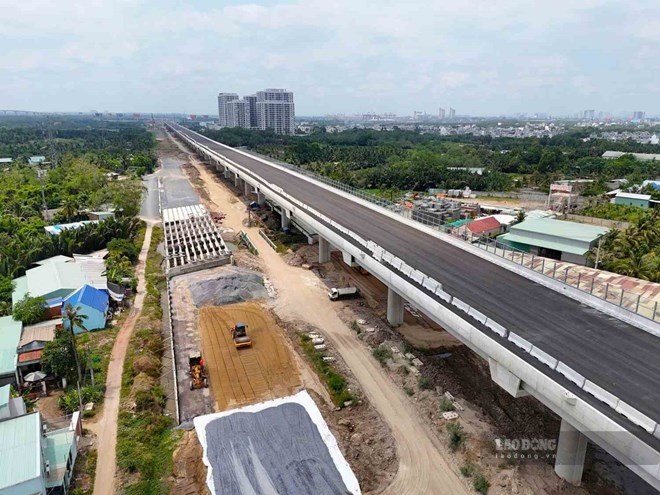
Mr. Thuan said that in addition to reducing dependence on sand, elevated bridges also adapt better to weak soil conditions, limiting the impact of subsidence, flooding and natural changes, thereby improving stability in the exploitation process.
In addition, the overpass helps reduce land recovery area, save compensation costs, ensure flood drainage capacity, limit flooding, reduce residential area fragmentation and is more convenient in management and maintenance when putting the project into operation.
According to the expert, if fully calculating costs such as weak soil treatment, waiting time for subsidence, subsidence compensation, construction of service roads, overpasses, site clearance and auxiliary items, the total investment of the elevated bridge plan is not too large compared to traditional embankment roads.
He cited the Ho Chi Minh City - Trung Luong expressway with about 13 km of elevated bridge passing through a complex geological area. After more than 14 years of operation, this section still operates stably, without problems of flood drainage or subsidence.


