
The information was announced by the Ho Chi Minh City Department of Construction at the preliminary conference on implementing solutions to strengthen urban order management, build communes, wards, and special zones to ensure urban discipline and civilization in the City, on the afternoon of May 25.
According to representatives of the Ho Chi Minh City Department of Construction, re-establishing urban order and building a civilized urban environment is not only aimed at improving aesthetics but also plays an important role in the goal of reducing traffic congestion and improving the efficiency of exploiting existing infrastructure systems.
Currently, the Department of Construction is coordinating with the Ho Chi Minh City Police and relevant departments and agencies to complete the plan to implement solutions to reduce traffic congestion in the period 2026 - 2030.
The city aims to reduce from 5 - 10% of congestion cases, improve the traffic flow capacity of the entire traffic network and handle at least 75% of high-risk congestion points.
According to the plan, Ho Chi Minh City will focus resources on completing 39/45 transitional transport projects from the 2021 - 2025 period. At the same time, the City will start construction of 53 new projects in the 2026 - 2027 period.
Notably, 7 urgent steel overpass projects will be implemented immediately in 2026 and completed in 2027 to quickly handle serious congestion points.
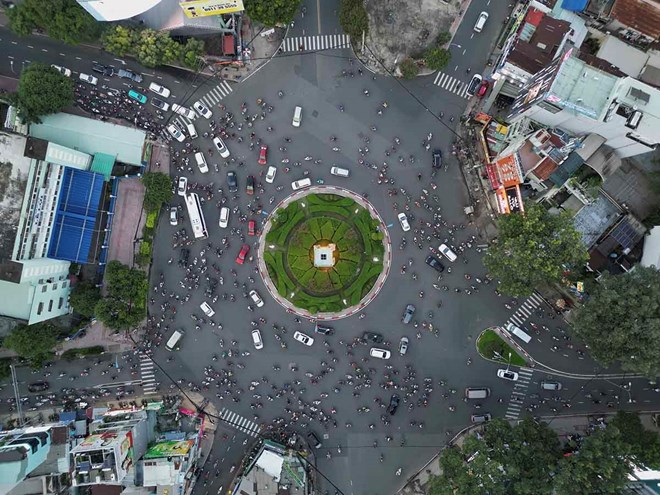
In addition, the City also implemented many other urgent projects such as: 15 underpass projects combined with bridge elevation; supplementing approach bridge branches to the main bridge; building pedestrian overpasses; building 5 multi-story parking lots in the bus station area; implementing 6 bus station infrastructure projects to serve public passenger transport,...
According to the Department of Construction, expanding the public transport system and supporting infrastructure will significantly reduce pressure on the road transport network, which is already overloaded.
In parallel with infrastructure investment solutions, Ho Chi Minh City also implements many non-constructive solutions to optimize traffic management and operation.
The city will review and improve regulations related to urban order, organize flexible and practical traffic; and at the same time strengthen the application of technology in traffic management and operation and improve the efficiency of infrastructure maintenance.
Measures to handle encroachment on roads and sidewalks will also be tightened, along with the orientation of developing public passenger transport associated with controlling personal vehicles.
Ho Chi Minh City is also promoting traffic diversion in frequently congested areas such as the city center, Cat Lai Port area and Tan Son Nhat Airport.
A notable highlight is the application of digital twins in traffic management. This technology will be expanded in the city center core area with a scope of about 2.7 km2, Tan Son Nhat airport area and roads belonging to Ring Road 2 HCMC.
According to the assessment of the construction industry, this is an important shift from the traditional traffic management model to smart urban management, allowing simulation, forecasting and traffic coordination in real time.


