The Ho Chi Minh City Institute for Development Studies is conducting a survey to collect people's opinions on naming lines and metro stations. This is one of the contents of the research project on the system of names for urban railway stations in Ho Chi Minh City.
According to the research unit, the survey aims to assess the appropriateness of the current naming system, and at the same time develop naming principles for future routes and stations in a direction that is easy to recognize and convenient for people to use as well as in daily communication.
In addition, the project also studies building a system of symbols, abbreviations, route numbers, station numbers and separate identification colors for each route, aiming to synchronize the entire technical identification system of the Ho Chi Minh City urban railway network. The immediate focus is on priority metro lines to be deployed in the period 2025 - 2030.
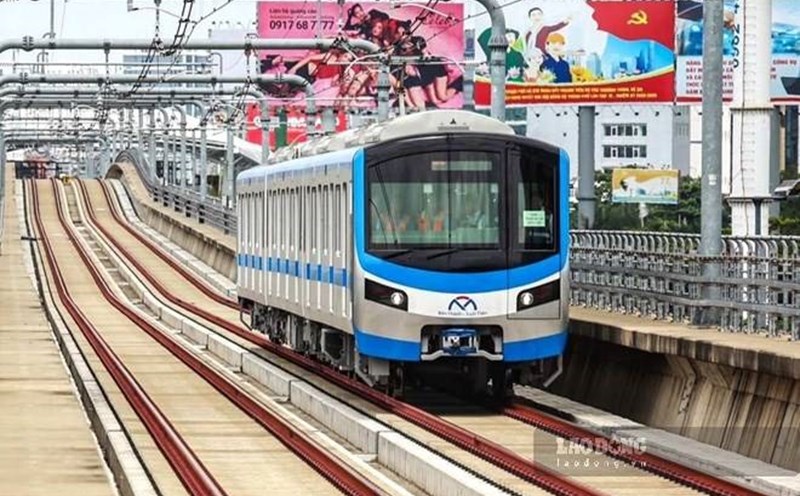
Currently, Metro Line No. 1 (Ben Thanh - Suoi Tien) has been put into operation since the end of 2024 with 14 stations including: Ben Thanh, City Theater, Ba Son, Van Thanh Park, Tan Cang, Thao Dien, An Phu, Rach Chiec, Phuoc Long, Binh Thai, Thu Duc, High-Tech Park, National University and Suoi Tien Bus Station.
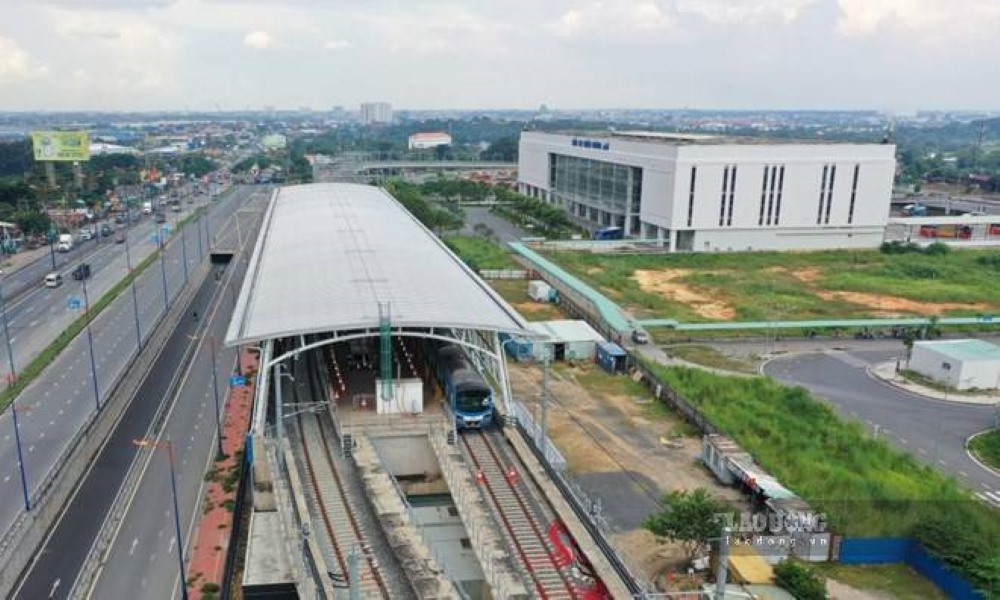
However, during operation, some station names have appeared that are easily confusing for passengers. Typically, Suoi Tien Bus Station is actually located in front of the new Mien Dong Bus Station area, while the National University station is located in the Suoi Tien area, quite far from the National University center.
In addition, after Ho Chi Minh City merged with Binh Duong and Ba Ria - Vung Tau, the planning of the metro network in the new area also gives rise to the situation of duplicate numbers between lines.
For example, Ho Chi Minh City has Metro Line No. 1 (Ben Thanh - Suoi Tien), while Binh Duong previously also planned Metro Line No. 1 (Binh Duong - Suoi Tien).
Similarly, Metro No. 2 of Ho Chi Minh City (Ben Thanh - Tham Luong and Ben Thanh - Thu Thiem) has the same number as Metro No. 2 (Thu Dau Mot - Ho Chi Minh City) of Binh Duong before.
Metro line No. 3 (Hiep Binh Phuoc - An Ha) of Ho Chi Minh City also coincides with Metro line No. 3 (Vung Tau - Ba Ria - Phu My) of Ba Ria - Vung Tau before.
To complete the naming plan, the survey table offers many groups of questions to record people's opinions.
For the station name, participants are allowed to choose important criteria such as: Short, easy to remember (1 - 2 syllables); easy to pronounce for Vietnamese people and foreigners; reflecting traditional place names; associated with relics, historical and cultural values; overlapping or near major road names; near important projects such as hospitals, universities, airports, shopping centers,...
The survey also collected opinions on station naming options such as: according to traditional place names (Ben Thanh, Cho Lon, Thu Thiem); according to major road names (Le Loi, Hai Ba Trung, Nguyen Hue); according to prominent works (Cho Ray Hospital, National University, Tan Son Nhat Airport); according to ward or administrative area names; according to historical figures; combined route codes (M1-01 Ben Thanh, M1-02 Ba Son);...
For metro line names, the survey table offers many options for people to choose from, including: Naming by serial number (Line 1, Line 2, Line 3... ); by color (Red Line, Blue Line... ); combining numbers and colors (Line 1 - Red); by starting point - ending point of the line (Ben Thanh - Suoi Tien); or combining both serial number, color and starting point - ending point.