
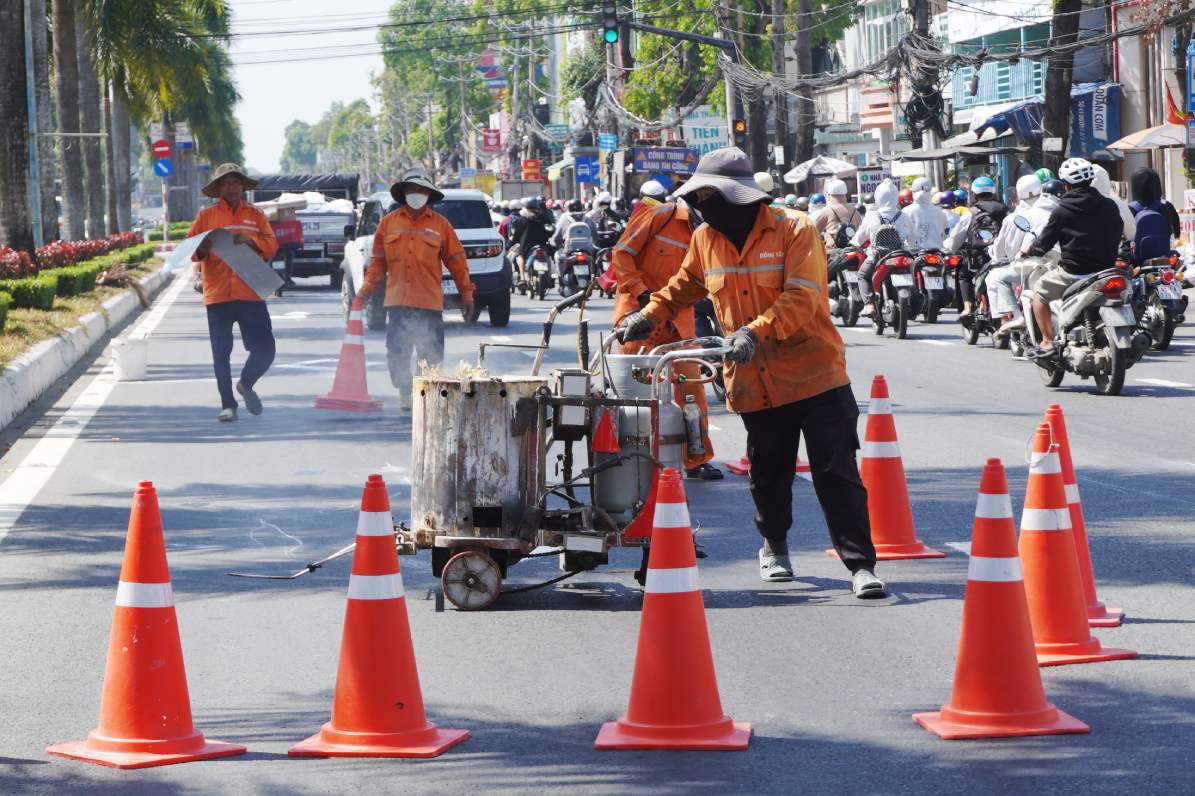
Recently, in Can Tho City, functional sectors have re-draped road paint markings on many key roads and traffic junctions. In which, the addition of "swing-like" road markings at intersections is expected to contribute to reducing congestion, improving traffic safety, and gradually building civilized and modern urban traffic.
However, actual records show that, at some locations, organizing traffic with hammock lines is causing many traffic participants to be confused, even worried about being fined because they do not understand the regulations clearly or because the arrangement is not really reasonable.
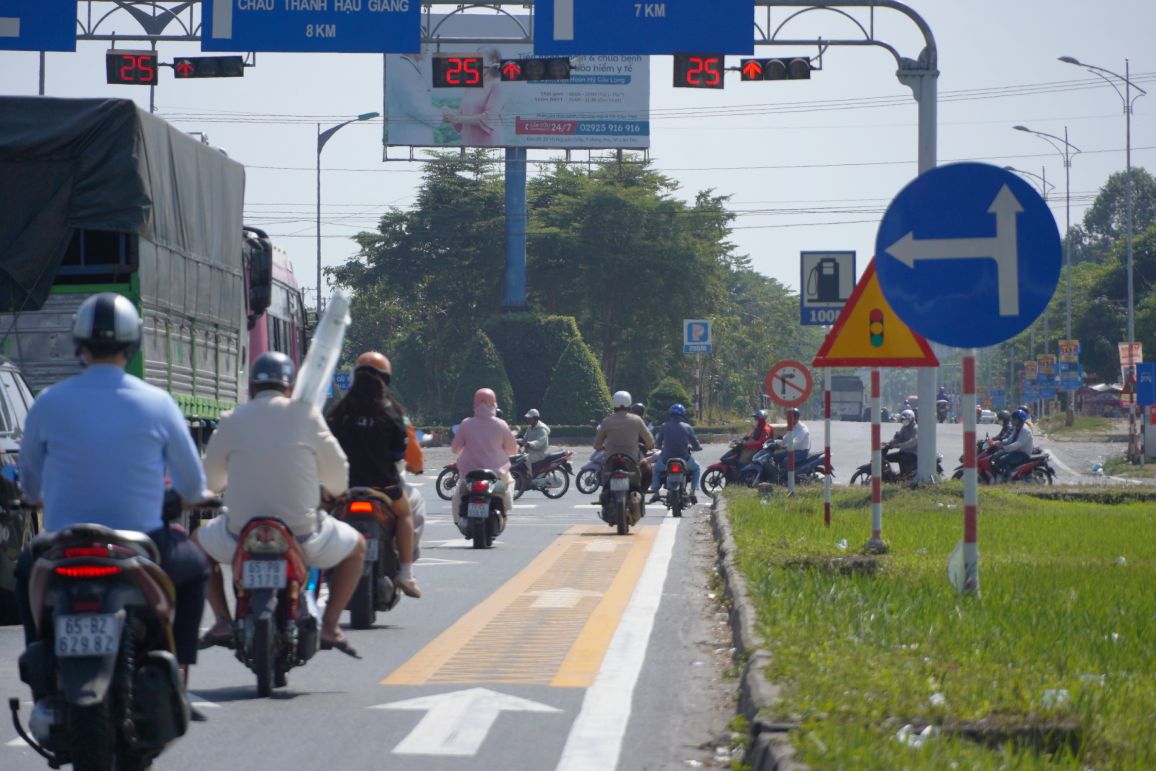
At the intersection with the exit of National Highway 1A towards South Song Hau in Hung Phu ward, Can Tho city, the eye line of the hammock is drawn in the right lane, while the traffic direction does not allow turning right and vehicles are forced to stop when encountering red lights, which confuses people.
Mr. Nguyen Anh Hoai (Hung Phu ward, Can Tho city) said that he supports marking hammocks to reduce traffic congestion. However, at some locations, when the red light is forced to stop, the stopping point is located in the hammock marking area, causing people to be confused.
Stopping is afraid of being fined, not stopping is overtaking red lights, while turning right is not allowed. Road users are very embarrassed," Mr. Hoai shared.
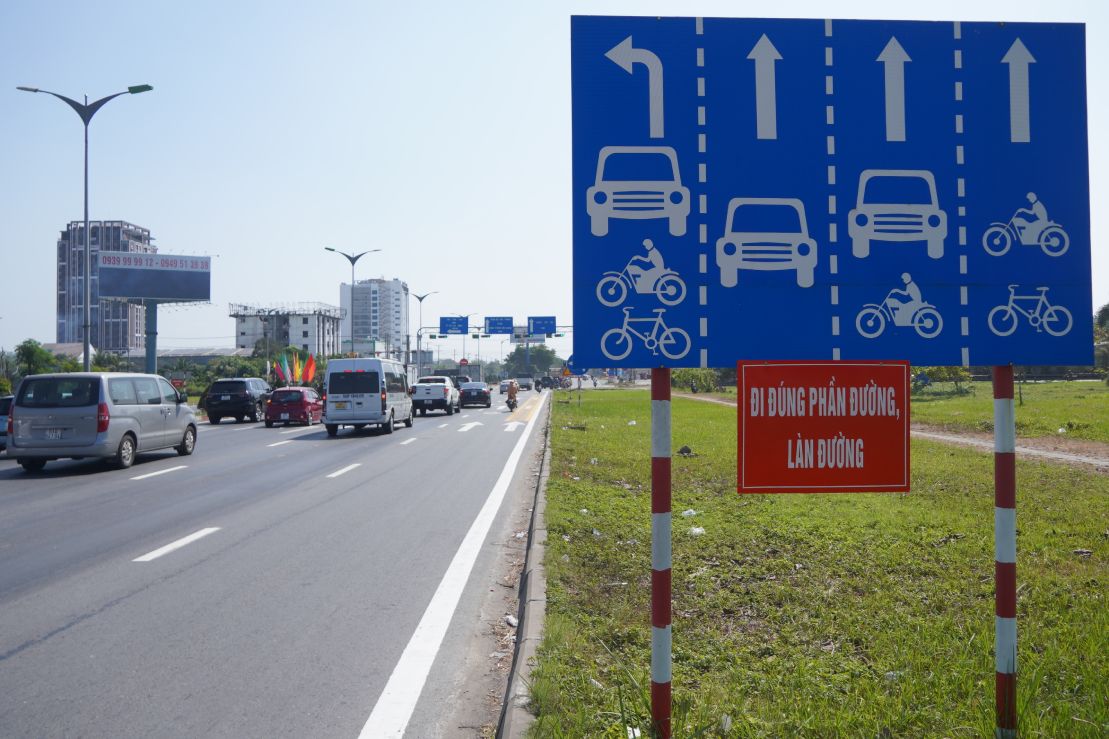
According to Lao Dong Newspaper's records, currently, on some roads and intersections in Can Tho City, there is still a situation of vehicles brazenly stopping and parking on hammock lines to load and unload goods. This situation not only reduces the effectiveness of road markings in keeping intersections clear, but also poses a risk of congestion and traffic unsafety.
In addition to the above situation, at the Quang Trung - Ly Thai To intersection (Hung Phu ward, Can Tho city), many people participating in traffic have not yet moved into the lane with eye-liners towards IC3 intersection, but choose to go out to the outer lane.
Meanwhile, according to the traffic organization plan, motorbikes are still allowed to go straight through the fenced-off lane when ensuring they do not have to stop in this area. Going in the wrong lane causes some vehicles to fall into red light situations when the traffic light turns, potentially posing a risk of traffic unsafety.
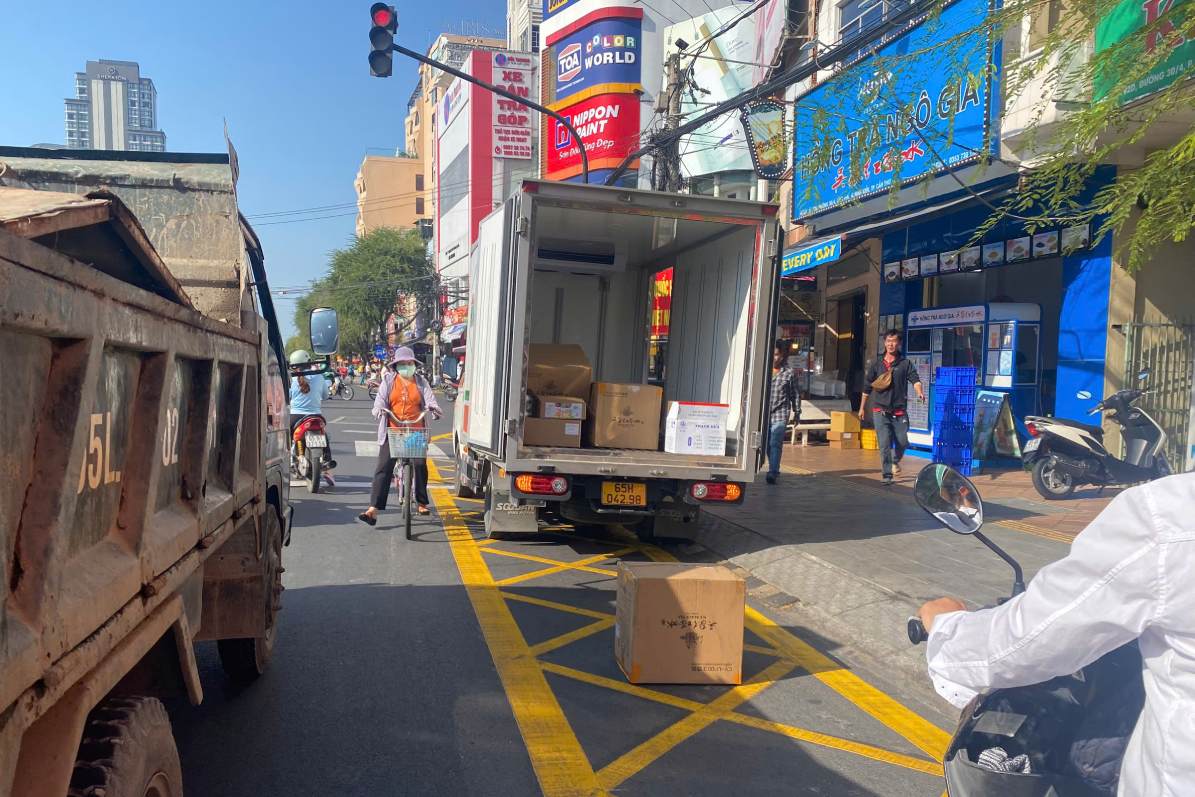
On January 27, the Department of Construction of Can Tho City said that according to the National Technical Regulation on Road Signage QCVN 41:2024/BGTVT, eye-shaped lines (symbol 4.4) are rectangular with interspersed diagonal lines inside, arranged at important intersections or areas organizing continuous right turn lanes. This line is used to warn vehicle operators not to stop vehicles within the boundary of the road surface where the lines are arranged, thereby avoiding traffic congestion and ensuring safety in the intersection area.
According to the Can Tho City Department of Construction, in the past time, the unit has deployed yellow-rimmed road markings at some key traffic intersections in the city. Specifically: IC3 intersection cluster (N91 - N91B row); 30 Thang 4 - Tran Hoang Na intersection; Quang Trung - Ly Thai To intersection; 3 Thang 2 - Tran Hoang Na intersection and Nguyen Van Cu - Nguyen Tri Phuong intersection. These are all areas with high traffic volume, often experiencing congestion during peak hours.
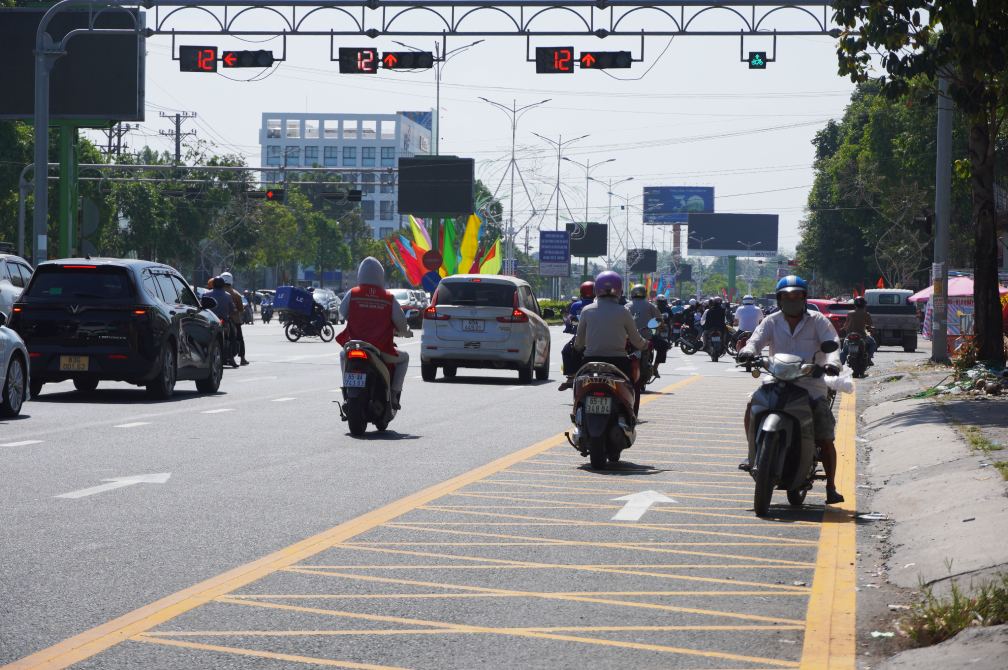
The Department of Construction of Can Tho City also informed that, according to Decree 168/2024/ND-CP (applied from January 1, 2025), motorcyclists and motorbike drivers stopping on hammock rails may be fined from 200,000 - 400,000 VND; for cars, the fine is from 400,000 - 600,000 VND. In case of traffic accidents, vehicle drivers may also be fined more heavily, accompanied by additional forms of handling according to the provisions of law.
Mr. Mai Van Tan - Director of the Department of Construction of Can Tho City - said that the deployment of hammock-shaped road markings aims to reorganize traffic at intersections in a scientific and reasonable direction, focusing on key roads and traffic areas of the city. Thereby, contributing to raising awareness of self-discipline in complying with the provisions of law on traffic order and safety, gradually building a civilized and modern traffic culture.


