
The 5 North - South Eastern expressways in phase 1 have the above two systems installed, including: Mai Son - National Highway 45, National Highway 45 - Nghi Son, Nghi Son - Dien Chau, Nha Trang - Cam Lam (Vinh Hao section) and Phan Thiet - Dau Giay.
Currently, these systems are in the process of testing and evaluating KPI according to regulations, before official operation.
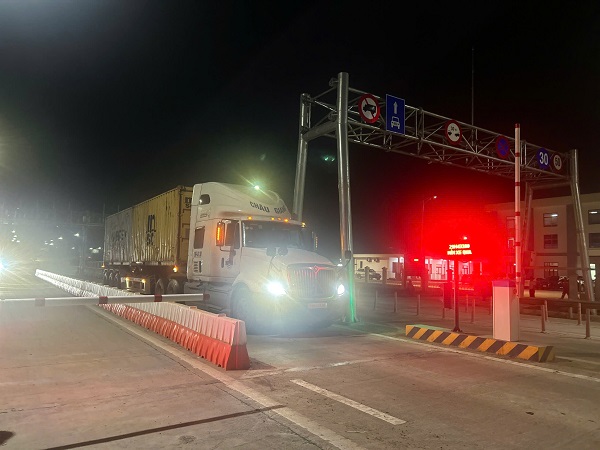
Specifically, at the Mai Son - National Highway 45 section project, the ITS system is synchronously installed with modern equipment such as surveillance cameras (CCTV/VDS), electronic traffic signs (VMS/LCS) and smooth connection to the Traffic Management Center (TMC) located at the Dong Giao intersection. This is considered the "brain" of the entire route, allowing real-time monitoring, operation and handling of traffic situations.
The toll collection system on this route includes 7 intersections with a total of 46 toll lanes. Notably, the toll collection model is designed in a modern direction, applying multiple free lanes (without barriers) at the entrance and single lanes with barriers at the exit. This organization method helps vehicles circulate continuously, reducing stopping and parking, and traffic congestion.
One of the important highlights of the ITS system on the North-South Expressway in the East is the deep integration of artificial intelligence (AI) technology. The system has the ability to recognize license plates even when vehicles move at high speeds, automatically detect violations such as speeding, lane encroachment, illegal parking, as well as promptly warn when accidents or traffic incidents occur.
Deputy Director of the Vietnam Road Administration Nguyen Viet Huy said that the application of AI not only helps improve management efficiency, but also opens up new directions in modern traffic management. Data collected from the system will be analyzed and synthesized to serve direction and administration, towards automating reporting, helping functional units to monitor traffic conditions right on mobile devices.
In parallel, an automatic weight control system (WIM) has also been synchronously installed on the route. When overloaded vehicles are detected, the system will automatically display warnings on electronic signs, and record data to transfer to functional agencies for processing in the form of "cold fines". This solution is expected to contribute to effectively controlling overloaded vehicles, protecting road infrastructure and improving traffic safety.
However, during the KPI test and evaluation process, the deployment of the ETC system and ITS system still faces many difficulties. Currently, the fiber optic cable system in some sections is still floating, not buried underground for protection, posing a potential risk of being affected by weather or external factors such as being cut or stolen, stolen some sections of power cables, fiber optic cables... it takes time to process, causing transmission interruption.
In addition, the central operating software needs to continue to be improved, fully integrate subsystems and synchronously connect with the common Back-End (output) system, ensuring data is transmitted smoothly and accurately throughout the route.
Regarding technical solutions, Deputy Director Nguyen Viet Huy affirmed that he does not accept objective reasons to delay toll collection, does not blame network infrastructure or wait for fiber optic cables. Units must proactively increase 4G/5G waves, ensure security, system safety and smooth connection, and at the same time solidify the transmission system to avoid interruption of operation.
Regarding the issue of organization and operation, the Deputy Director requested to strengthen direct coordination at the site, send technical personnel to the station to thoroughly handle compatibility errors. Operating units must arrange 24/7 on-duty forces, ready to operate immediately when the system is smooth. At the same time, Project Management Boards must urgently complete dossiers and asset lists to hand over to the Vietnam Road Administration for management according to regulations.


