
Recorded at the National Hospital for Tropical Diseases, recently, the General Internal Medicine Department has regularly received many patients hospitalized with symptoms of bone and joint pain.
Typically, the case of a 76-year-old male patient, with a history of diabetes and hypertension. Before being admitted to the hospital, the patient developed back pain spreading to the buttocks, accompanied by pain in both knee joints when walking. Through examination, doctors discovered that the patient had osteoarthritis of both knee joints and signs of osteoporosis.
According to doctors, the patient is overweight (1m55 tall, weighing 70kg) - a risk factor that increases musculoskeletal diseases, especially on a background of chronic diseases such as diabetes.
Another case is Ms. D. T. A (Ninh Binh), admitted to the hospital in a state of back pain spreading down her buttocks and back of both legs, encountering many difficulties when sitting. Family members said that previously the patient had severe pain, could not sit up on her own, and had to lie on a stretcher to move. After about 1 week of treatment at the hospital, the patient's health has basically stabilized.
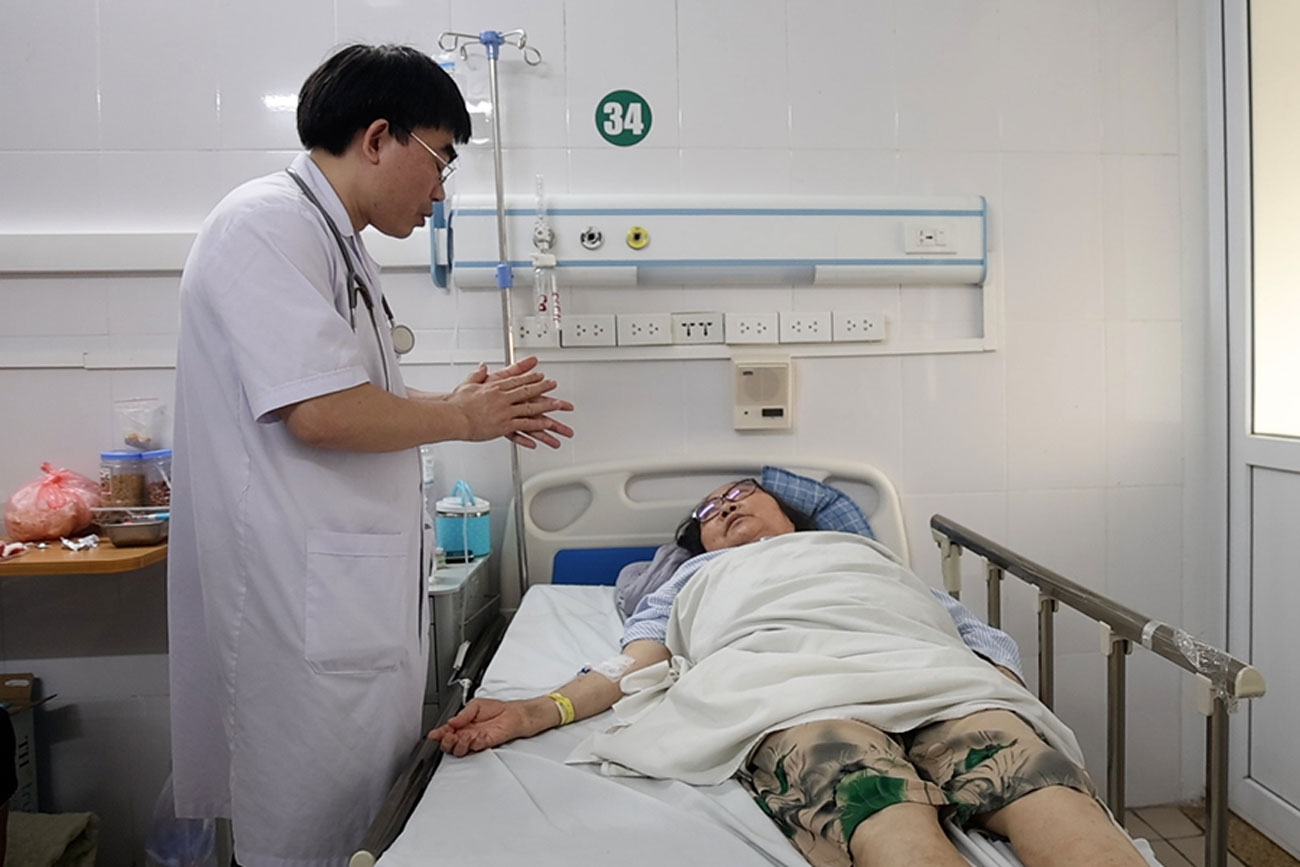
Dr. Vu Minh Dien, Deputy Head of the General Internal Medicine Department - said that in the elderly, the skeletal system gradually weakens, easily leading to osteoporosis. When the bone structure is reduced in strength, just a collision such as slipping can cause a femoral neck fracture or subsidence of the vertebrae.
According to doctors' recommendations, for the elderly or those at risk of osteoporosis, it is necessary to maintain a reasonable lifestyle and adhere to treatment as prescribed. In particular, overweight people should lose weight and increase exercise to improve bone and joint health.
Doctors also said that when symptoms of joint pain appear, people should go to a medical facility to measure bone density, thereby having directions to adjust their diet, lifestyle and supplement with appropriate micronutrients.
To prevent osteoporosis, experts recommend that people maintain a diet rich in calcium and vitamin D3, exercise appropriately for 30-60 minutes each day, and at the same time have regular health check-ups at least once a year to detect musculoskeletal diseases early.


