
E-cigarettes and heated tobacco products should be absolutely banned
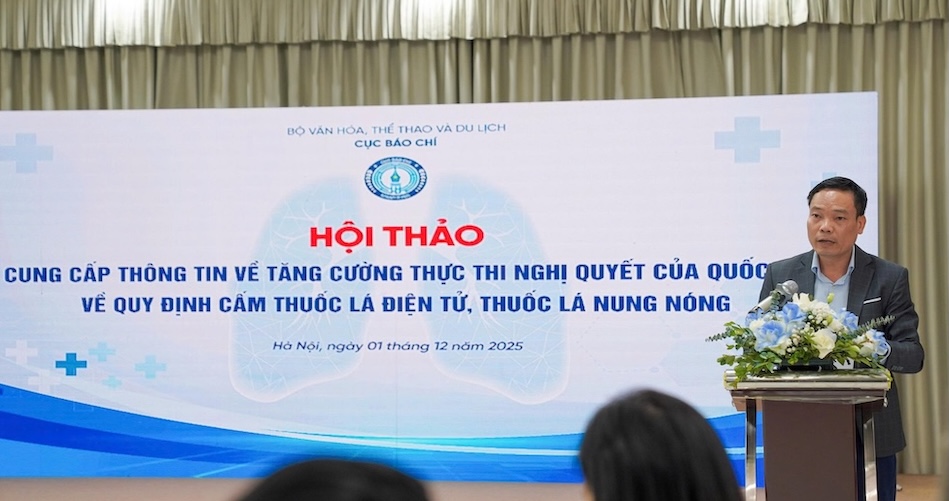
On the afternoon of December 1, the Department of Press, Ministry of Culture, Sports and Tourism held a workshop to provide information on the prevention of the harmful effects of tobacco with the theme: Strengthening the implementation of the National Assembly's Resolution regulating the ban on e-cigarettes and heated tobacco products.
At the workshop, Dr. Angela Pratt - Chief Representative of the World Health Organization (WHO) in Vietnam - shared: Since the National Assembly voted to pass the ban a year ago, Vietnam has been recognized by the international community for its pioneering role in banning electronic cigarettes and heated tobacco products. This is a decision of great significance to public health, especially in protecting the health and future of the younger generation.
WHO quoted the Poison Control Center, Bach Mai Hospital as saying that the number of emergency cases involving the use of these products, especially in young people, has decreased by nearly 70% in the 10 months after the ban was issued, compared to the same period before.
"Thanks to the strong ban issued by the National Assembly, advertising activities for these products by celebrities and influential people seem to have ended" - WHO representative in Vietnam affirmed.
To ensure the National Assembly's ban continues to be effectively implemented, WHO recommends including the trading of new tobacco products including e-cigarettes and heated tobacco products in the list of industries where business investment is prohibited in the amended Investment Law; not accepting any exceptions including allowing the production of new tobacco products for export.
WHO also believes that allowing the production of e-cigarettes and heated tobacco products for export weakens the theoretical basis on health and social protection of the ban, while causing inconsistency in the legal system, creating opportunities for smuggling and leakage to domestic markets, and at the same time placing a great burden on control and enforcement of the law.
The press needs to continue to promote its shock role, contributing to protecting public health
At the workshop, Mr. Dang Khac Loi - Deputy Director of the Press Department - said: In Vietnam, the use of e-cigarettes and heated tobacco products is also increasing alarmingly.
According to a report by the Ministry of Health, the rate of e-cigarette use among students aged 13-17 increased from 2.6% in 2019 to 8.2% in 2023. In the 13-15 age group, the rate has more than doubled from 3.5% in 2022 to 8% in 2023. These figures are a clear warning about the harm and spread rate of this product among adolescents.
Faced with this situation, on November 30, 2024, at the 8th Session of the 15th National Assembly, the National Assembly passed Resolution No. 173/2024/QH15, which stipulates: "The National Assembly agreed to ban the production, trading, import, storage, transportation, and use of electronic cigarettes, heated tobacco products, gases, and addictive substances that are harmful to human health from 2025, ensuring public health, social order and safety...". This is a strong, timely and extremely necessary decision to protect public health, especially the younger generation.
However, for the National Assembly Resolution to come into life and be effectively implemented, the role of the press and media is extremely important.
The press is the pioneer in providing accurate and scientific information about the harmful effects of e-cigarettes and heated tobacco products; Reflecting on violations, illegal advertising and business tricks; Propagating legal regulations to the people; At the same time, contributing to creating social consensus, strengthening trust, acceptance and support for State regulations to protect the younger generation.
We are facing a big challenge when e-cigarettes and heated tobacco products are " disguised" in many new forms of technology, catching the eye, attractive flavors, spreading through social networks at a very high speed with many false information such as "more harmful", "technology products", "trends for young people".
"In that context, the press needs to continue to promote its shock role, contributing to protecting public health and building a healthy and safe living environment for adolescents" - the Deputy Director of the Press Department emphasized.


