
Talking to Lao Dong reporters, Lieutenant Colonel, Doctor Nguyen Minh Tuan, Deputy Director of 19-8 Hospital (Ministry of Public Security) affirmed: English is becoming an essential skill for hospitals to integrate and develop sustainably.
From a "closed environment" to integration requirements
According to Senior Lieutenant Colonel, Dr. Nguyen Minh Tuan, for many years, due to the characteristics of being a hospital under the Police sector, the professional and training activities of 19-8 Hospital are closed, with few opportunities for international contact and cooperation. The use of English in daily work is therefore almost no environment to maintain.
Previously, many medical staff learned English mainly to serve the purpose of obtaining degrees when studying for a master's or doctoral degree. And the use of English in professional work and international communication is very limited. Without an environment, foreign languages will gradually fade away," Mr. Tuan shared.
However, along with the development requirements of the health sector and changes in management thinking, 19-8 Hospital was forced to expand cooperation. The amendment of related regulations, allowing hospitals under the armed forces to participate in teaching, in coordination with medical schools, created an important turning point. When the door to integration opened, the need to use English became urgent and undelayable.
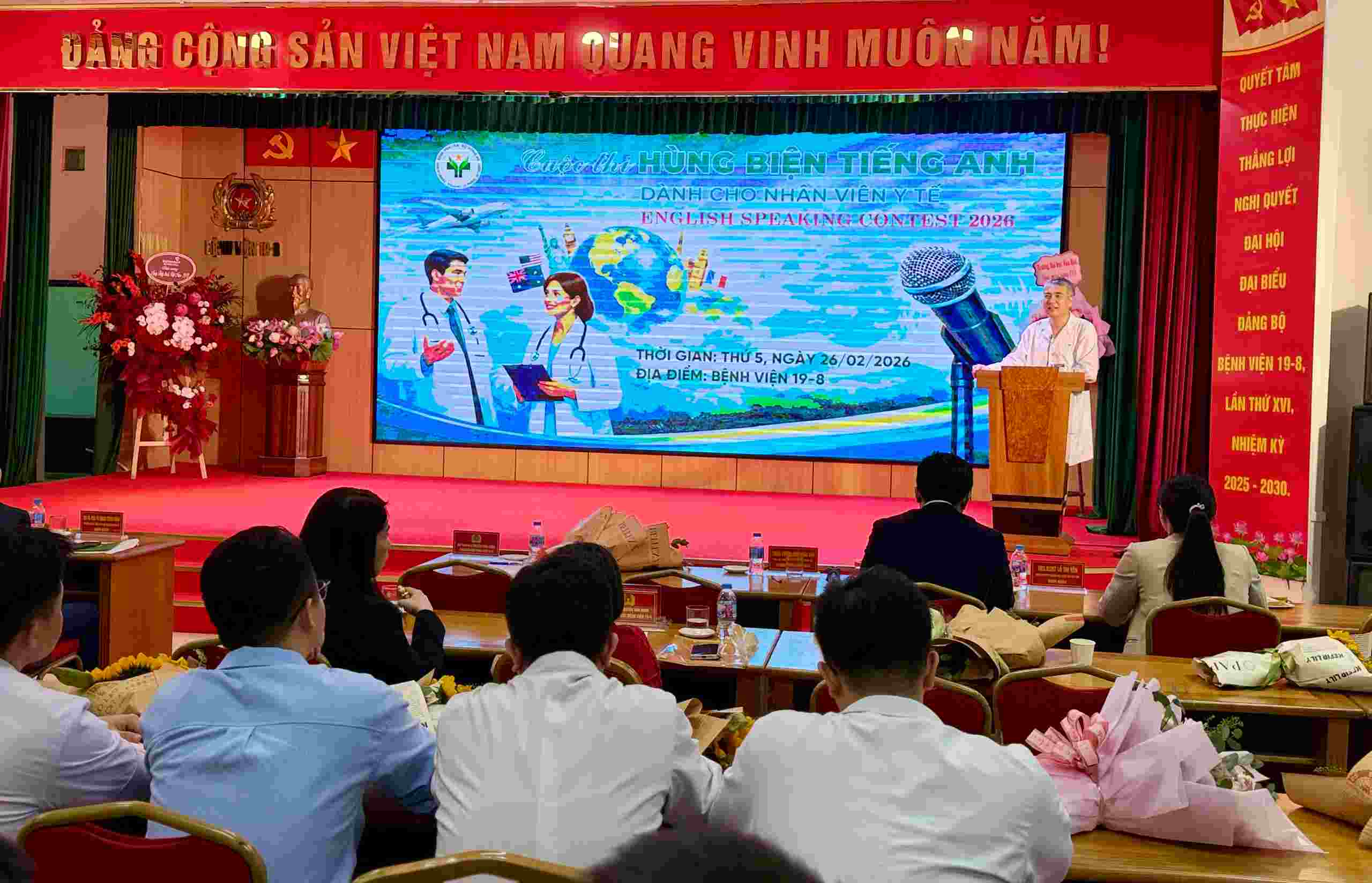
In that context, the English debate contest initiated by the hospital's Young Science Club is considered a starting point for the formation of an internal foreign language environment. According to the Deputy Director of Hospital 19-8, learning English in a single way is very difficult to be effective, because language only truly "lives" when used regularly.
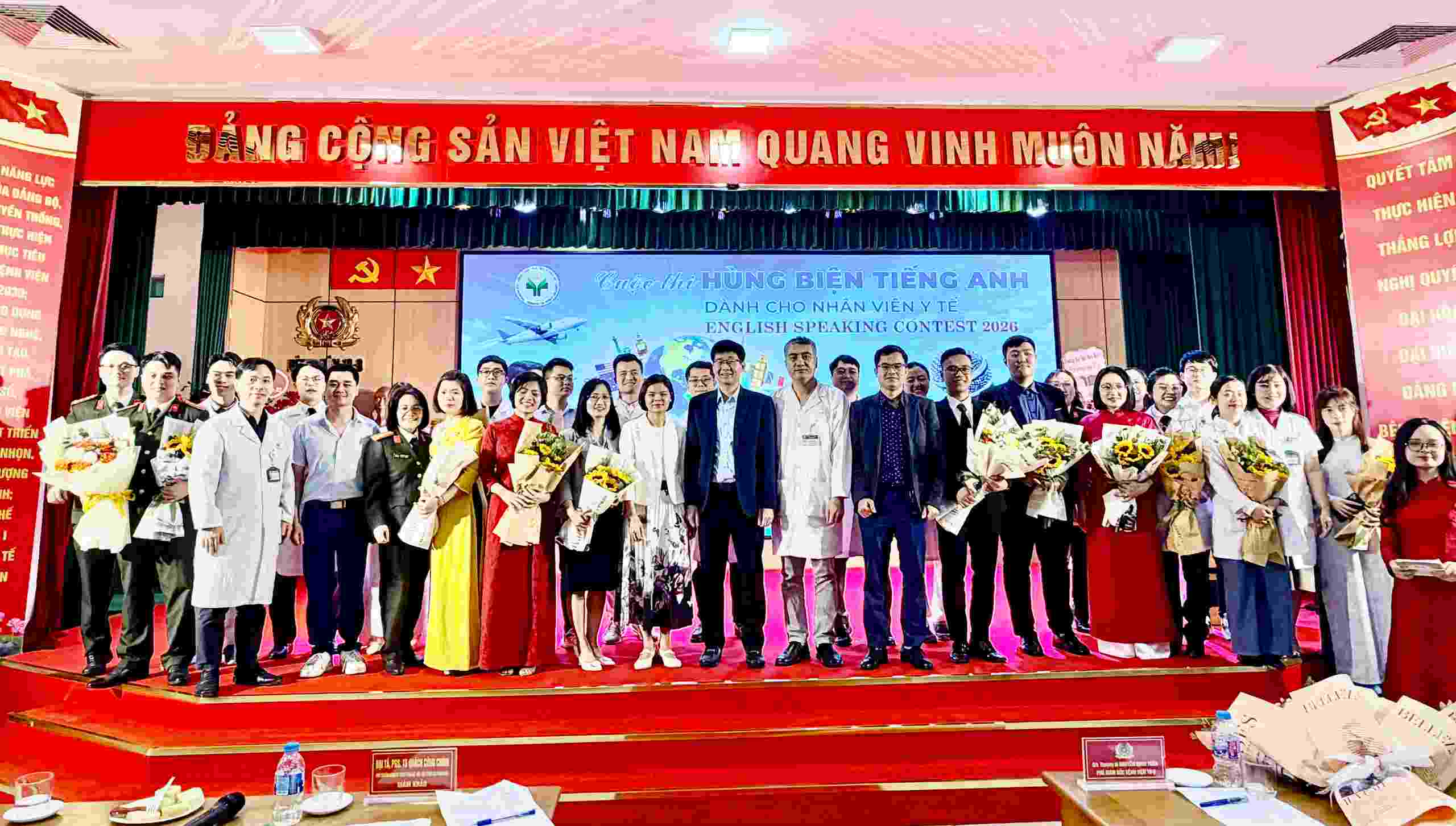
The contest attracted 26 entries, of which many departments and rooms had up to two entries. The quality of the entries was positively evaluated, especially in the ability to use medical specialized English.
This shows that if there is a suitable playground, medical staff can completely develop their foreign language skills," Mr. Nguyen Minh Tuan said, while expecting the movement to spread more widely throughout the hospital.
Foreign languages associated with communication and treatment effectiveness
According to Senior Lieutenant Colonel, Dr. Nguyen Minh Tuan, communication and presentation skills play a very important role in the medical environment, not only in English but also in Vietnamese. Treatment is not simply professional treatment, but also a process of interaction, creating trust with patients.
Some studies show that only about 30% of treatment effectiveness comes from the doctor's expertise, while up to 50% depends on the patient themselves and 20% from the support of family and those around them. If doctors do not convey clear information, patients can hardly cooperate well in treatment" - Mr. Tuan analyzed.
In fact, Hospital 19-8 still regularly participates in foreign medical activities, receiving delegations of Lao and Cambodian officials to examine and treat patients; sending doctors to Laos to perform political and medical tasks. The hospital is also home to the Vietnam - Cuba Center for Research and Application of Medical Products, with regular coordination between experts from the two countries. In addition, the hospital has signed cooperation agreements with hospitals and universities in Japan, expanding relations with Singapore, Belgium, and Taiwan (China).
In all these activities, English plays an indispensable connecting tool.
Long-term orientation to improve foreign language proficiency
After the contest, Hospital 19-8 determined that this is only the beginning. In the coming time, the hospital will coordinate with academies, universities and training centers to develop specialized English learning programs for medical staff, associated with practical needs and professional tasks.
In parallel with that, the hospital continues to promote two strategic cooperation directions: training postgraduate doctors in Japan and Korea; and receiving and applying advanced medical technologies from abroad such as nuclear medicine, medical biologicals, AI technology and stem cells.


