
The Ministry of Construction is seeking opinions on the Draft amending and supplementing a number of regulations on the development and management of social housing, in which the proposal to relax the income ceiling to expand the beneficiaries of policies is noteworthy.
According to the Draft, in case the applicant is a single person, with an average monthly actual income of no more than 25 million VND (according to the confirmed salary and wage scale), they will be eligible to buy social housing. For single people raising minor children, the maximum income level is increased to 35 million VND/month.
For married people, the total average monthly income of the couple does not exceed 50 million VND, an increase of 10 million VND compared to current regulations.
Mr. Tran Van Duc (30 years old) - working in the media field in Hanoi - has an income of about 23 million VND/month. Each month he has to spend about 5 million VND on rent. Basic electricity, water, internet and living expenses range from 2-3 million VND. Food expenses are about 4-5 million VND, not including travel expenses, gasoline, parking and other arising expenses of about 2-3 million VND. In addition, he still spends a part of his income to support his family, about 3 million VND per month.
After many years of working, he wishes to have an apartment to stabilize his life. However, with the current price level of commercial apartments, buying a house is almost beyond his financial capacity. Meanwhile, despite his interest in social housing, his income exceeds the threshold for purchasing (the ceiling income for buying social housing is 20 million VND/month according to current regulations).
I have real needs but fall into the mid-range: not capable of buying commercial housing, and social housing is not eligible," he said.
From this reality, Mr. Duc hopes that functional agencies will consider raising the income ceiling for social housing purchases to about 25 million VND/month, so that workers with average incomes like him have more opportunities to access housing, instead of continuing to rent long-term rooms.
Not only the above case, many middle-income workers in urban areas are also falling into a similar situation when it is difficult to access both commercial and social housing.
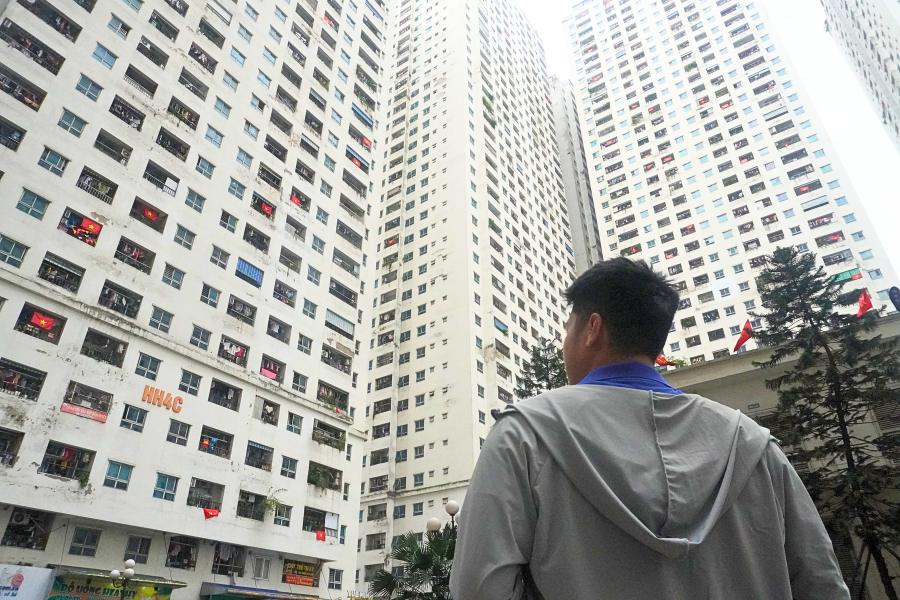
Commenting on this issue, Mr. Nguyen Hoang Nam - General Director of G-Home Joint Stock Company, a company specializing in developing social housing - said that raising the ceiling income for buying social housing is in line with reality.
He analyzed that although the income level below 25 million VND/month seems high, when having to cover living expenses, raising children and family expenses, the budget for housing is usually only about 20-30% of total income. With this ratio, raising the income ceiling is necessary for people to be able to borrow from banks and pay in installments to buy houses for 20-25 years.
According to Mr. Nam, if the ceiling income for buying social housing is still kept too low as before, a paradox will arise: people who are not capable of buying commercial housing also do not have enough financial conditions to buy social housing, while those who are eligible have difficulty borrowing capital because their income does not guarantee debt repayment ability.
In the context that social housing prices are also increasing, with some projects in Hanoi reaching nearly 30 million VND/m2, adjusting the income ceiling will help to be more suitable for the affordability of buyers.


