
There is a long-term recruitment position
Ms. Bui Thi Ngoc Le - Director of Minh Tung Phat Mechanical and Metal Co., Ltd. (Yen Nghia ward, Hanoi) - said that her company regularly advertises recruitment for 2 positions: CNC machine operator and highly skilled welder.
These 2 positions are not without people, but sometimes we can recruit people and then we lose personnel because they quit their jobs, go to places that pay higher salaries or they cannot withstand work pressure. The salary for the above 2 positions at my company has increased by 50% since 2023, however, recruitment has never been easy," Ms. Le said.
Also "headache" like Ms. Le, Mr. Nguyen Dang Tung Anh - Director of Hoang Phuc Industrial Technology, Electronics and Equipment Supply Company (Me Linh commune, Hanoi) - shared that for decades he has had great difficulty recruiting technical maintenance industrial staff positions even though the salary offered is no less than 20 million VND/month.
This position requires workers to have a comprehensive understanding of the inspection, repair, and maintenance process of industrial machinery and equipment to ensure they operate stably and effectively, prolong life, reduce incidents, and optimize productivity. Universities train in industrial maintenance with modest supply, while market demand is very large. Especially, for skilled and experienced people, we have to hire them case by case and remuneration at the level of "artisans" to hope to have them," Mr. Tung Anh said.
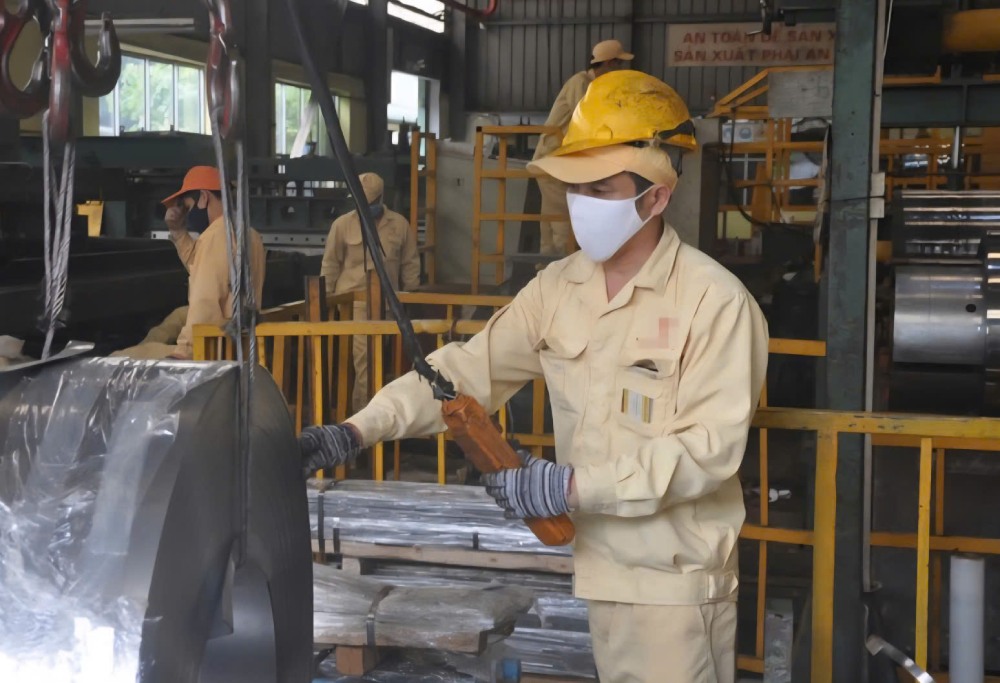
In Hanoi and some neighboring localities, according to a survey by the Hanoi Employment Service Center, positions such as nurses, caregivers, industrial maintenance workers, CNC machine operators, skilled welders, container drivers, shift logistics workers, network security engineers, electrical - automation technicians... are continuously in a state of shortage.
The common point of this job group is specialized skills requirements, high work pressure, prolonged working hours or harsh working conditions. Many businesses have adjusted their salary policies, supplemented shift allowances, hazardous allowances, and even supported housing, meals, and transportation, but the recruitment results are still modest.
Just increasing welfare is not enough
From the experience of his own business, Mr. Tung Anh said that better benefits help businesses compete more in the labor market, but with specific human resource positions, benefits are only part of the decision to return to or stick with work.
Mr. Tung Anh pointed out the basic reasons why the attachment of specialized human resources groups needs to originate from deeper and more comprehensive preferential policies.
First, the total occupational pressure is still too great due to the heavy working environment, the risk of accidents, and working away from home.
Second, welfare has not touched the "pain" of workers when many businesses increase allowances but lack fundamental support such as stabilizing working hours, ensuring long-term health, supporting families, and promotion opportunities.
Third, the trust of workers has not been completely restored after periods of volatility, many workers have had work hours reduced, salary delays, and sudden job losses.
On the side of workers, Ms. Nguyen Thi Lan Huong - former Director of the Institute of Social Labor Science - said that barriers from workers also contribute to exacerbating the situation of special personnel shortages.
Limitations in skills and vocational certificates when many specific positions require formal training, long learning time and significant costs, while many workers have left the market for a while, skills are fading, reluctant to learn or do not have enough financial conditions for retraining.
The psychology of hesitation to return to high-pressure environments after a period of job disruption, a part of workers choose freelance, part-time or small-scale jobs, although income is unstable but time-proactive and less stressful. In comparison, they accept "job shortages" rather than returning to stressful occupations.
Expectations of change after market fluctuations due to workers increasingly valuing the balance between life and work. For many people, high salaries are no longer attractive enough if traded for health, time for family or the risk of prolonged career.
From that reality, Ms. Huong emphasized that increasing welfare is a necessary condition, but not a sufficient condition to solve the problem of specialized human resource shortages. Businesses wanting to attract and retain labor need to shift from the mindset of "compensating with money" to redesigning the entire working experience.
This principle is very simple: Organize shifts reasonably, reduce unnecessary pressure; invest in technology to reduce manual labor; build a clear career path so that workers can see the future; and share risks with workers through insurance and long-term health care," Ms. Lan Huong said.


