At the national conference summarizing 1 year and 6 months of implementing Resolution No. 57-NQ/TW dated December 22, 2024 of the Politburo on breakthroughs in science, technology, innovation and national digital transformation, General Secretary and President To Lam emphasized the requirement to build high-quality human resources, attract talents and connect intellectuals at home and abroad.
According to the General Secretary and President, research institutes, universities and the team of scientists need to continue to promote their core role in creating new knowledge and new technologies; focus on solving practical problems of the country, localities and businesses, and at the same time take the effectiveness of application and transfer as an important measure of research activities.
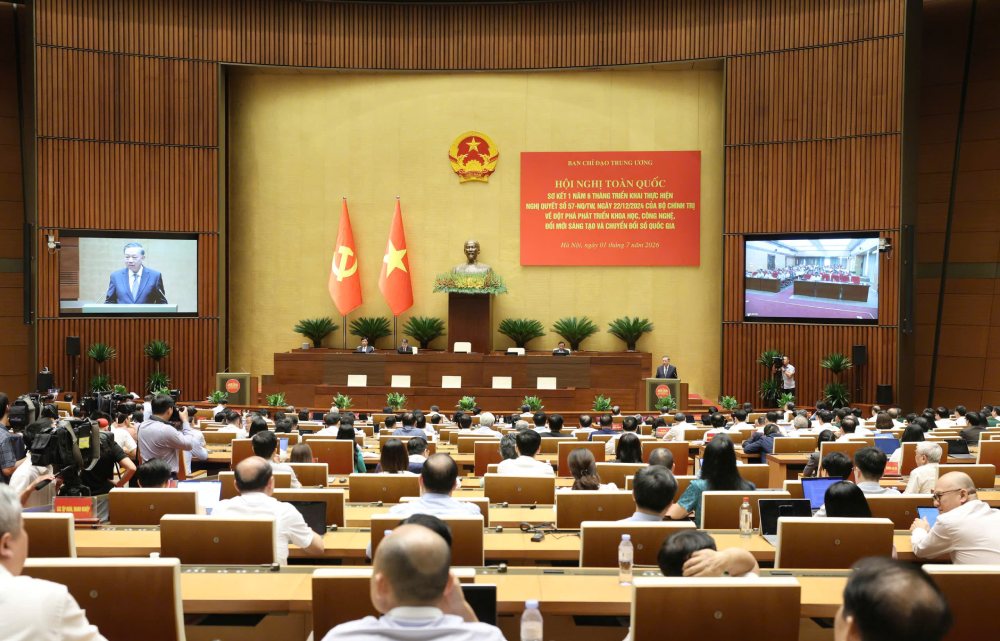
Notably, General Secretary and President To Lam requested to take the effectiveness of application, transfer and commercialization of research results as one of the important measures of scientific activities. Along with that are stronger policies in attracting talents, international experts, Vietnamese intellectuals abroad, forming strong research groups and connecting the global network of Vietnamese intellectuals.
This message shows that in the context of increasingly fierce technology competition, high-quality human resources and a team of highly qualified experts are no longer supporting factors but have become the foundation that determines the national autonomy and competitiveness.
Universities must become core technology production centers
Talking to Lao Dong, according to Prof. Dr. Nguyen Dinh Duc - Vietnam National University, Hanoi, strategic technology needs to be approached from the major national problems, thereby forming valuable and competitive products.
He believes that universities are the place to conduct long-term research, develop core technology and build strong research groups. Fields such as artificial intelligence, advanced materials, biotechnology, semiconductors, aerospace all need the widespread participation of universities.
According to Prof. Dr. Nguyen Dinh Duc, higher education institutions need to go beyond their traditional training role to build a research and innovation ecosystem, strengthen technology transfer, accompany businesses and participate in solving the country's development problems.
Universities are not just places to grant degrees, but must be centers for training high-quality human resources, scientific research, innovation, knowledge transfer and the development of high technologies and strategic technologies," he emphasized.
This viewpoint is also consistent with the direction of the General Secretary and President on reviewing training programs right from the new school year, prioritizing strategic technology industries, promoting digital skills training, digital transformation capacity, innovation and especially AI application.
Accordingly, preparing human resources today is preparing national competitiveness in the future.
From attracting talent to creating a development environment
Along with strategic orientations, many new mechanisms for attracting and valuing talents in the field of science and technology have also been promulgated.
According to Ms. Vu Thi La - Deputy Director of the Department of Organization and Personnel (Ministry of Science and Technology), currently talented young scientists and talented young engineers enjoy many specific policies according to government decrees. In which, the salary level is implemented according to the agreement in the labor contract, employees can be rewarded annually based on the results of task performance, initial support to stabilize accommodation and living.
Scientists are also guaranteed research funds, use national key laboratories, hire research assistants and technicians, and participate in scientific exchange programs at home and abroad. For families, the policy also extends to welfare fields such as health care, resort support and creating learning conditions for children.
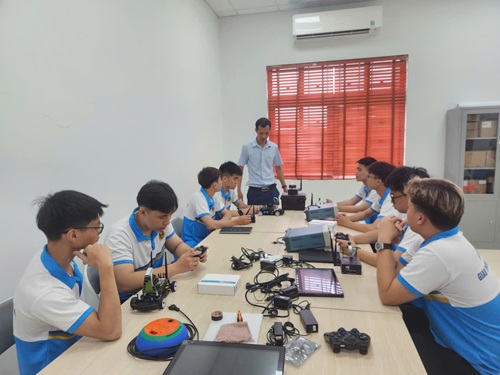
Notably, talented young scientists and talented young engineers are entitled to additional allowances equal to 150% of their current salary, are prioritized to be assigned jobs suitable to their expertise and are considered for outstanding salary increases if they have particularly outstanding achievements.
According to information from the Department of Personnel Organization, at the Dialogue Program of the Youth Union of units under the block of 4 institutes, 1 network (4V1M) held at the end of May 2026, Minister of Science and Technology Vu Hai Quan also committed to issuing a separate mechanism for young scientists to develop, creating an independent and self-reliant space and granting maximum power to affirm their capacity right from the early stages of their careers.
These changes show that talent development thinking is gradually shifting from administrative management mechanisms to creating an environment for talented people to maximize their abilities.
Linking research with the market and the problem of national development
Another notable point is the increasing demand for applicability and commercialization of research results.
According to the assessment of Minister of Science and Technology Vu Hai Quan, the enthusiasm of the team of young scientists is reflected in their bold participation in major research programs with commitments close to international standards. Many programs aim for at least 60% of research results to be published in prestigious international journals, 20% to protect intellectual property rights and 15% to be transferred and commercialized to directly serve production and business.
This is also the spirit that General Secretary and President To Lam emphasized when requesting to take the effectiveness of application and transfer as an important measure of scientific activities.
In the context of artificial intelligence, semiconductor and strategic technologies becoming new growth drivers of the world, investing in people, empowering universities and research institutes and building a favorable development environment for talent will determine Vietnam's breakthrough ability.
When young people are given conditions to research, create and contribute, Resolution 57 will not only stop at strategic goals but also create a solid foundation for technological autonomy and national competitiveness in the coming decades.