
Not just research, but create economic value
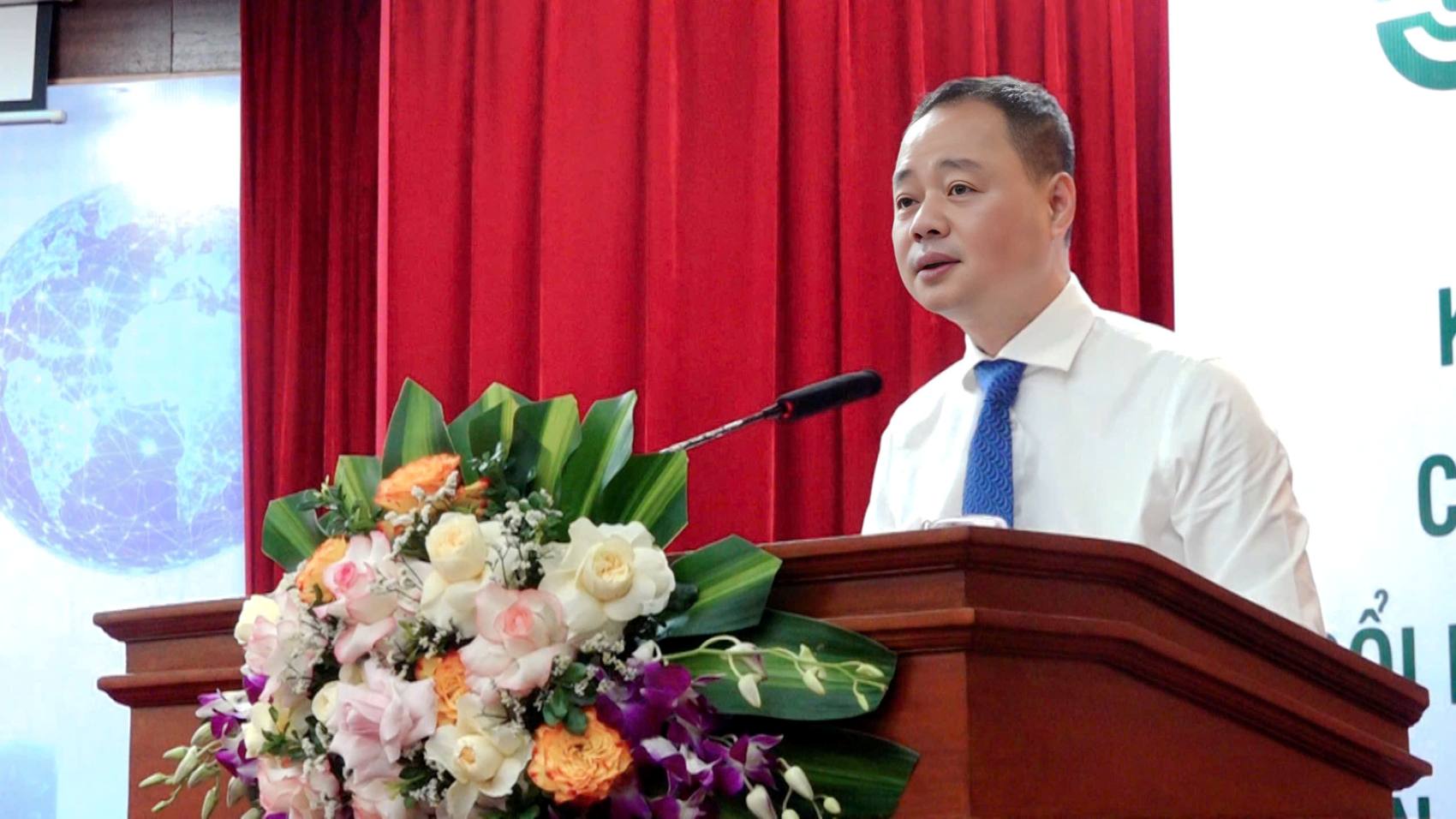
Speaking at the conference "Exleasing and Connecting Resources to Promote Innovation" held on the afternoon of May 29, Prof. Dr. Tran Hong Thai - Member of the Party Central Committee, Secretary of the Party Committee, President of the Vietnam Academy of Science and Technology said that the requirements for science and technology today have changed very fundamentally.
According to Mr. Thai, in the past half century, generations of officials and scientists of the Academy have built a foundation for basic research, applied research and multi-disciplinary technology development, making important contributions to the national science and technology development.
From earth science, marine science, physics, chemistry, mathematics, biology to materials technology, aerospace technology, environment, energy, information technology and many emerging fields, the Academy always pursues the mission of creating knowledge, providing scientific arguments and contributing to solving practical problems of the country.
However, according to Mr. Thai, the ultimate value of research does not only stop at scientific publications but must be expressed by the ability to create technology, products, businesses, markets and practical contributions to people's lives.
Resolution 57 has identified science and technology, innovation and digital transformation as the top important breakthroughs, the main driving force for rapidly developing modern production forces and bringing the country to breakthrough development in the new era.
That puts the responsibility on the shoulders of scientific organizations, scientists and the business community to jointly make science and technology a direct production force and a real driving force for economic growth," Mr. Thai emphasized.
Connecting the innovation ecosystem
According to the President of the Vietnam Academy of Science and Technology, innovation cannot be a single effort of a research institute or a group of scientists, but must be the resonance of many subjects in the ecosystem.
In which, the State plays a constructive role, businesses lead the market, research institutes and universities create knowledge and technology, investors share risks, support organizations perform the role of connecting, and the young generation is the pioneering force in innovation.
Mr. Thai said that if these resources are still fragmented, research results will be difficult to go far. Conversely, when effectively connected, laboratories, lecture halls, businesses, investors and localities can participate in creating value.
Leaders of the Academy said that in the past time, many research projects have been commercialized and applied in fields such as biotechnology, new materials, environmental technology, information technology, automation, energy and medicine. The number of patents on intellectual property has also increased significantly.
However, the gap between research results and market products is still not small. According to Mr. Thai, this gap can only be narrowed by more effective coordination between scientists, businesses, investors, intellectual property support organizations, quality standards and state management agencies.
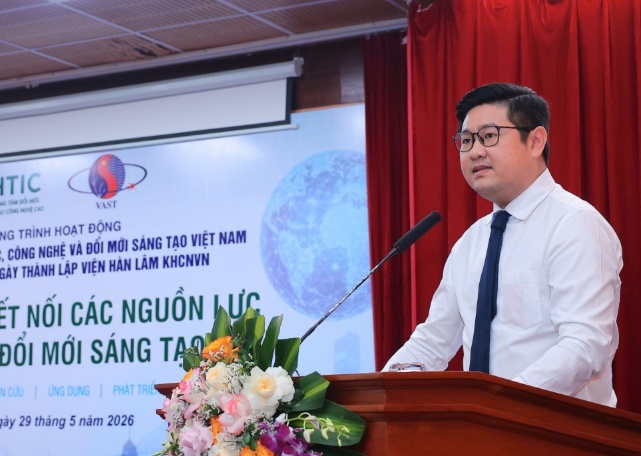
Agreeing with the requirement to strengthen linkages in the innovation ecosystem, Mr. Vu Hong Quan - Vice Chairman of the Central Vietnam Young Entrepreneurs Association said that technology commercialization will no longer be a slogan if each technology is ready to be transferred to find suitable businesses and each business with practical needs finds scientists to accompany them.
According to Mr. Quan, cooperation memorandums need to be followed by specific pilot projects and evaluated by clear economic efficiency. The process of technology commercialization must originate from the actual needs of the market, associated with the actual conditions of businesses, and at the same time have transparent financial mechanisms, intellectual property and the participation of intermediary organizations to support connection.


