On December 12, the People's Committee of Tay Ninh province organized the Asia R&D Connect 2025 International Forum to enhance knowledge connection, promote research - development and support localities in building a science - technology ecosystem in the digital transformation phase.
The event was co-organized by the Department of Science and Technology of Tay Ninh province in collaboration with UEH.ISB Talent School (Ho Chi Minh City University of Economics), gathering representatives of research institutes, international experts and enterprises.
The forum is considered a step to concretize Resolution 57-NQ/TW on science - technology development, innovation and digital transformation, creating space for the parties to share models, experiences and propose solutions for the development challenges of Tay Ninh in the integration period.
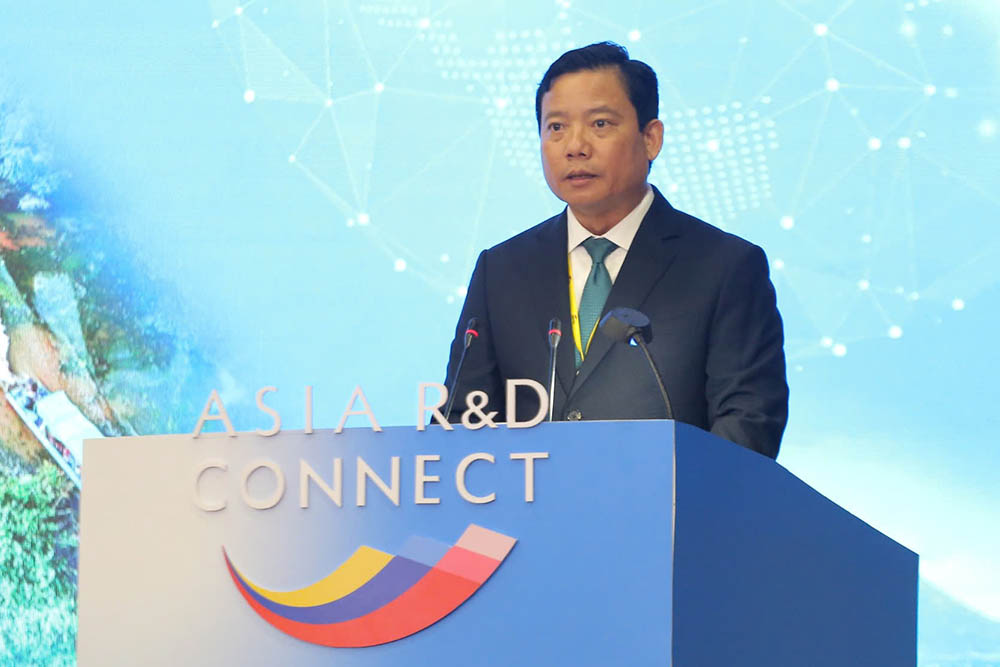
Speaking at the event, Mr. Pham Tan Hoa - Vice Chairman of Tay Ninh Provincial People's Committee said that the locality wishes to accompany research institutes, universities and the business community to build a regional R&D ecosystem. According to him, Resolution 57 is an opportunity for Tay Ninh to adjust its growth model in the direction of science - technology.
Tay Ninh identifies 3 key groups of tasks. The first is to perfect the policy framework, shifting from pure R&D investment thinking to science and technology governance, creating conditions for businesses to participate more strongly.
Second is to promote the development of digital government, digital economy and digital society, through upgrading data infrastructure and deploying platforms to serve management and provide public services.
The third is to build a creative startup ecosystem, in which the key goal is to form the Provincial Innovation Center in the coming time.
At the forum, Associate Professor, Dr. Tran Ha Minh Quan - Principal of UEH.ISB Talent School said that Tay Ninh is qualified to develop the Asia R&D Hub model thanks to a stable economic foundation, large demand for applied research and local cooperation readiness. According to him, this model can help convert knowledge into practical solutions and is a premise for forming a regional-scale research network if successfully implemented.
The above orientations are expected to create motivation for Tay Ninh to accelerate the digital transformation process, while enhancing competitiveness and connectivity role in the region in the coming time.