

Reality shows that technology transfer activities in Vietnam in the past time have still faced many difficulties. The concept of technology is still narrowly understood, mainly associated with tangible machines and equipment, while intangible assets such as data, algorithms or software are increasingly playing an important role.
In addition, the science and technology market is developing slowly, the intermediary system lacks professionalism, causing many research and technology results not to be commercialized effectively.
Discussing this issue, Mr. Chu Thuc Dat - Deputy Director of the Innovation Department (Ministry of Science and Technology) said that the Law amending and supplementing a number of articles of the Law on Technology Transfer is built to directly handle the above-mentioned obstacles. According to Mr. Dat, the amended Law aims to complete the legal framework, expand the approach to technology and promote the technology market to develop more effectively.
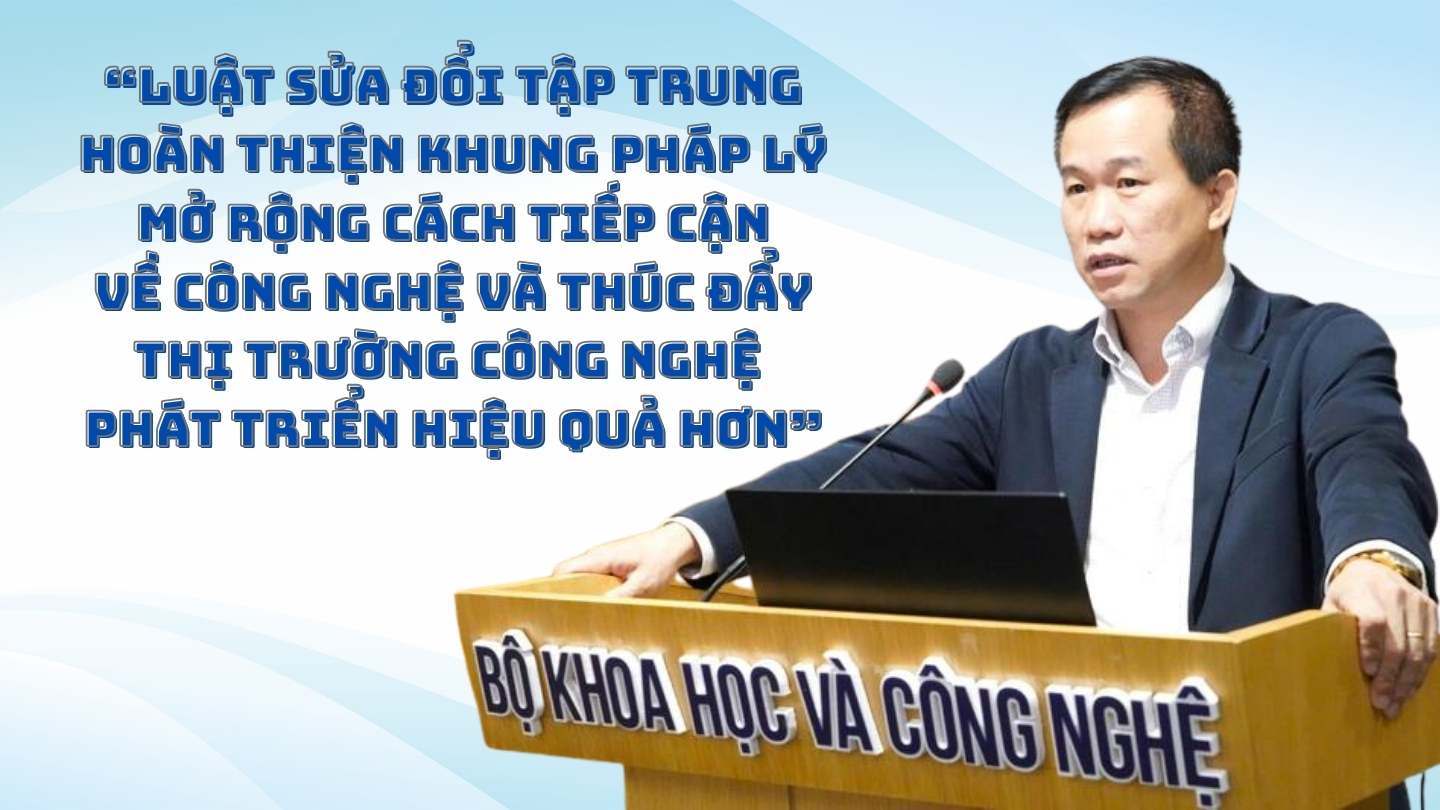
Sharing about the orientation of the law, the Deputy Director of the Department of Innovation informed: "This amended Law focuses on three main objectives: First, continue to improve the legal framework to promote effective and synchronous technology transfer activities, in accordance with practical requirements and socio-economic development policies. At the same time, approach international trends, strengthen decentralization and simplify policies.
Second, promote innovation and transfer of endogenous technology, strengthen technology linkages between domestic enterprises, organizations, and individuals with overseas entities.
Third, develop the science and technology market in an efficient, transparent and professional direction, creating a favorable environment for technology and intellectual property transactions, thereby improving productivity, quality and competitiveness of the economy.
A noteworthy new point of the amended law is the expansion of the concept of technology. Accordingly, technology not only includes machinery and equipment but also expands to knowledge, data, design, models, algorithms and software. The law also clarifies forms of transfer such as technology documents, quality management processes, standards and technical parameters, accurately reflecting current technology trends and added value of intellectual property.
The Law amending and supplementing a number of articles of the Law on Technology Transfer also completes regulations on establishing and protecting the right to own and use technology according to the law on intellectual property, science and technology, and management of public assets. Organizations and individuals with the right to own or legally use technology are allowed to commercialize technology or contribute capital with technology in investment projects and enterprises.
In addition, the Law emphasizes the development of intermediary organizations of the science and technology market such as brokerage, consulting, evaluation, technology valuation and supply-demand connection in a professional and transparent direction. The construction of science and technology exchanges and innovation support mechanisms is expected to overcome current limitations, creating a foundation for the technology market to operate smoothly.
According to Mr. Chu Thuc Dat, the Law amending and supplementing a number of articles of the Law on Technology Transfer will take effect from April 1, 2026. Some regulations on procedures for approving the issuance of technology transfer licenses are applied right from the time the law is passed, in order to soon remove obstacles in practice. With 21 amended articles, the law is expected to both control risks and create favorable conditions for investment, promote technology development and improve national competitiveness.


