
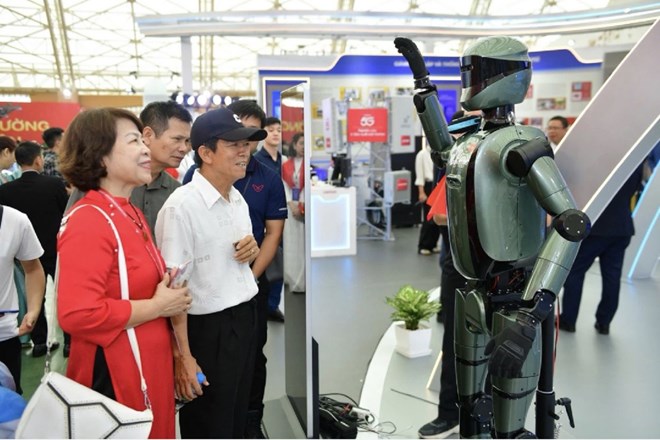
In the context of Vietnam setting a goal to master strategic technologies, the big problem is not only choosing which technology to prioritize but also how to allocate resources so that they are not spread out, avoiding chasing trends but lacking commercialization and forming domestic value chains.
Reality shows that many technology sectors require very large investment resources, long development time and inter-sectoral coordination. If the priority list is too broad, support may be dispersed, making it difficult to create products competitive enough or directly impacting economic growth.
According to Dr. Doan Nam Thai - CEO of AVATECH, if the priority technology portfolio is too broad, the investment resources of the State and businesses will be dispersed, making it difficult to form leading enterprises or production chains that are competitive internationally.
According to Mr. Thai, many countries only choose a number of truly advantageous sectors to focus on long-term investment, thereby creating an industrial and market ecosystem for technology products. Therefore, building a portfolio in a streamlined direction, associated with market needs and domestic business capacity, is a necessary direction.
Discussing this issue, Mr. Hoang Anh Tu - Deputy Director of the Department of Science and Technology (Ministry of Science and Technology) said that the mechanism for ordering, assigning tasks and allocating resources for strategic technology development is currently regulated in Decrees 267, 265 and Circular 39 and Circular 44.
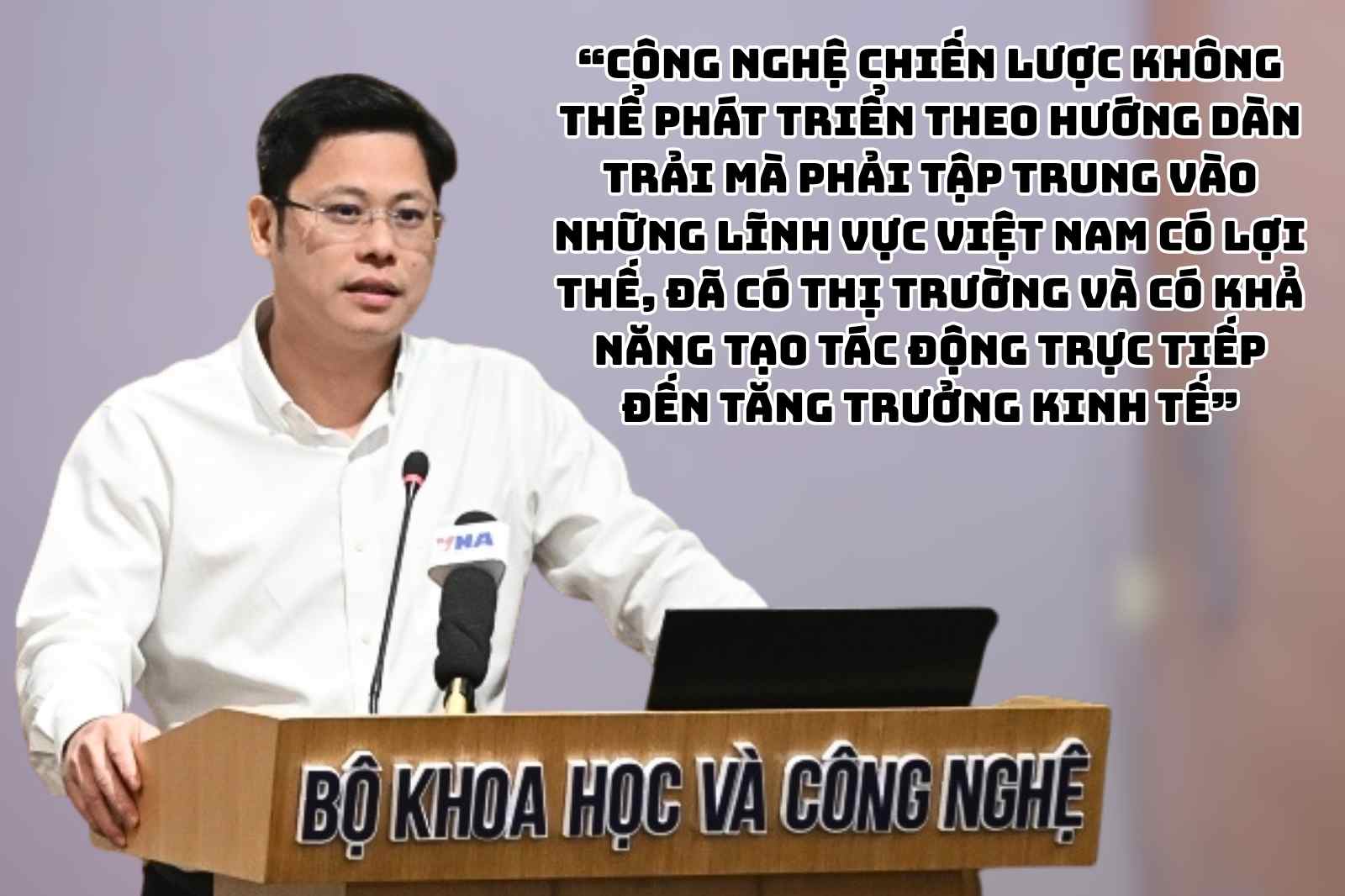
According to Mr. Tu, based on the list of strategic technology and strategic technology products, ministries and agencies will order the task of developing strategic technology and products. The Ministry of Science and Technology is responsible for summarizing and reporting to the Government Working Group on strategic technology development. After receiving the opinion of the Working Group, the Ministry will submit to competent authorities to assign tasks to relevant ministries and agencies.
Notably, the identification of strategic technology is built on many principles to ensure practicality and efficiency. According to Mr. Hoang Anh Tu, the first principle is to closely follow the direction of the General Secretary, President; Prime Minister and Deputy Prime Minister on the requirement to build a list in a streamlined direction.
In addition, the adjustment and supplementation of the list still ensures the inheritance from Decision No. 1131/QD-TTg dated June 12, 2025 of the Prime Minister. Strategic technology and technology products must also meet the criteria specified in Article 5, Article 6 of the Law on High Technology No. 133/2025/QH15.
Mr. Tu said that the identification of strategic technology is also based on three core factors including the need to develop and improve the competitiveness of the economy; advantages and potentials of domestic industries; the ability to form a value chain and market for technology products.
The new list has a smaller number of strategic technology and technology products than the list in Decision 1131. The technologies and products added this time are mainly focused on areas with advantages and potentials of domestic industries, which already have markets and have a large and direct impact on economic development," Mr. Tu shared.
According to the Deputy Director of the Department of Science and Technology, the Ministry of Science and Technology is currently coordinating with many ministries and agencies to review and complete the list. Currently, the Ministry has sent a dossier requesting appraisal opinions from the Ministry of Justice.
Not only focusing on choosing priority technologies, policies to support businesses to develop strategic technologies are also set out to solve the resource problem for domestic businesses.
Mr. Hoang Anh Tu said that the State will support businesses in developing technology and strategic technology products through many forms such as ordering and sponsoring scientific and technological tasks, innovation; tax incentives, bidding, investment; support for research infrastructure, laboratories and research centers.
Notably, according to Mr. Tu, financial incentive policies do not distinguish between large corporations and startups when participating in strategic technology development.


