
Saline intrusion is increasingly unpredictable, threatening people's livelihoods in coastal areas of the Red River Delta. In that context, the VinFuture Foundation in coordination with the University of Science (Vietnam National University, Hanoi) is implementing an AI project for early forecasting, integrating multi-technology, creating a "digital shield" to help farmers proactively respond and minimize damage.
The project "Integrating physical models and data-based models in saltwater intrusion monitoring and forecasting to serve green agriculture development in some coastal areas of the Red River Delta" jointly implemented by the VinFuture Fund and the University of Science (Vietnam National University, Hanoi) is a key initiative to improve adaptability to climate change and promote green agriculture in coastal areas of the Red River Delta.
The project aims to build a multi-tech integrated monitoring and forecasting system: from physical models, artificial intelligence models (Machine Learning, Deep Learning) to remote sensing data, unmanned aerial vehicles (UAVs) and IoT sensor networks.
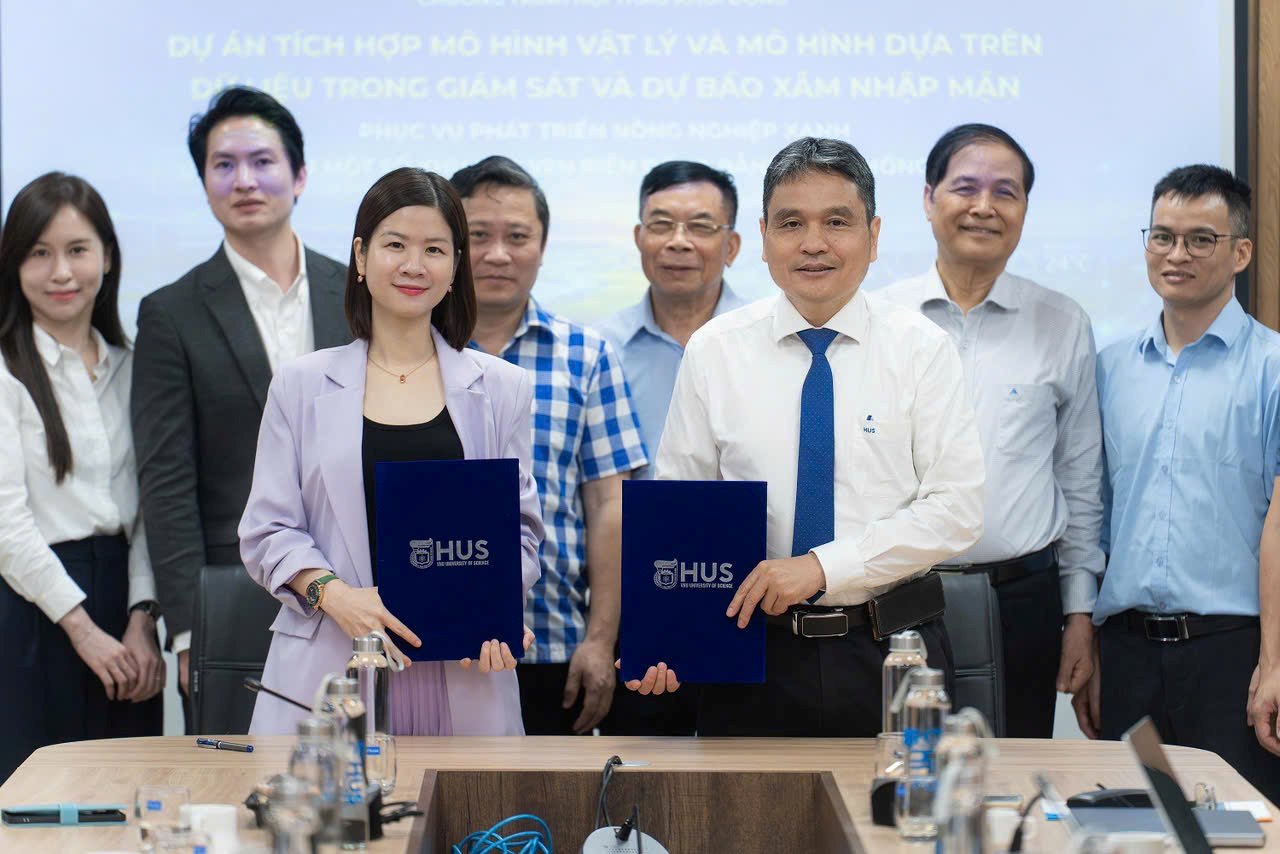
According to the research group, all multi-source data will be synchronized on the space-time platform DataCube. When combined with physical models, artificial intelligence models, remote sensing, IoT and WebGIS systems, the platform creates digital maps that help track and issue saltwater intrusion warnings at the nearest real-time level. This is a key tool to help localities proactively respond and protect agricultural production from negative environmental impacts.
The platform will provide early warning capability for saltwater intrusion from 1 to 5 days in advance. This "golden time" helps farmers proactively adjust crop schedules, develop water storage and management plans, thereby minimizing economic damage caused by natural disasters.
The project director is Assoc. Prof. Dr. Nguyen Huu Duy - Deputy Head of the Department of Humanities and Planning, Faculty of Geography, University of Science (Vietnam National University, Hanoi). He has published more than 100 international articles with more than 4,000 citations (h-index = 35) in the field of disaster prevention, land use change and urbanization. He is also a member of the Science Council of Earth Science - Marine Science (2025-2027) of the NAFOSTED Foundation - under the Ministry of Science and Technology.
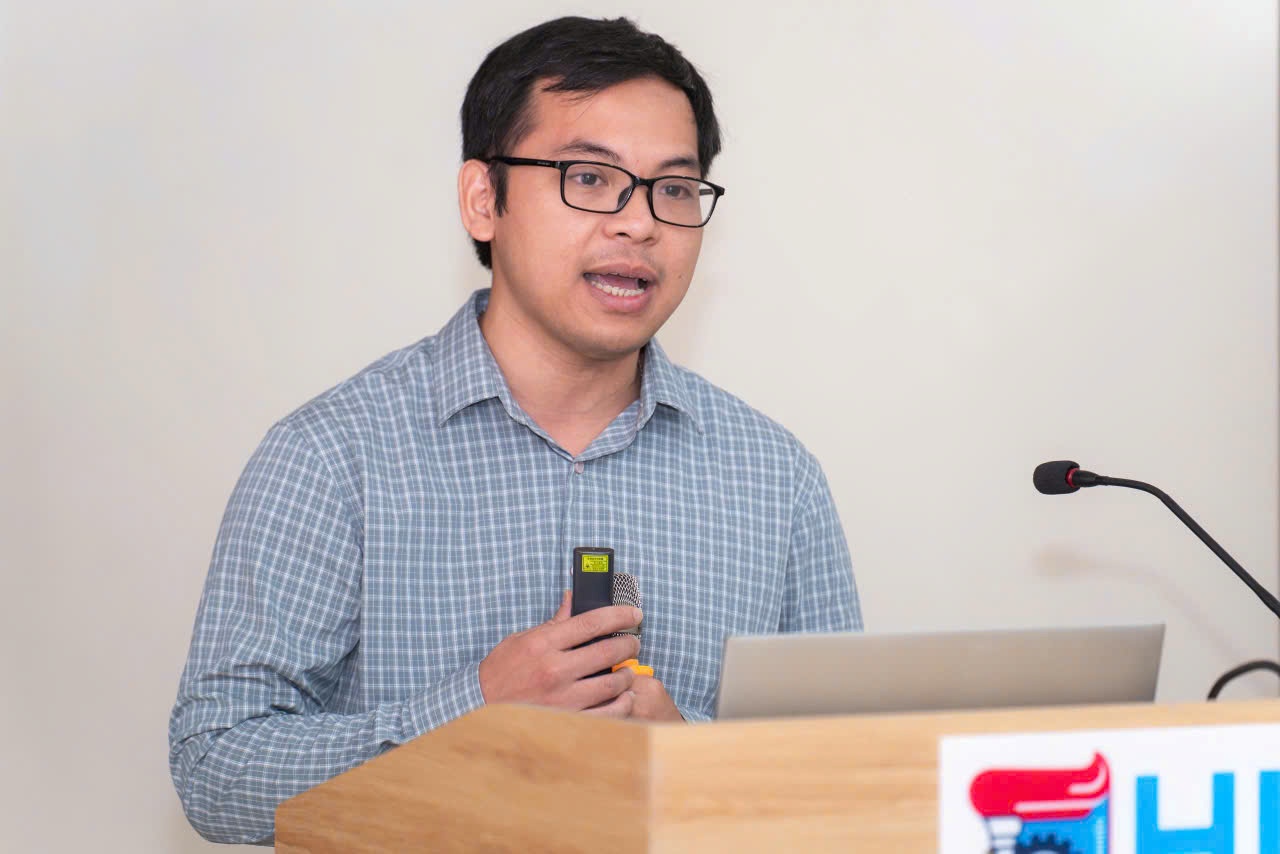
Support from the VinFuture Fund helps to implement projects on the ground more conveniently, and can expand the scope of application of the project. More importantly, the connection and spread from the VinFuture Fund will contribute to bringing research results closer to people, management agencies and businesses, thereby enhancing the social impact of the project and promoting green agriculture faster and more effectively," Mr. Duy shared.
The cooperation between VinFuture Fund and the University of Science (Vietnam National University, Hanoi) is expected to shorten the distance from laboratories to fields. Instead of crude data, the system focuses on converting data into easy-to-understand recommendations, helping people apply them directly to production.
Dr. Le Thai Ha - Managing Director of VinFuture Fund shared: "VinFuture always appreciates accompanying scientists and research institutions with highly applicable projects, contributing to solving urgent challenges of the community.
We expect the project to not only improve the capacity to monitor and forecast saltwater intrusion but also provide practical support for people and management agencies in making decisions, thereby promoting the transition to a green, sustainable and better adapted to climate change agricultural model”.
The project is expected to be implemented in 2 years with the coordination of domestic and foreign organizations such as: Thuy Loi University (Vietnam), Institute of Water Resources Science (Vietnam), Nanyang Technological University (Singapore), University of Edinburgh (Scotland).
The research group expects the project to become a "digital shield" to help farmers in coastal provinces proactively protect their livelihoods from the risk of saltwater intrusion, and at the same time lay the foundation for transitioning to green agriculture models, sustainably adapting to climate change.


