
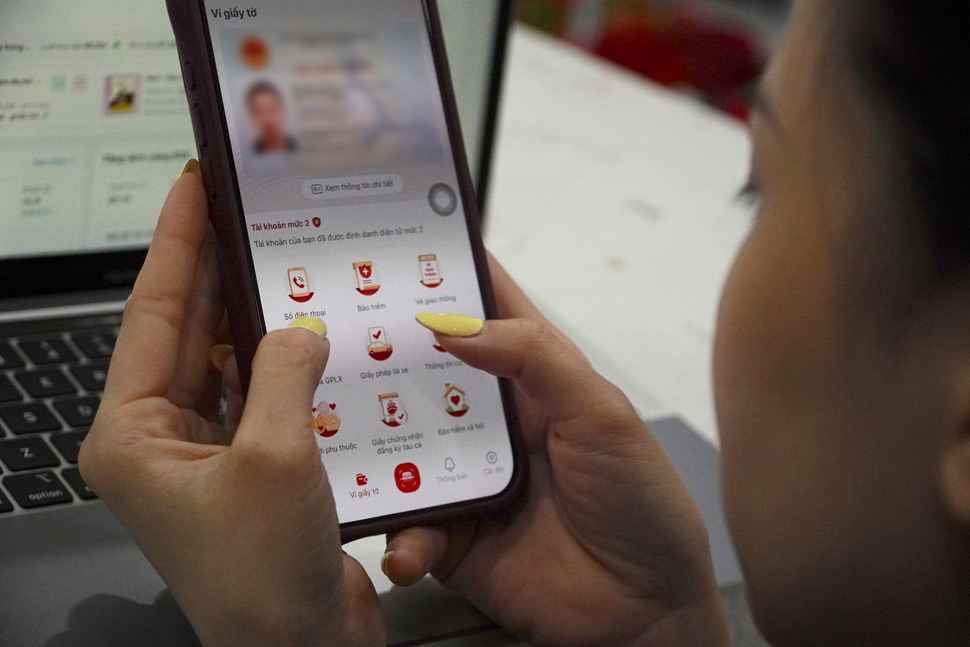
After the regulation on subscriber authentication according to Circular 08/2026 took effect, the need to check and authenticate subscriber information of people increased sharply. Along with that, many forms of fraud "following" SIM card authentication also began to appear.
Talking to Lao Dong Newspaper, Ms. Le Thu Hang (Hanoi) said that at 0:38 on April 23, she received a message informing that her phone number "has registered a level 2 VNeID identification account and has been verified according to regulations". However, below, she requested to access a strange link to "check and confirm information".
Ms. Le Thu Hang (Hanoi) said that a few days ago she had just verified her subscriber information through the network operator's application, so when she received a notification message related to "checking and confirming subscriber information", she almost did not suspect it.
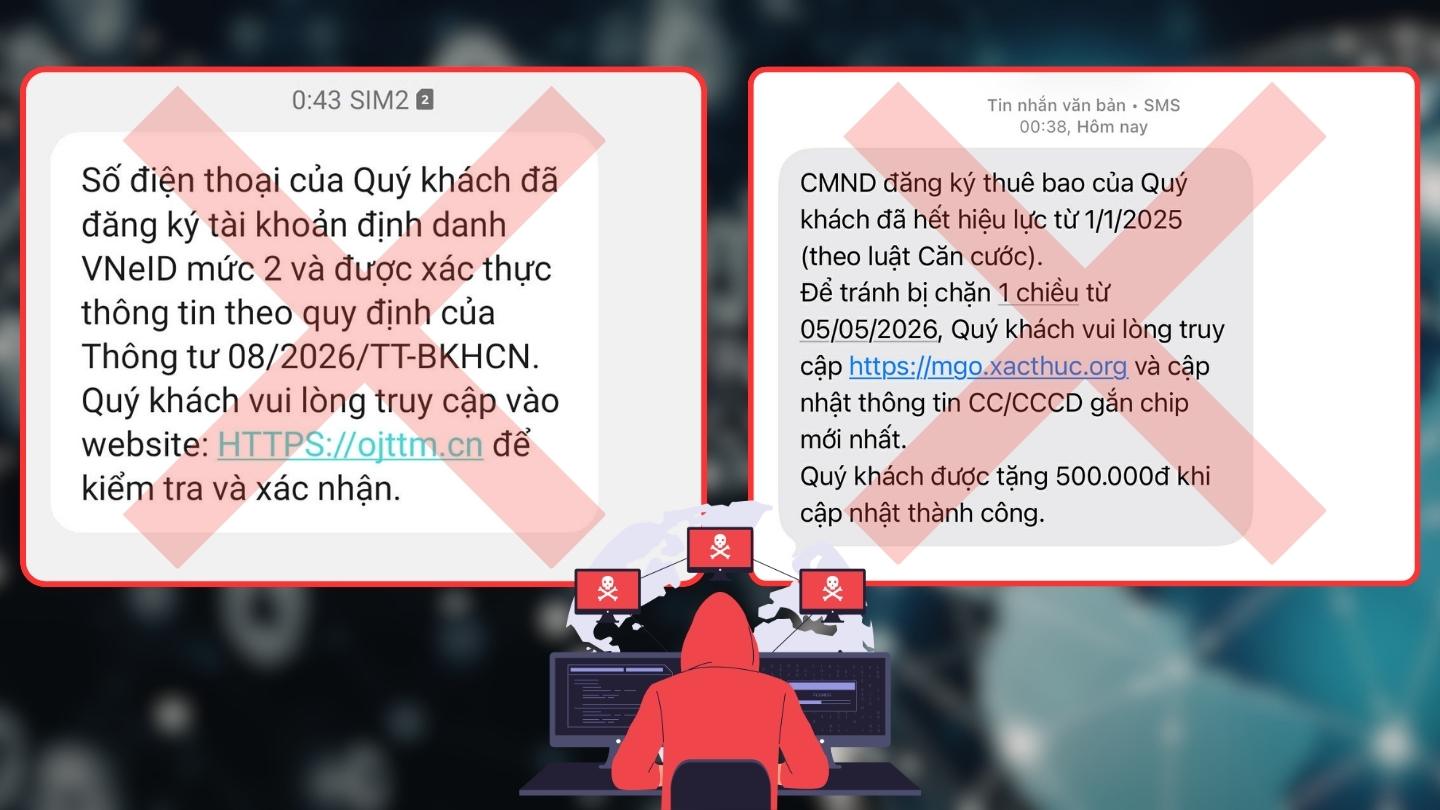
The message came right when I had just updated information a few days before, so I thought the system would send it again to complete the procedures. I intended to click on the link immediately," Ms. Hang recounted.
However, when clicking on the link, her phone now warns that this is a strange link and requires confirmation before accessing because the machine is installed with security software.
At that time, I was about to click "Agree" when I suddenly noticed a rather strange link, unlike the website type of the network operator I had accessed before," Ms. Hang said.
Suspecting a problem, Ms. Hang borrowed a phone from a relative, who had previously received an authentication notice from the network operator, to compare the content of the message and the access address.
Comparing it, I saw two completely different links. The message from a relative using a familiar address of the network operator, and the link I received was a strange domain name, so I didn't dare to click further," Ms. Hang said.
After that, Ms. Hang called the network operator's customer care switchboard to check and was informed that her phone number had not yet generated a new update request and the message with the link above was not an official notification from the system.
I think if anyone is not paying attention or is worried about having their SIM locked, it is very easy to follow. Luckily, the phone has a security warning, so I stopped to check more carefully," Ms. Hang shared.
Meanwhile, Mr. Nguyen Viet Dung (Hung Yen) fell into a different situation. He said that he had heard many times before about the fact that subscribers who have not updated their citizen identification cards or have not been fully verified may be restricted from service, so he is always worried that his phone number has not completed the procedures.
Therefore, when he received a message notifying that his registered ID card information had expired and requesting to update to a chip-based citizen identification card to avoid one-way SIM locking, he almost believed this was a real notification.
I thought my data was probably not fully updated, so the system sent an additional request. The message clearly stated the processing time, along with the access link and the notification content that I would be "given 500,000 VND" after completing the update. I was quite impatient at that time because I was afraid of being locked by the SIM, so I also intended to follow suit," Mr. Dung said.
However, because he was busy with work, Mr. Dung did not have time to access the link. Then, when he read the warnings in the mass media about the trick of forging subscriber authentication messages with content and links similar to the case he just encountered, he was startled to check again and realized that it was a fake message.
In fact, scammers are taking advantage of users' psychology of fear of service disruption to urge them to access fake links or provide personal information.
According to records, some cases also receive calls from people claiming to be subscriber authentication support staff. The subjects ask users to read OTP codes or install strange applications to "support information updates".
Telecommunications businesses recommend that users only carry out authentication through official channels such as network operator applications, VNeID or directly at transaction points.
Users absolutely do not access strange links sent via SMS, do not provide OTP codes, passwords or personal information to strangers in any form.
Users need to carefully check the website domain name, the phone number to send messages and contact the official switchboard of the network operator when there is suspicion, instead of rushing to follow threatening or urging requests.


