
Stage "revives" in digital space
It is not difficult to recognize the change if you follow the Fanpages of theaters recently. With practical experience when "surfing" these pages, you can see that the way of doing media has changed: posts are thicker, images are invested; behind-the-scenes clips, trailers, performance schedules... are updated continuously and synchronously.
With the Youth Theater, the play "Nam Dong Military Region" is becoming the focus on social networks.
Promotional content is posted with high frequency, from performance excerpts to behind-the-scenes training, attracting tens of thousands of views and interactions.
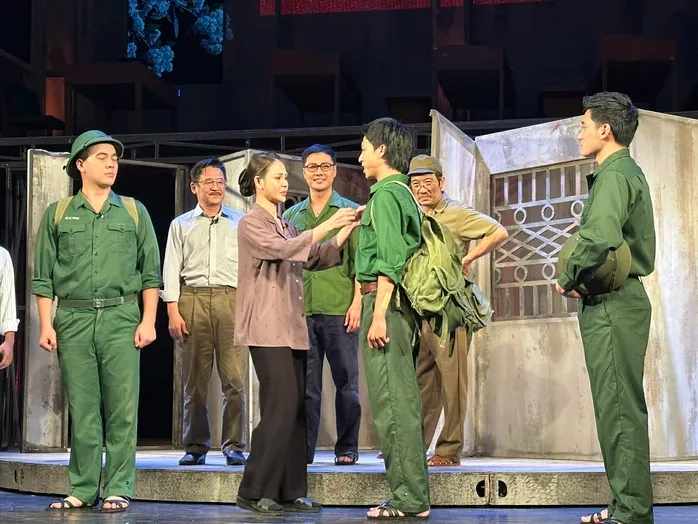
Not just one play, programs such as "Laughing Life - O Sin Wharf", "Cinderella - Glass Shoe", "Swans"... are also promoted methodically, with detailed performance schedules for each day.
At the Vietnam Drama Theater, this effect is clearly shown through specific programs. Before the 14th Party Congress, two plays "What's Left" and "Uncle Ho - A Vast Love" were opened for free online ticket registration and quickly sold out in just a few minutes, each screening attracting about 200 spectators.
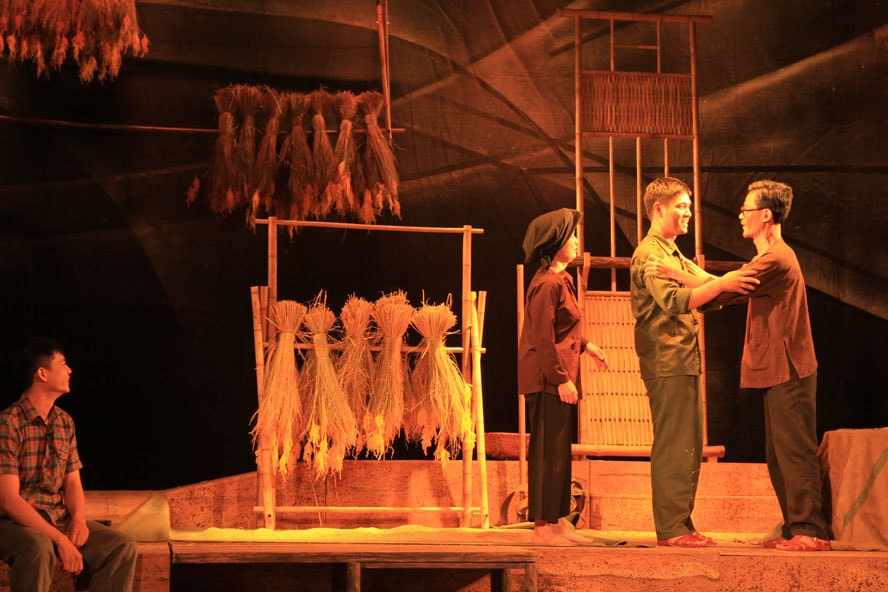
In parallel, the theater also maintains performances in the "Season of Emotions" series with plays such as "Mask of People", "What's Left Behind". These are plays exploiting family and post-war themes - not an easy-to-watch entertainment genre - but still maintaining a stable audience. This shows that when approached properly, the stage still has the ability to attract the public, even with works of depth.
Social networks and digital platforms are becoming the "second box office" of theaters, where the journey from promotion to ticket sales is significantly shortened.
From digital transformation to economic and cultural expectations
In the context of the 14th National Congress Resolution defining the development of the cultural industry, linking cultural values with economic values and promoting digital transformation, theaters are not only facing the requirement of innovation but also forced to simultaneously change both creative thinking and operating methods.
Meritorious Artist Nguyen Si Tien - Director of the Youth Theater - said: "Digital transformation is becoming an inevitable trend in all fields, including performing arts.
However, for public theaters, the biggest challenge is still limitations in infrastructure and investment resources.

According to Mr. Tien, clearly aware of this, the Youth Theater has taken specific actions such as upgrading elements such as lighting, sound, stage design to create better visual and auditory effects, while taking advantage of digital media platforms to promote programs and reach young audiences.
Not stopping there, the testing of new technologies is also being implemented. "The integration of new technologies, including artificial intelligence (AI), is being tested in staging to create new experiences. This is a necessary step for stage art not to lag behind in the context of competition with modern entertainment types," Mr. Tien said.
Meritorious Artist Kieu Minh Hieu - Director of the Vietnam Drama Theater emphasized a fundamental change: "The cultural industry must be an economic product. That is the right assessment for us to set goals and actions to achieve".
According to Mr. Hieu, the development of theater today cannot be separated from two factors: artistic quality and public access.

The Theater determines to improve the quality of works, while taking advantage of technology platforms and social networks to promote and bring art closer to the general public, thereby gradually re-establishing the need for enjoyment in life," Mr. Hieu emphasized.
In addition, the theater also promotes the combination of traditional and modern elements, from training artists to choosing scripts, in order to both maintain its identity and expand market access.
However, according to the theater directors, digital transformation will hardly be effective without synchronous support. "It is necessary to invest in infrastructure, mechanisms and policies and especially appropriate remuneration regimes so that artists can feel secure in creating," Mr. Hieu said that this is a key factor to retain professionals.
From applying technology in staging, taking advantage of digital platforms to improving the quality of works, the theater is gradually adapting to the new environment. If properly supported, digital transformation will not only help find audiences but also open up the possibility of creating economic value for the industry.


