
This year's workshop has the theme "Education 4.0 and Artificial Intelligence: shaping the future of learning", attracting the participation of more than 300 scientists and educational managers from 11 countries.
Associate Professor, Dr. Nguyen Van Trao - Vice Principal of Hanoi National University of Education said that in the context of strong development of science and technology and artificial intelligence and a profound influence on all aspects of social life, especially in the field of education, the seminar is an important forum for academic exchange, experience sharing and updating new trends in educational research, innovation of teaching and teacher training methods.
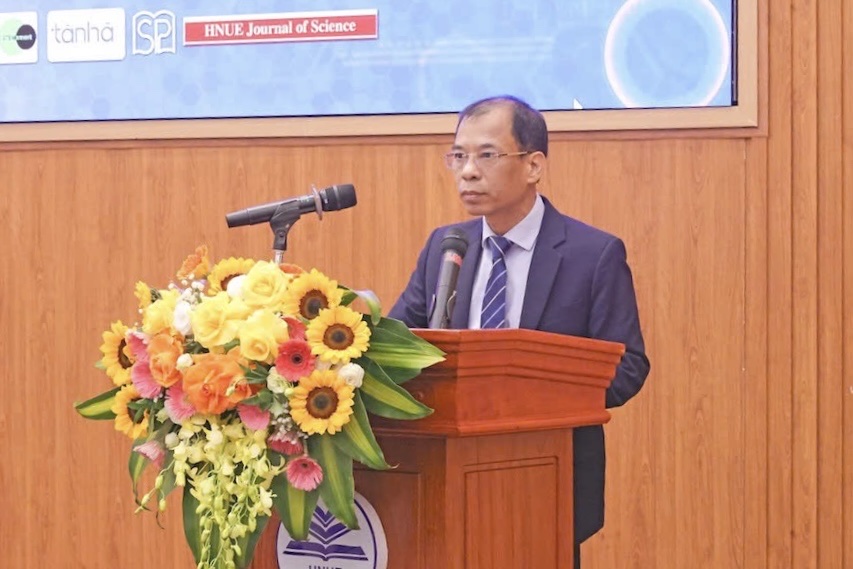
As a key pedagogical university in the country, Hanoi National University of Education clearly identifies its pioneering role in training a team of teachers with the ability to adapt to the requirements of the new development stage.
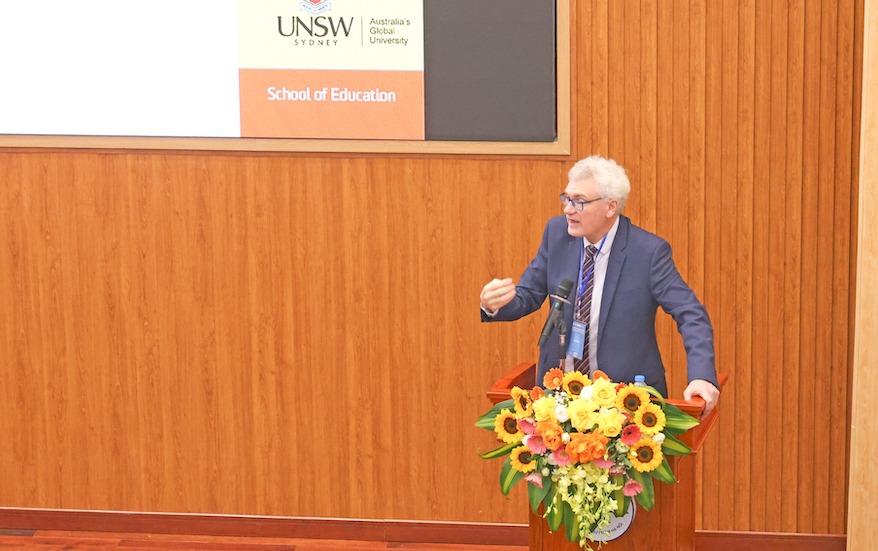
Through the workshop, the school's management and expert team had the opportunity to listen to opinions and experiences from countries with developed science and education, thereby selecting appropriate orientations in applying technology and artificial intelligence to educational research, teaching activities and teacher training.
In addition to exploiting the benefits that technology and artificial intelligence bring, the workshop also contributes to helping teachers better identify the limitations and challenges in the process of applying technology to teaching and learning.
"This is especially meaningful for teacher training, because pedagogical students are not only learners but also future teachers, who will continue to spread the spirit of innovation, creativity and educational values to the community and society" - Associate Professor, Dr. Nguyen Van Trao said.
Professor, Dr. Gabriele Schrüfer, Bayreuth University (Germany) acknowledged that artificial intelligence (AI) is truly changing every aspect of life. In the context of the world facing many major challenges such as poverty or climate change, AI shows the ability to create strong changes.
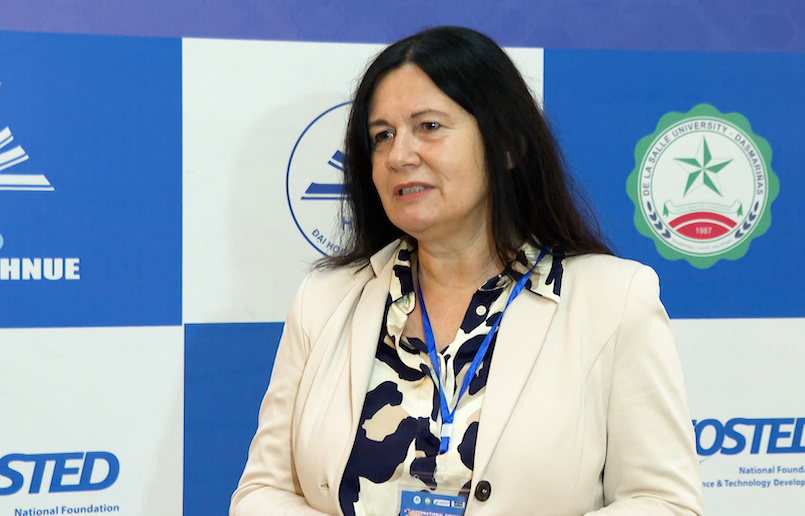
However, the core issue is not teaching or acquiring knowledge, because those contents can be supported by AI, but lies in developing other abilities and how to nurture students.
From there, the requirement is to change the way of teaching and learning in schools. Educational activities do not stop at traditional lectures, but need to be organized in the direction of learning services, forming professional learning communities, thereby encouraging students to be more proactive and responsible for their studies.
The application of AI in education should therefore not be seen only as a supporting tool, but should aim at building and enhancing the sense of responsibility of learners.
"AI is not just a tool, it is a change in awareness," she said.
The presentations were presented entirely in English at the workshop, focusing on discussing contents revolving around educational transformation in the context of 4.0 technology and the strong development of artificial intelligence (AI), specifically including the main topics:
- Education 4.0, AI and emerging technologies in modern education.
- Digital transformation in education.
- Technology in enhancing STEAM education.
- Teacher training and adaptation requirements for teachers in the AI era.
- Artificial Intelligence for Inclusive Education, Sustainable Development and lifelong Learning.
- Education policies and governance in the AI era.


