
child drowning rate decreases by 16%
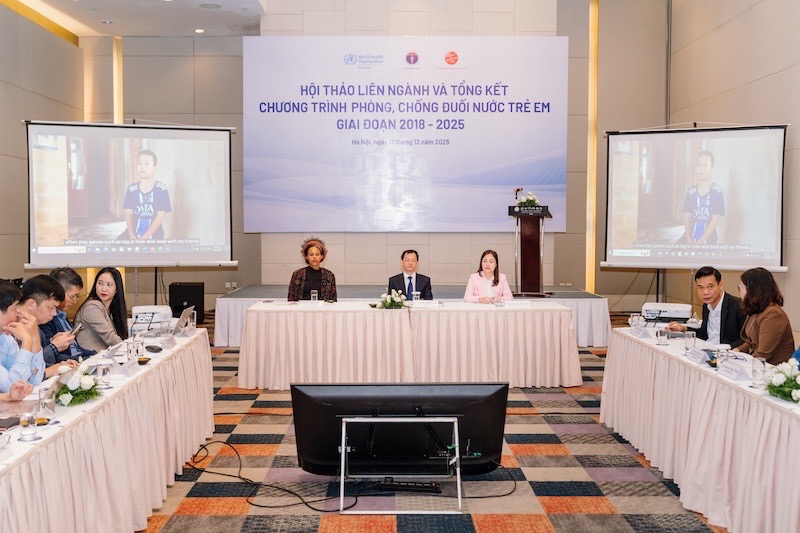
On December 17, the Department of Mothers and Children (Ministry of Health) and the World Health Organization, in coordination with the United States' Campaign for Tobacco Free Kids (CTFK), organized an interdisciplinary workshop and summarized the 2018-2025 child drowning prevention and control project.
Associate Professor, Dr. Nguyen Tri Thuc - Deputy Minister of Health said: "From 2018 to now, more than 63,000 Vietnamese children have been taught safe swimming, more than 1,500 physical education teachers have been granted swimming certificates, more than 30,000 parents, caregivers, and preschool teachers have been instructed on preventing child drowning.
The rate of child drowning decreased by 16% compared to before the project was implemented in intervention localities, contributing to reducing the number of child drowning deaths".
According to the Deputy Minister, Vietnam is still one of the countries with the highest rate of death from child injuries in the world, with about 1,800 children dying from drowning each year. drowning is still a burning issue, especially in the context of a country with a network of many rivers, lakes and canals. These are huge losses for the children's families, the community and society.
The Deputy Minister emphasized that the contents of summarizing the results and practical lessons from the 10 provinces and cities implementing the program are valuable shares contributing to discussing and building inter-sectoral strategies, with the spirit of determination to act to protect children and future owners of the world.
Improve capacity, manage and replicate effective intervention models
According to Dr. Nguyen Ngoc Anh, Director of the Center for Policy Research and Development, every 1 USD spent on swimming lessons for children can be repaid up to 20 USD, according to the results of the cost - efficiency analysis of investment return (ROI).
This is a high refund, 20 times the original cost. In addition, each swimming class for 20 children only costs an average of 50,000 VND, while it is estimated that the economic burden of drowning in children can be up to more than 15 billion VND per year.
With a commitment to transforming the successful initiatives of the national intervention program, Ms. Doan Thi Thu Huyen - National Director, Campaign for Tobacco- Free Kids (CTFK) in Vietnam has made 4 recommendations to strengthen drowning prevention for children.
In terms of investment in resources and finance, through the implementation of the program, the average cost to train a child to know how to swim safely is only about more than 720,000 VND.
Along with the results of the analysis of investment capital refunds up to 20 times, this is an important database for localities to refer to, in prioritizing local budget allocation and calling for socialization based on the standard training process that the program has developed, developing solutions to ensure cost efficiency.
child drowning prevention needs to be integrated into the development targets of each country and locality, promoting the role and important political tasks. The organization recommends including the rate of children who know how to swim safely and have safety skills in the socio-economic development index system, creating the strongest motivation for implementation.
At the same time, drowning prevention in children must be standardized and monitored. Strengthen data collection and assessment to make local interventions, while inspecting and supervising swimming facilities, ensuring strict compliance with safety regulations. The program is well measured, contributing to effective management.
drowning prevention work cannot be separated from the context of natural disasters and floods. To adapt to climate change, it is necessary to integrate drowning prevention skills into disaster response programs, equipping children with the ability to protect themselves when storms and floods occur.
"We hope that with the attention and investment of the government, the close coordination between sectors, facilities and techniques to teach safe swimming and safe swimming skills to children will be increasingly replicated and improved" - Ms. Huyen said.
By 2026, in the context of transferring projects to the Ministry of Health and localities, capacity building, management and replication of effective intervention models such as the safe community model and safe schools are becoming urgent.
In particular, in the context of increasingly serious adaptation to climate change and extreme weather, it is even more necessary to strongly implement a drowning prevention program to protect children.


