
The Ministry of Education and Training (MOET) has just announced a draft Circular on the Charter of primary schools, secondary schools, high schools and high schools at many levels, and announced a public consultation.
Reject regulations on granting secondary school graduation certificates, on selecting textbooks, and on School Councils in public schools
The draft Circular consists of 8 chapters and 47 Articles.
The draft adds Boarding Schools and other schools with good facilities to the regulations on the types of schools and the system of general schools; special education groups.
At the same time, it stipulates changes in the educational management functions of the District People's Committee (UBND) and the Department of Education and Training under the responsibility of the Commune People's Committee and the Department of Culture - Society.
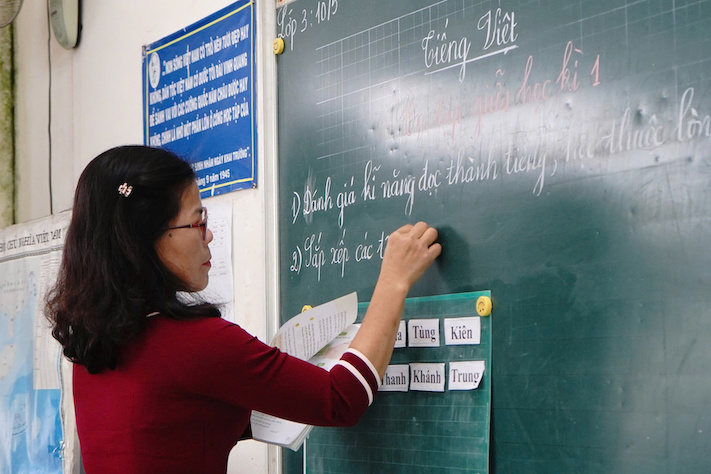
This change is in line with the policy of "Focusing on perfecting legal regulations to promptly remove bottlenecks, bottlenecks, mechanisms, and policies" and " steps up decentralization and delegation of power" in Resolution No. 71-NQ/TW dated August 22, 2025 of the Politburo on breakthroughs in education and training development.
The draft Circular clearly stipulates the rights and responsibilities of managers, teachers, and staff in schools. At the same time, remove the regulation on granting high school graduation certificates to perform compulsory educational tasks for secondary schools; remove the regulation on selecting textbooks; remove the regulation on School Councils for public schools.
These provisions and exceptings aim to ensure consistency with the provisions of the Law amending and supplementing a number of articles of the Law on Education and the Law on Teachers.
Reducing administrative procedures for transferring schools and receiving students
The draft Circular specifically regulates the management of records in schools that are digitized. Electronic records are used to replace paper records according to the roadmap in accordance with the conditions of the locality, the school, the implementation capability of teachers and ensuring the legality of electronic records. The management of electronic records is regulated by the Department of Education and Training according to the connection standards and data standards of the Ministry of Education and Training.
At the same time, to reduce administrative procedures for parents and students, the draft Circular stipulates that school transfers and student reception are carried out on the Public Service Portal.
In case the application and declaration of transfer information, study application, and re-study cannot be done on the Public Service Portal, students or parents or guardians must submit an application for transfer to the school, study application, and re-study application to the school where they are transferred in the form of direct submission, online submission, or by post.
Building a safe, healthy and humane educational environment
The draft Circular stipulates the duties, powers, professional standards, and requirements for regular training for the teaching staff. These regulations contribute to improving the quality of the team, increasing professionalism, responsibility and transparency in performing professional tasks. At the same time, ensuring full legitimate rights, helping teachers and staff feel secure in their work; improving the quality of education, and society's trust in the teaching staff is strengthened.
The draft Circular also provides regulations on behavior, prevention of school violence, prevention of violations of professional ethics in schools to build a safe, healthy and humane educational environment.
In addition, the draft Circular also specifically stipulates standards on facilities, teaching equipment, libraries and quality assurance conditions to create motivation for the investment and modernization of schools; ensure safety, limit waste and improve the efficiency of public asset use.
The draft Circular also stipulates a clear mechanism for coordinating families, schools and society, creating conditions for parents, social organizations and the community to participate in the educational process; strengthening social supervision, mobilizing resources for educational activities, preventing risks and supporting students for comprehensive development.


