
The incident started with students' posts on social networks, comparing the difference in A80 support money. The information was shared at a dizzying speed, forcing the principal of this school to directly dialogue with the students.
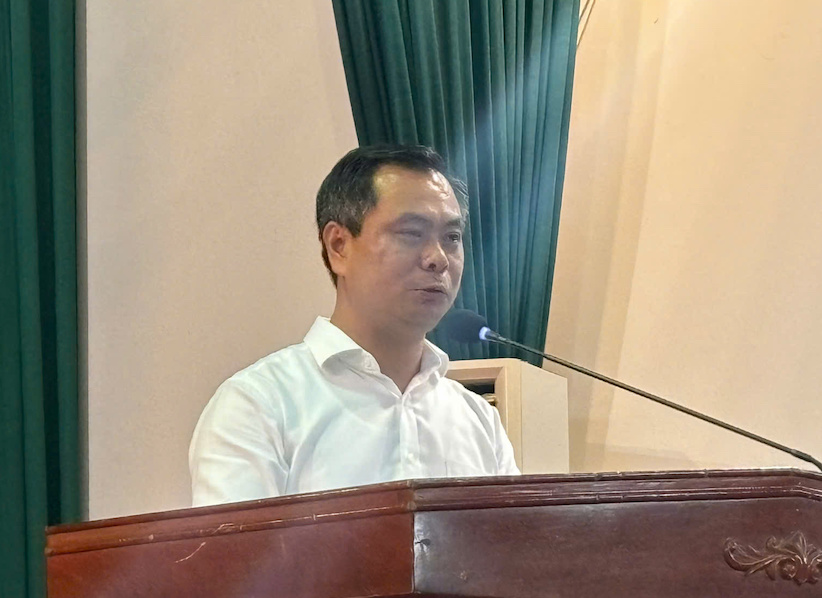
On December 1, in front of students, the school principal affirmed that the incident was just "lack of timetable, misunderstanding".
But in reality, he and two subordinates were arrested on charges of abusing their positions and powers while performing official duties, with specific violations related to paying students on the occasion of A80.
The above incident made me and many people both sad and angry: saddened that the trust of learners was eroded, angry because some places turned fees and sponsorships into "dark areas" that could easily be abused.
When the school makes vague announcements, internal documents are difficult to access, and dialogues are "in accordance with the correct process" but lacking real debate, students are likely to fall into a "listen - pay - accept", only when frustration bursts out on social networks.
Social networks sometimes help create transparent pressure but are also a risky choice because information is easily distorted, easily sensitive, easily turning learners into "communication victims" instead of legal entities with evidence and complaint procedures. The sad thing is that in many dialogues, students lack information about issues of concern to school life as well as contributions or benefits that are not clear, easy to access, and the results of the dialogue between the school and students are only formal.
In fact, access to policy information in universities is currently very uneven. Some schools do well, as shown through the disclosure of tuition fees, services, processes, and response points and feedback mechanisms. However, there are also many places that "publicly allow" when the term is confusing, lacking a summary table for each course, each clause, each legal basis, especially fees such as English entrance exam fees for class classification (this is purely a pedagogical activity, the ability to assess the class also requires paying hundreds of thousands of VND), uniforms, textbooks, internships for businesses, allowances/supporting costs...
When students do not have a firm grasp of the regulations, the consequence is not only the loss of rights but more importantly, they lose their right to choose, lose the ability to negotiate and are easily led by the mentality of "if anyone pays, I pay".
On the part of learners, the provisions of the law do not put students in the role of "passive feepayers" but have the right to provide information and participate in supervising educational activities. The Law on Higher Education clearly states that learners are provided with full information and have the right to contributing opinions, participating in managing and supervising quality assurance conditions. Therefore, my advice is: Students should practice the habit of properly requesting - requesting the legal basis on fees, scholarships/subsidy/receitment, save official notices, ask via email channel/service portal (to have a trace), follow the class/faculty representative group and prioritize the internal complaint and recommendation process before posting online.
On the school side, it is necessary to take specific actions, turning dialogue into a place for decision-making based on data, so that students can speak with evidence and the school can respond responsibly without letting students speculate and post it on social networks. If we do not want to "flash fire into fire", we must consider transparency as a system, not a " discount" by publicizing a single summary of all fees related to learners; announcing the same admission/ first-time; having a deadline for knowing in advance to respond to recommendations; having a dialogue with minutes, monitoring the implementation; and most importantly, explaining.
The Law on Education affirms that learners have the right to be respected, treated equally and provided with information, as well as the right to participate through the organization representing learners reflecting the needs and desires of students and the school responds in the spirit of: "Taking learners as the center" ... taking "people as the root to serve".
In order for the above policy to not be simply a " wall hanging" slogan, but a management philosophy, each school must build a mechanism to protect students' rights with a smooth "stream" of information: Publicity is easy to understand, dialogue is actually in minutes and at the beginning of work, there are focal points to receive feedback, response deadlines, and protect the reflector from being bullied.
At the same time, benefits only last when they come with responsibilities. Students need to live and work according to the law, know how to read - understand - record words, ask questions in the right place, reflect well, respect the truth and respect the process; do not be indifferent when their rights are violated, but do not act sensatively and excessively, sometimes speculate without a basis to rush to submit to social housing, causing unpredictable consequences.
When schools consider transparency as culture and students consider the law as "civil skill", new confidence will be maintained, and small "fire spots" will no longer have the opportunity to become "fire spots". I would like to emphasize that the lack of transparency and information for students at Hanoi College of Tourism is not a single issue but is quite popular and needs to be corrected.


