
Low income, artists struggle to stick with the profession
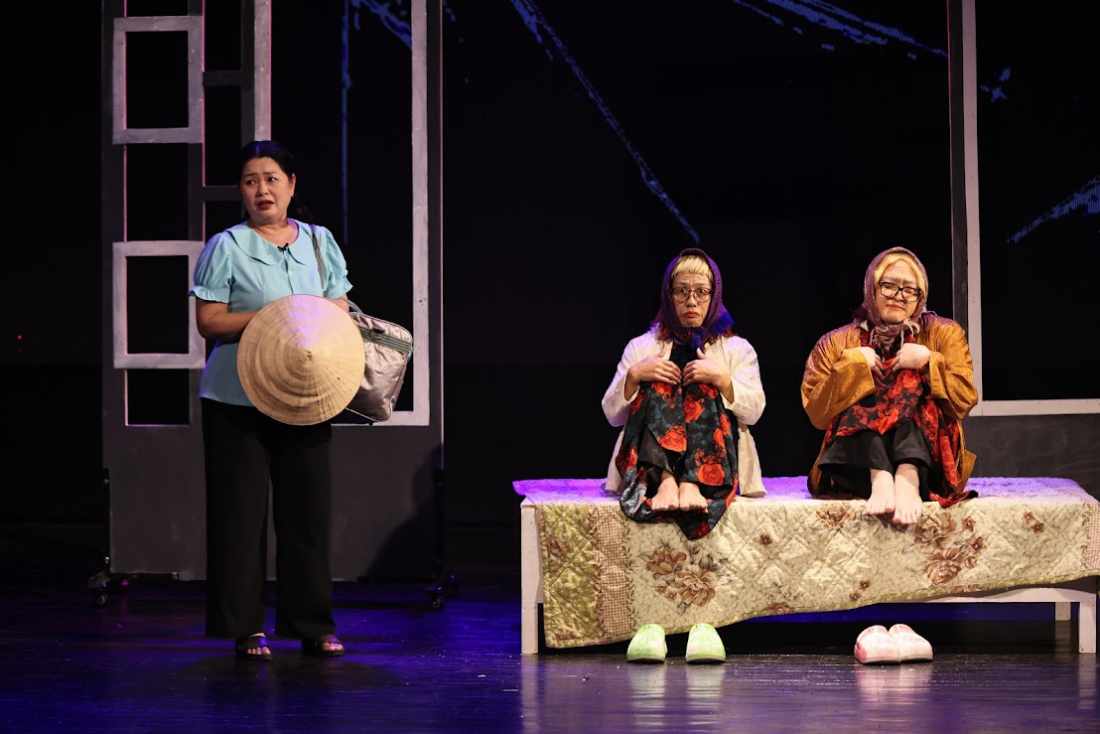
At the Youth Theater, the popular cat-xe for a main role is only about 150,000 - 200,000 VND per night, while supporting roles only receive 70,000 - 80,000 VND. This number has existed for many years, despite the fluctuations of the entertainment market.
Meritorious Artist Chi Trung once frankly shared: "Successful friends like Thu Quynh, Thanh Son, no matter where they are stars, when they return to the theater, they still receive a cat-xe of 150,000 VND/performance. Many young students when applying for jobs at the theater, I say to them: If you come to the stage to get rich, to seek wealth, I advise you to change jobs. At the theater, I can only give you aspirations, love for art, and opportunities to develop yourself".
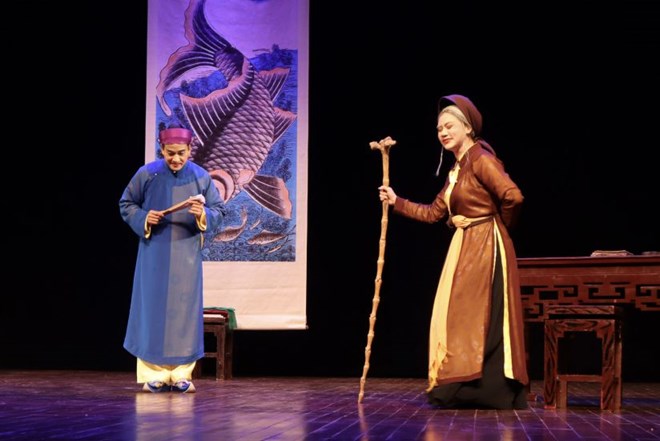
Not only spoken drama, traditional forms such as Cheo, Tuong, and Cai Luong also face a similar situation. A play can mobilize 40-45 people, from actors to backstage. The allowance for each performance is divided into smaller portions, main actors about 200,000 VND, supporting roles 160,000 VND, extras 120,000 VND and the logistics department only about 80,000 VND. With low performance frequency, total income from the stage is not enough to ensure minimum living standards.
Meanwhile, the cost of staging is high. With Tuong art, costumes alone are a big "burden". A set of martial arts armor costs 50-60 million VND, a hat costs more than 3 million VND, and a shoe costs about 3 million VND. Limited funding forces units to take advantage of old costumes, reuse them through many plays, affecting the quality of art and the ability to refresh products.
People's Artist Le Tuan Cuong - Deputy Director in charge of the Vietnam National Traditional Theater - said: "Now actor contracts only get 3 - 5 million VND/month, you don't have enough money to rent a house. Training an actor to graduate takes 4 years, coming here we will continue training for another 4 years to be able to work.
With a long training period and high skill requirements, this income level makes the theater profession less attractive to young people.
In the field of Cheo, People's Artist Thanh Ngoan pointed out that reality is even more difficult. She said that very few artists can both maintain their passion and ensure their lives: "It can be said on the fingers of one hand that those who both nurture their passion and ensure their lives. Like myself, 44 years in the profession, retiring with a salary of about 10 million VND, it is very difficult to keep up with current social costs. Not only artists are working, even those who have retired also face financial difficulties".
The low income situation forces many artists to seek external sources of income. Many people participate in television dramas, advertisements or do other jobs to maintain their lives. Some Cheo and Cai Luong artists try to find opportunities on digital platforms, build personal channels, but the number of successful cases is not large. This leads to the reality that the theater is no longer the main source of income, but only for maintaining the profession.
The direct consequence is the shortage of successor forces. Many students graduating from art schools do not choose to stick with the stage, even if they have talent. Those who stay mostly rely on passion, but in conditions of prolonged low income, maintaining creative motivation also faces many limitations.
In addition, the issue of audiences also has a reverse impact on the lives of artists. When the number of audiences decreases, the number of performances decreases, and income is further narrowed.
Improving income for artists
From a management perspective, Mr. Nguyen Si Tien - Director of the Youth Theater said that policies on salaries and remuneration are being studied for adjustment. He said: "It is expected that in the near future, the income of artists may increase from 1.5 to 2 times compared to the present. This is an important factor to help them feel secure in creating, contributing and long-term commitment to the profession.
The Youth Theater also implemented many solutions to expand the audience market. In 2025, the unit organized 186 performances, serving more than 56,000 spectators, with revenue reaching over 13.7 billion VND. This is proof that if there is a suitable strategy, the theater can still create economic value, contributing to improving income for artists.
However, solutions from the unit are only supplementary. The core issue still lies in mechanisms and policies. NSND Thanh Ngoan believes that there needs to be in-depth and long-term investment in culture, otherwise there will be a risk of "bleeding" of human resources.
Besides income, artists also want to have a stable creative environment, more performance opportunities and better working conditions. These are factors associated with the quality of art products and the ability to attract audiences. When conditions are sufficient, artists can not only maintain their profession but also develop and enhance the value of traditional forms.
Another issue raised is human resource training and use. Managers believe that there should be policies to attract young people, while creating mechanisms for artists to develop their careers in the long term. If this problem is not solved, the preservation and development of traditional art will face many difficulties in the future. Increasing income, perfecting mechanisms and expanding the audience market are closely linked factors.
When artists can live by their profession, they will have conditions to wholeheartedly dedicate themselves to creativity. When art products are improved in quality, the theater will have the ability to attract the public. And then, culture will truly become an endogenous resource, contributing to socio-economic development as the goal has been set.


