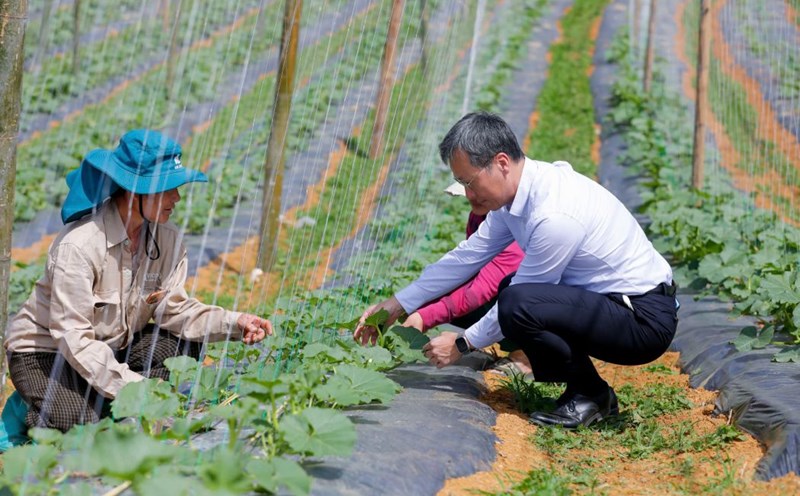
The cheerful sound and laughter are bustling. In that space, Mr. Nguyen Xuan Thao (born in 1962) - a sunny, tall man with rough bottle hands still enthusiastically walks along each row of trees, as if chatting with his "children" Arabica. From the coffee beds, he wrote a story that made farmers here lift their heads high, and Son La coffee beans found a place on the world map.
From worries to bold decisions
About 70 years ago, Arabica coffee - a world-famous sweet coffee variety was brought back by the French to be grown in Son La. Later, coffee trees were considered a poverty reduction plant for ethnic minorities here. The steep hills, cool climate, ideal altitude... were all created to nurture this plant. However, for decades, "black gold" here has been sold at cheap prices, dependent on traders, and almost no one knows its name.
Mr. Nguyen Xuan Thao, who has been involved in coffee since the 1990s, has witnessed everything: From sowing seeds, fertilizing to harvesting, then sadly seeing each bag of raw coffee leave the village at a price that is not enough to compensate. "If it continues like this, coffee growers will not be able to get well forever," Mr. Thao told himself.
In 2017, the " northern coffee tycoon" issued a decision that many people at that time considered a "dwarf": Lined with 11 households in Hoang Van Thu village, established Bich Thao Coffee Cooperative with an initial coffee growing area of 50 hectares. He is the Director and also the "head of the technical department" for the people. The initial orientation was clearly established: Not chasing quantity, only pursuing quality - the cooperative focuses on organic farming and deep processing of specialty coffee varieties, adapting to climate change.
laying the foundation with international quality and standards
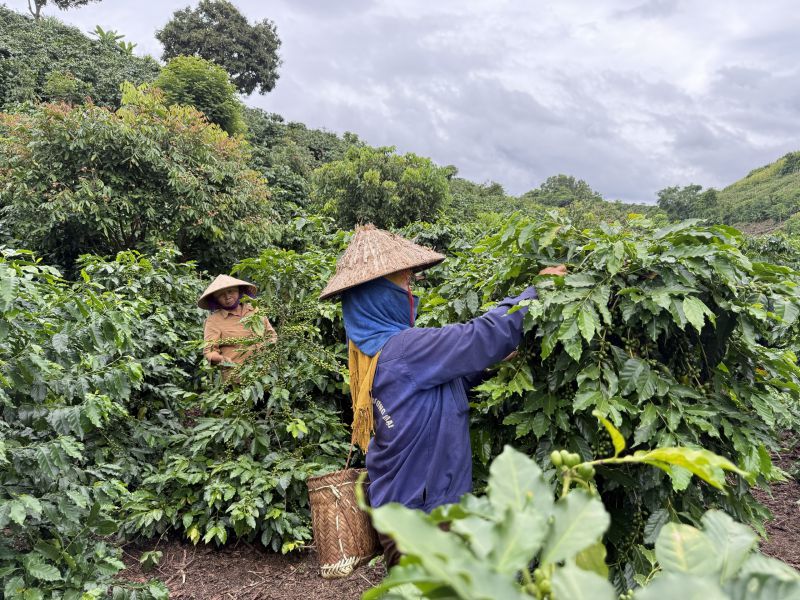
Right from the first crops, the cooperative applied VietGAP, UTZ processes, organic farming and marking each plot of land to trace the origin. Each harvested coffee fruit must be 100% ripe and red. This method goes against the habit of picking both green and ripe fruits of many farming households, but it is the "passport" for Bich Thao coffee to enter the global playground. Thanks to that, although Son La only has about 30,000 hectares of Arabica coffee, the output is only 5% of the total coffee output of the country, the Arabica coffee area is currently the leading in the country.
This effort was soon recognized: Bich Thao Coffee Cooperative became one of the first 6 units in Son La to be granted the right to use the geographical indication "Son La Coffee" for powdered coffee, bean roast coffee and green coffee products. And is also the first cooperative in the province to have a product certified with a 5-star OCOP. To date, the cooperative has cooperated with 800 households, growing 1,500 hectares of specialty coffee.
Not stopping at cultivation standards, Mr. Thao also seeks new processing directions. One of the turning points is the application of the "honey process" processing method, which is famous in Central America. This method does not use washing water, coffee berries after harvest are enzyme- flavored, dried in greenhouses, retain the natural sweet mucus layer, creating a characteristic honey flavor. All raw materials are processed at a modern factory with a closed line transferred from Germany, with a capacity of about 60 - 80 tons of coffee per day, according to ISO 22000:2018 standards.
In particular, the cooperative produces according to the circular economy model, making the most of by-products: Coffee fruit shells are processed into tea or composted as fertilizer for plants. In 2026, the cooperative plans to launch a cold-dried coffee beverage product, aiming to meet OCOP standards, expanding the line of high-end products to the international market.
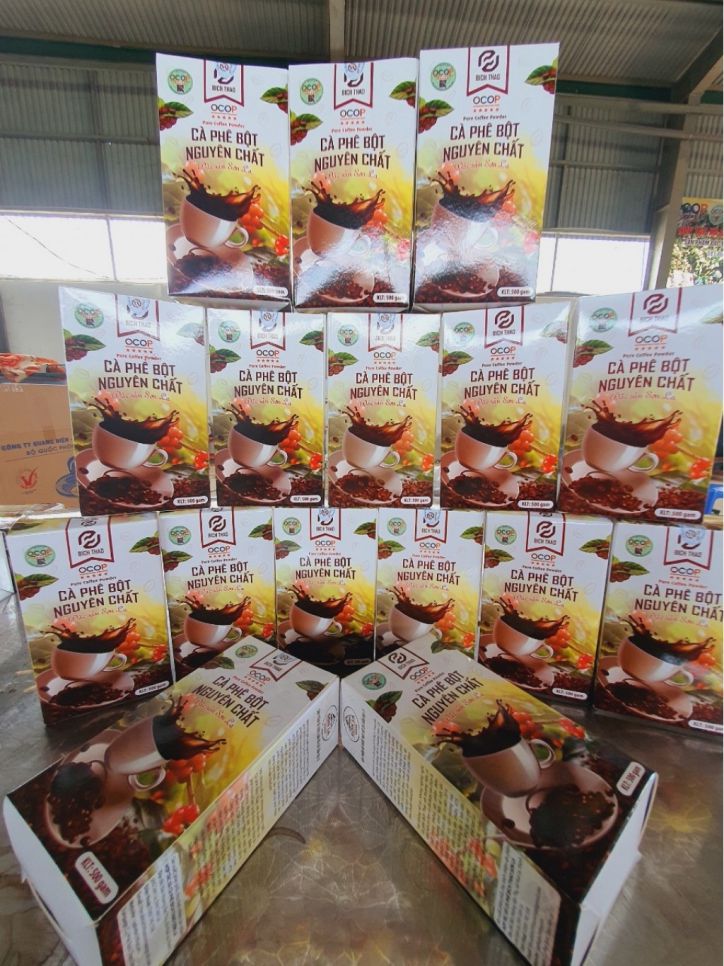
Sowing seeds today, reaping sweet apricots later
When the quality was proven, Bich Thao Coffee Cooperative began to conquer the international market. They carefully researched each coffee standard and culture of importing countries, built 54 processing and fermentation areas according to specific standards for each market.
Careful research on coffee culture has helped export 97% of the cooperative's specialty coffee output to 24 countries, including Germany, France, the US, Japan...; at prices from 230,000 - 270,000 VND/kg - many times higher than raw coffee. Revenue in 2024 will reach over 40 billion VND, and from the beginning of 2025 to now, this figure has exceeded the 40 billion VND mark. The cooperative is creating stable jobs for 50 - 60 workers, mainly Muong and Thai people, with an average income of over 10 million VND/month.
Mr. Nguyen Son Tung, technical officer of the cooperative, said: "Here, the production process is very strict. Fertilizer is only spread after rain, when the soil is humid enough, and must be spread evenly around the canopy. When harvesting, only pick the red ripe fruit, absolutely do not strip the whole branch. Thanks to the correct process, the trees are strong, the seeds are of good quality, the selling price is also higher, so the effort is worth it".
Bich Thao Coffee Cooperative is not only a pioneer in raising the value of Arabica Son La, but also a model of sustainable production and circular economy. This model needs to be replicated so that Son La farmers not only sell coffee but also sell cultural, environmental and brand values, said Mr. Vuong Van Hai - Chairman of Son La Coffee Association.
After 8 years, Bich Thao Coffee Cooperative has become a bright spot in the Son La coffee industry. But for Mr. Thao, the greatest achievement is not just the numbers, but the fact that people have believed in and followed a sustainable production process, increasing the value of coffee trees.
In mid-October, on the green coffee hills of Bich Thao Coffee Cooperative, the sound of laughter blends with the bustling sound of whirring. Mr. Thao slowly walked along the coffee beds. In his eyes, belief in Son La coffee beans is not only a story of the crop, but also a dream of a hometown brand reaching out to the world, bringing the flavor of the Northwest sky and the pride of persistent farmers.