
When AI music enters the charts
Music created by artificial intelligence (AI) is no longer a matter of the future. About a dozen AI songs have appeared on various Billboard charts since 2022. Many products are created by Suno - an AI music application that uses models built from millions of songs composed and performed by humans.
The appearance of these songs raises a question: If computers can create a complete song, what part of the work still belongs to the artist?
For those who oppose it, the problem is not how good AI makes music. Dave Lee - Bloomberg Opinion writer believes that music is created entirely by commands, instead of talent and experience, which is unacceptable. In particular, he reacted when such songs are algorithmically put into playlists without listeners knowing their origin.
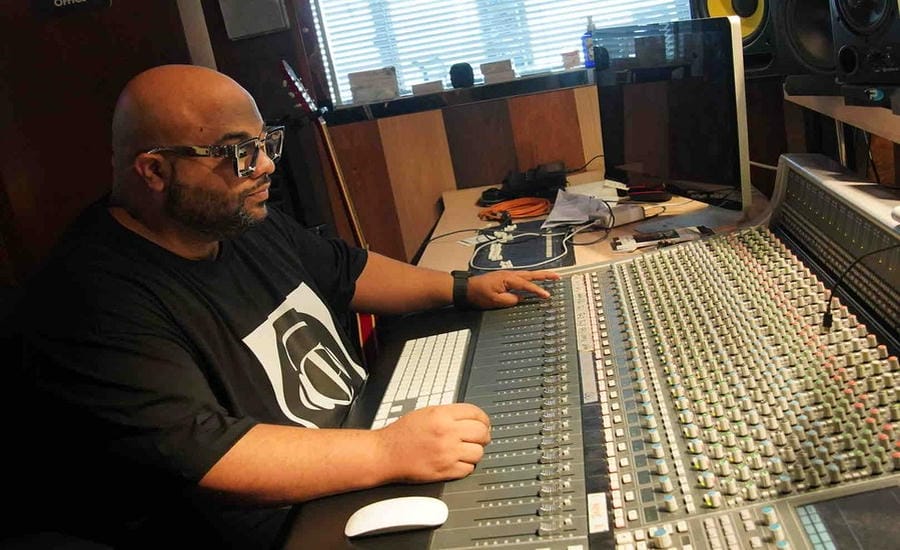
However, some famous figures in the music scene consider AI a great opportunity. The icon of Hip-Hop music, artist Dr Dre calls it "a new tool for creativity". While musician Bjorn Ulvaeus, former member of the ABBA band, once said that AI is like an extension of the mind, helping him quickly visualize how a composition will resonate with a large orchestra.
The boundary is therefore not simply AI or people. A musician who uses AI to try harmony and create demo versions is still the one who decides the work. But a song created almost entirely by machine and then put directly on the platform to make money is another story.
Cheaper music, music makers under pressure
In Singapore, some studios recorded project budget reductions of 10 - 40%, exceptionally up to 60%, while opportunities for freelancers in the music field decreased by about 20 - 30%. Donny Pereira - CEO of music production company plusONE said that some projects have reduced budgets by up to 60% in the past 2-3 years, despite increasing content volume. AI allows customers to create their own music and vocal drafts, thereby putting pressure on production costs.
However, AI is not just an alternative tool. At Zynth Studios, this technology is used to develop ideas, experiment with harmony, create demos and support artists when they are stuck with ideas. Composer Muhammad Zahin Anwari believes that AI should be a supporting tool, instead of replacing the composing process.
In fact, customers still turn to humans because AI voices are often commented on as unnatural and unexpressive; AI music may be technically correct but may not necessarily create emotions. The paradox is that AI helps produce faster and cheaper, but human "touch" can become irreplaceable value.
Does the listener have the right to know?
A survey by Deezer-Ipsos conducted with 9,000 people in 8 countries showed that 97% of participants could not distinguish between songs created by AI and songs composed by humans. This shows that the problem is no longer whether listeners like AI music or not, but whether they know what they are listening to or not?
While listener recognition is limited, the scale of AI music is increasing very rapidly. The online music streaming platform Deezer said that the number of AI songs uploaded has exceeded 50,000 songs per day, equivalent to about one-third of the total amount of music uploaded to the platform.
Before this boom, platforms began to change policies. Tidal allows AI music to appear but requires labeling and does not allow making money with products created entirely or largely by AI. Spotify and Apple have also implemented labeling mechanisms, while the Australian Recording Industry Association (ARIA) has completely removed AI-generated music from their charts. ARIA's CEO - Annabelle Herd admitted that the context is changing rapidly but said: "A chart honoring unlicensed artificial intelligence products will weaken the very foundation of recorded music that we represent.
But AI music recognition is also not simple. Suno is researching technology solutions to help platforms identify product origins, in the context of increasing risks of mass production of AI songs to exploit copyright money.
Faced with the current situation of AI encroaching on music, a question arises: If input tasks such as making demo versions, sound editing or simple tasks are automated one after another, where will young people learn the profession from?
Pereira wondered: "No one can wake up one day and immediately become a master composer or sound designer, you need time to learn to accumulate experience and embark on art.
However, AI can also create a paradox: The more content is produced by machines, the more valuable human authenticity becomes.
Singaporean businesses realize that customers still need jobs based on developing artists, building brands, communities and human relationships. Culture, storytelling and artistic expression are still difficult-to-replace fields.
AI will certainly continue to be present in the recording studio. The issue is not whether to close the door to technology or not, but to set limits for technology to serve people instead of devaluing creative labor.
Perhaps the future of music is not AI or humans, but AI and humans. And in a world where machines are increasingly easy to create sounds, the most difficult thing to copy may still be a real experiential life.
What do listeners think about AI music?
A Deezer-Ipsos survey conducted on 9,000 people in 8 countries, announced at the end of 2025, showed that: 73% of respondents want to be notified when AI songs are proposed; 45% want to have AI music filtering tools and 40% say they will ignore songs identified as AI-generated. The survey shows that the public does not completely oppose technology, but demands transparency about the origin of products.


