
Fully complete the cycle of democratic practice: from participation to supervision and enjoyment
The 13th Congress upheld the motto "people know, people discuss, people do, people check", thereby emphasizing the people's right to participate in the process of organizing the implementation of guidelines and policies. However, in practice, the practice of democracy in many places still shows formality; the people's right to participate is not always accompanied by effective supervision and ensuring fair enjoyment of development achievements.
The 14th Congress has developed this orientation to a new step when clearly adding the content "people supervise, people benefit", thereby completing the cycle of practicing democracy in a more complete and substantive way. This addition affirms that the people's right to mastery does not stop at participation, but must be ensured by a mechanism of supervision, control of power and specific accountability; at the same time, the achievements of development must be distributed fairly, linking democracy with social justice and social progress.
Expanding and institutionalize space for people to participate in policy planning, criticism and supervision
The 13th Congress raised the issue of promoting the role of the People in building the Party, building the government and participating in social management. The 14th Congress developed this orientation in a clearer and stronger direction when emphasizing the requirement to build appropriate, convenient and reliable mechanisms for the People to participate in giving opinions on the process of formulating guidelines, policies and deciding on major and important issues of the country.
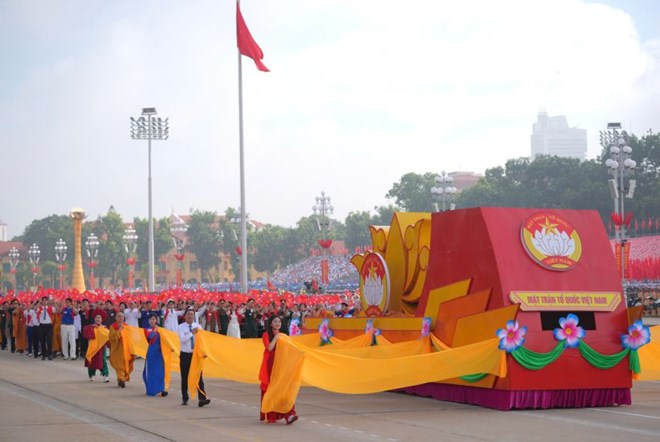
A prominent development point is the shift in approach: from mainly "taking people's opinions" to promoting the accountability of Party and State agencies before the people; from formal social consultation to practical policy companionship. This requires competent subjects not only to listen, but also to have the responsibility to receive, respond and publicly explain the recommendations and proposals of the people.
Compared to the 13th National Congress, this is a development step suitable to the requirements of modern national governance, contributing to improving the quality of policy decisions, consolidating social consensus and strengthening the political trust of the People in the Party and the State.
Resolution of the XIV Congress continues to affirm that national unity is a precious tradition, a great source of strength for the Vietnamese revolution, but the new point is not in the way it is expressed, but in the vision and development implications. National unity is not only considered a "backing point" to maintain political and social stability, but is also identified as a prerequisite to open, lead and ensure the success of a new stage of development, when the country faces the requirements of rapid and sustainable development, deep international integration and increasingly fierce strategic competition.
Shifting the focus from "unity to overcome difficulties" to "unity to build development
A new development content, with a clear shift in thinking in the Resolution of the 14th Congress, is the shift from the logic of "unity to overcome difficulties" to the logic of "unity to build development". The 13th Party Congress was held in the context of the country and the world being heavily affected by the Covid-19 pandemic, so great unity is emphasized in the aspect of mobilizing the strength of the entire people to respond to crises, protect people's lives and maintain social stability.
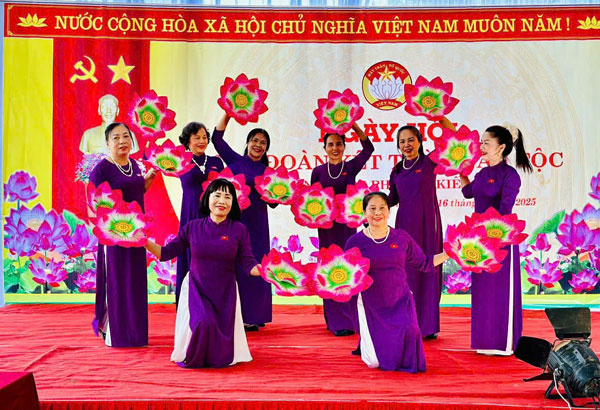
Stepping into the 14th Congress, the context has undergone fundamental changes. The country is moving into a new stage of development with many intertwined opportunities and challenges. In that context, great unity is no longer mainly placed in the "response" or "overcome" mindset, but is identified as a core internal driving force to create development, promote innovation, improve the quality of growth and sustainable development.
The new point here is that the 14th Congress recognizes great unity as a resource for development that can be managed, associated with promoting the subjective role of the People, arousing the aspiration to contribute, the spirit of social responsibility and the will to rise up of the entire nation. The viewpoint in the Resolution of the 14th Congress is important in the Party's theoretical thinking: from unity to "overcome" to unity to "break through", "rise up", creating a foundation for long-term development.
Linking the promotion of great unity with building a clean and strong Party
A new development point of special significance in the Resolution of the 14th National Congress is the clearer emphasis on the organic relationship, interaction between promoting the great national unity and building and rectifying a clean and strong Party. The Resolution affirms: maintaining unity and solidarity within the Party is an important basis for consolidating the great national unity bloc.
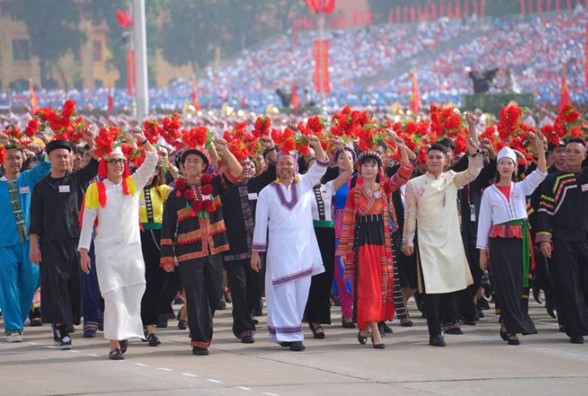
This is a step forward in awareness, clearly showing the Party's thinking: great unity cannot be sustainable if it is not placed on the foundation of a clean and strong ruling Party, saying and doing, trusted and supported by the people.
Linking great unity with social security and inclusive development, leaving no one behind
Another new development content in the Resolution of the XIV Congress is placing the promotion of great national unity in close relationship with ensuring social security, progress and social justice. Great unity is not only considered a political goal, but also a direct result of caring for the material and spiritual life of the People.
The outstanding new point is the emphasis on the requirement not to leave anyone behind, considering this an important social foundation to maintain consensus and long-term solidarity. In the context of developing a socialist-oriented market economy, if the gap between rich and poor, regional disparities and social inequality are not well resolved, the great national unity bloc will be directly affected.
Great national unity is like a social resource that can be organized, mobilized and transformed into development power.
A new development point that is comprehensive in the Resolution of the 14th Congress is the approach of great unity as a social resource that can be organized, mobilized and transformed into a substantive development power. This is a development compared to the previous approach, when great unity was mainly viewed in the spiritual, political - social aspect.
The 14th Congress set out the requirement to have appropriate mechanisms, policies and methods to turn the strength of solidarity into a specific driving force for development, associated with innovation, economic development, ensuring social security and improving the country's self-reliance capacity. This reflects the maturity in the Party's national governance thinking, in line with development requirements in the new era.
Enhancing the core political role of the Vietnam Fatherland Front and socio-political organizations in practicing democracy and building social consensus
The 13th Party Congress clearly identified the role of the Vietnam Fatherland Front as a political alliance, a voluntary union of socio-political organizations, social organizations and people from all walks of life, playing an important role in gathering and mobilizing the people, promoting the tradition of great national unity; participating in building the Party and building the State; implementing social supervision and criticism according to regulations. The focus of the 13th Congress's approach is to consolidate the role of gathering forces, promoting the strength of solidarity, strengthening the close relationship between the Party, the State and the people, meeting the requirements of political and social stability in the context of many difficulties and challenges.
On that basis, the 14th Congress developed this orientation to a new, more comprehensive and substantive step, when emphasizing the requirement to continue to strongly innovate the content and methods of operation of the Vietnam Fatherland Front and socio-political organizations, considering them as the core political force in practicing socialist democracy and building social consensus. An important development point is the shift from the main approach of considering the Front as the subject of mobilizing and gathering the People to clearly defining the role of creating and leading social consensus in the new conditions.
Accordingly, the Front must not only stop at representing and protecting the legitimate and lawful rights and interests of the People, but must also perform that role in a more substantive, proactive and effective way; not only participate in supervision and social criticism according to procedures, but must improve the quality, depth and political weight of supervision and criticism activities; not only grasp public opinion, but also proactively orient and guide public opinion, contributing to consolidating trust, strengthening the bond between the Party and the State with the People and building a solid people's hearts battle.
The orientation of the 14th Congress has elevated the role of the Vietnam Fatherland Front from an important subject in mobilizing and gathering the masses to become a center for connecting, harmonizing interests and creating social consensus, in line with the requirements of promoting socialist democracy and national unity in the new development context of the country.
Orientation for building the Great National Unity Strategy to 2035, vision to 2045
A breakthrough new point in the major orientations of the 14th Congress is the requirement to build a Great National Unity Strategy with a medium and long-term vision. This is the first time the issue of great national unity has been approached in a strategic, methodical and systematic way, commensurate with its decisive role in the sustainable development of the country.
Compared to the 13th Congress, this orientation shows a shift from mainly emphasizing great unity as a policy, an action motto to considering great unity as a field that needs to be researched, summarized, institutionalized and organized for implementation with specific strategies, goals, roadmaps and synchronous solutions. This is an important basis for long-term promoting the strength of the People and the great national unity bloc in the cause of building and protecting the Fatherland in the new era.
It can be affirmed that the guiding viewpoints and major orientations of the 14th National Congress on promoting the strength of great national unity have shown a new, profound and comprehensive development step in the Party's theoretical thinking as well as the art of ruling. The overarching highlight is the strong shift from considering great unity mainly as a spiritual resource to establishing great unity as a strategic resource - a comprehensive social resource that can be organized, mobilized and transformed into substantive development strength. On that basis, the 14th National Congress emphasized the requirement to complete the cycle of full democratic practice, expand the space for the People to participate in planning, criticism, and policy supervision; linking democracy with discipline, responsibility, national interests - ethnicity; at the same time, placing great unity in a unified whole with building a socialist rule-of-law state, controlling power and modern national governance.
In particular, the clear identification of the core political role of the Vietnam Fatherland Front and socio-political organizations in practicing democracy and creating social consensus; and the orientation of building the Great National Unity Strategy to 2035, with a vision to 2045, have shown the long-term, methodical and breakthrough vision of the 14th National Congress. This is an important basis to consolidate the people's trust in the Party and State, nurture the "glue" of social consensus, build a sustainable people's heart battle, and create a decisive foundation for the country to develop rapidly, sustainably and firmly protect the Fatherland in the new era - the era of the Vietnamese nation's rise.


