
On March 19, the Kon Ka Kinh National Park Management Board said that in 2025, specialized forest protection forces discovered 6 cases of violations of forestry law.
Among them, there were 5 violations of general regulations on forest protection and 1 case of illegally hiding forest products. Seized exhibits included 6 air guns firing lead bullets, 3 alcohol guns, 333 lead bullets and 0,664 m3 of sawn timber; and arrested 1 related subject.
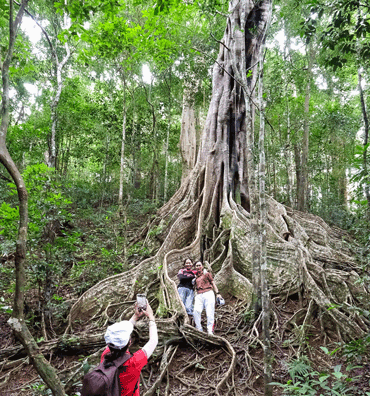
Kon Ka Kinh National Park is known as the "green lung" of the Central Highlands and South Central Coast, home to many rare flora and fauna.
In 2025, the unit received, rescued and re-released 300 forest animal individuals to the natural environment. Along with that, nearly 19,000 hectares of forest were contracted to protect 29 household groups in 18 buffer zone village communities, contributing to improving the efficiency of forest management, protection and development.
Gia Lai Provincial Party Secretary Thai Dai Ngoc affirmed that Kon Ka Kinh National Park plays a particularly important role in nature conservation, biodiversity, environmental protection, water resource regulation, scientific research and ecotourism development of the province.
It is also the core area of the Kon Ha Nung Plateau World Biosphere Reserve. This is a natural asset of strategic significance for the province, the Central Highlands region and the whole country.
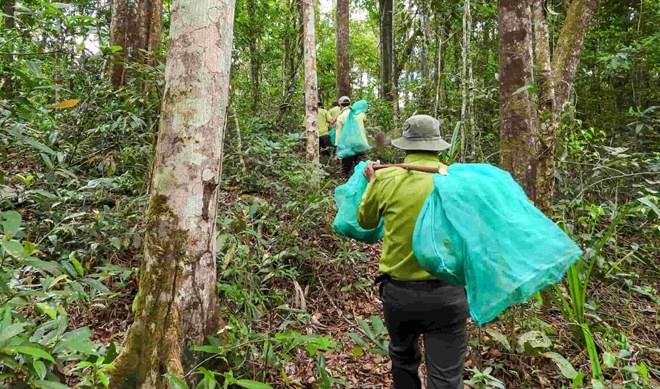
Recognizing the efforts of the Garden Management Board in difficult conditions, Gia Lai Provincial Party Secretary emphasized the consistent viewpoint of putting conservation as the top priority, not trading the environment and natural forest for growth.
The development of ecotourism must be in a systematic, controlled direction, promoting the unique values of ecosystems, scientific research, environmental education and indigenous culture.
In the coming time, Kon Ka Kinh National Park orients its development according to a model of conservation associated with rescue, restoration, scientific research, environmental education, ecotourism and sustainable livelihoods for buffer zone communities.


