
Starting from emotions and reflections on traditional Vietnamese dishes, and the desire to preserve traditional dishes on Vietnamese meals, 3 authors including Chef Nguyen Manh Hung, journalist Pham Trung Tuyen and writer Nguyen Hoang Dieu Thuy together created a special photo book called "Dishes that nurture us".
Dishes always carry a lot of memories, so the book not only presents images and traditional dish recipes, but each dish also goes along with a nostalgic past story, although very private of the authors, but gives us an image of a space and time with historical and cultural characteristics.
We not only eat, we also hear the food tell stories. When we eat, we not only feel the taste, the texture of the food, look at its colors, but we also remember where we ate this dish, with whom, in what kind of space, whether we were sad or happy at that time, whether it was winter or summer...
Now everything is becoming modern, including eating habits. Imported dishes appear more often in daily meals, probably because of this that many young people today do not like or cannot eat traditional dishes that their grandparents and parents used to eat.
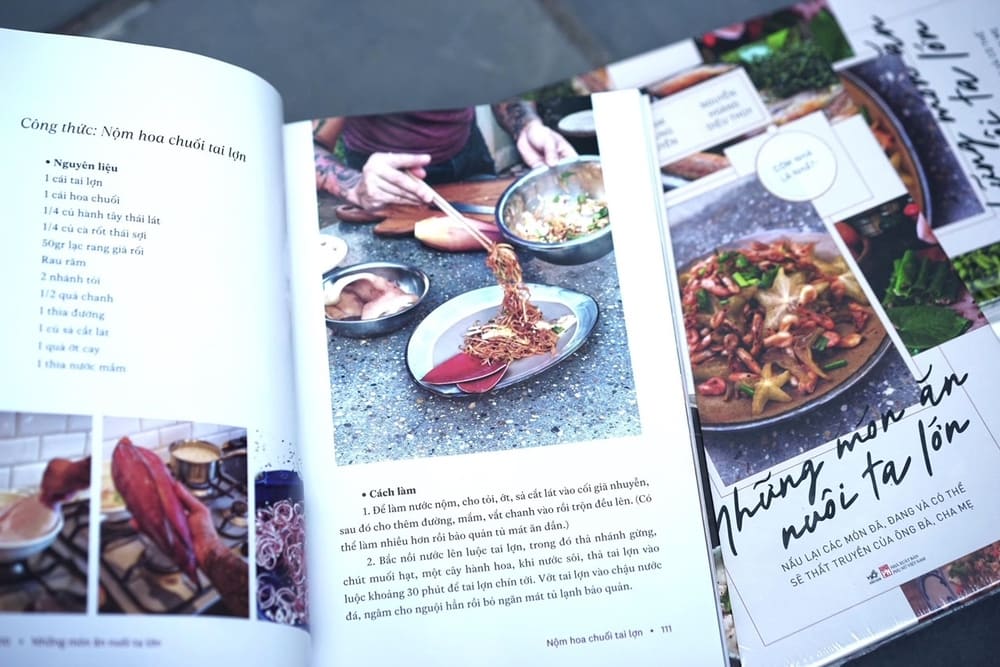
Starting from these emotions and reflections, the essays of Pham Trung Tuyen and Nguyen Hoang Dieu Thuy truthfully, emotionally and humorously recount memories of the dish. These are very personal stories, but because we were born and raised in a similar space, readers will surely see themselves faintly in it.
The book also presents recipes and images of attractive dishes by Chef Nguyen Manh Hung, showing the captivating and vivid atmosphere of cooking traditional dishes in a modern kitchen.
Readers may wonder, why are the dishes in the book so basic? But that is exactly what the authors aim for. In the book are extremely familiar dishes, nothing sophisticated, from a bowl of sweet vegetable soup, to rich roasted meat, to a plate of honey-brown braised fish or braised eel, from a bowl of sweet porridge to golden brown fried rice...
Therefore, when reading this book, readers can imagine the traditional meal of Vietnamese people, imagine the living space, living habits of Vietnamese people, with historical traces and cultural colors.
Vietnamese food depends on the weather, seasonal dishes, to maximize the quintessence of ingredients. Thanks to nature's gift, Vietnamese meals have a lot of green vegetables. Life attached to the fields has made crab, snail, fish, and shrimp dishes once account for the majority of family meals.
The days of famine made Vietnamese people very creative in storing food, in processing to maximize ingredients, and renewing familiar dishes. Vietnamese people have everyday dishes and snacks on leisurely days, forming a bustling community meal.
The brilliant and warm book "Foods that nurture us" wishes to preserve traditional dishes in Vietnamese meals, as a bond connecting us and our children and grandchildren with the past. It certainly also arouses inspiration for us to go to the kitchen to re-cook the dishes that grandparents and parents used to cook for us, which we often forget in this busy life. Return to basics, understand where we belong, know that we are Vietnamese.
Journalist Pham Trung Tuyen wrote: "Knowing how to cook and eat well wherever you live is a way to recognize Vietnamese people in the world of 8 billion people.
Writer Nguyen Hoang Dieu Thuy shared: "Before, eating only knew it was delicious, now eating is still reflecting simple philosophies deeply ingrained in hometown food, to feel more passionate about the old scent and taste. Now eating is understanding that we are recognized and beloved, is lingering nostalgia for memories in the kitchen, at the tray of rice, with loved ones, under a warm roof. Going far away to return is probably like that".
And this is what Chef Nguyen Manh Hung wants to say: "Childhood dishes always have a worthy place in the heart. This book aims to cook traditional dishes in a modern family space, so that everyone can practice. Thank you for reading the book, to come back with us to Vietnamese dishes, back to basics, to memories and emotions".


