
Understanding the "liver detoxification" and kidney cleansing trend correctly
Many people are always interested in drinks or methods to detoxify the liver and kidneys. However, Johns Hopkins Medicine Organization affirms: Products advertised as "liver detoxification" or "liver detoxification" have not yet been proven to have the ability to cleanse the liver or reverse damage caused by eating, drinking, and alcohol.
The most scientific way to protect the liver and kidneys is to maintain a reasonable weight, eat balanced, limit alcohol and control risk factors through the 5 food groups below.
5 familiar dishes to eat reasonably to protect the liver and kidneys
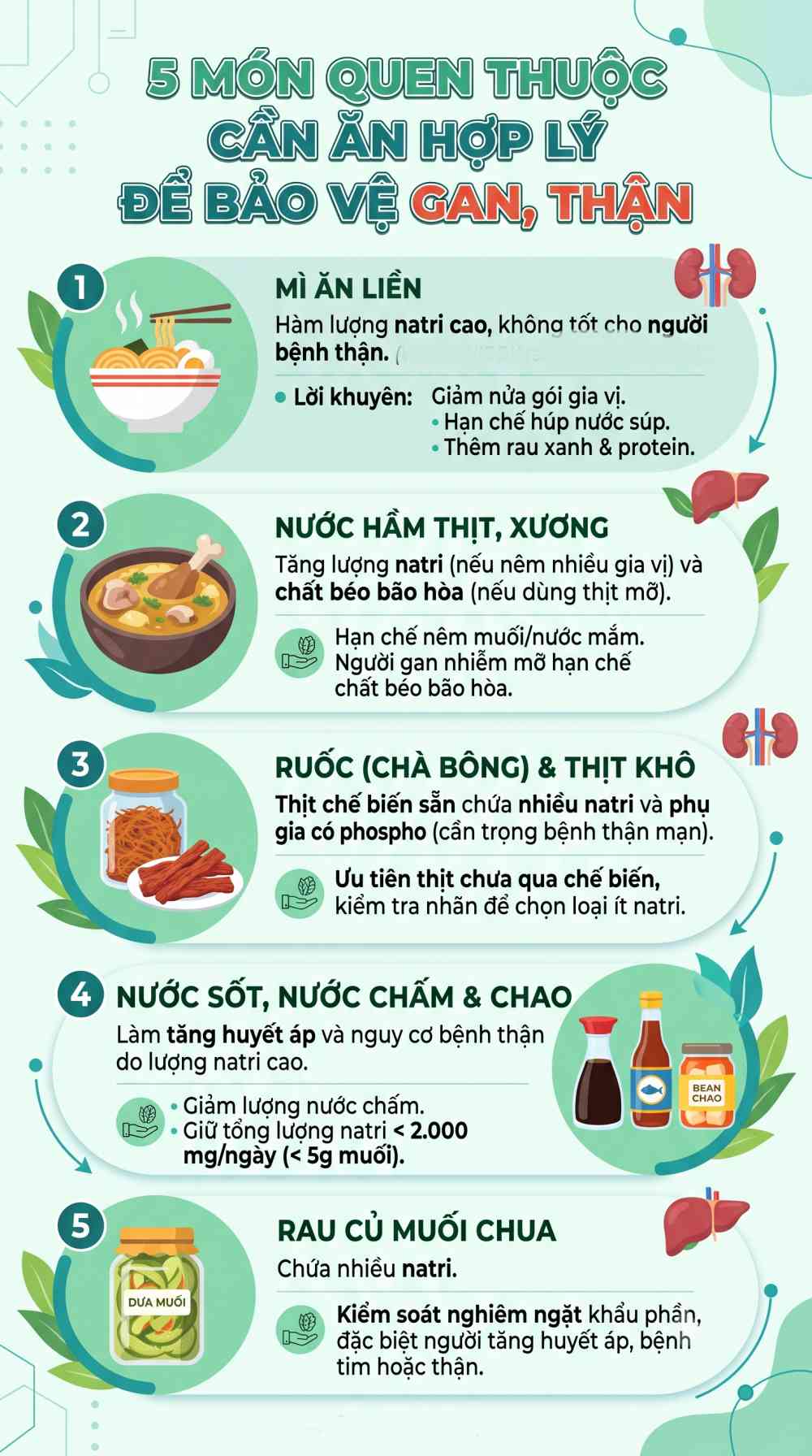
1. Instant noodles
Instant noodles are not foods that directly cause liver or kidney failure, but they belong to the group of processed foods with significant sodium content.
The National Institute of Diabetes, Digestive and Kidney Diseases (NIDDK) lists instant noodles as foods that may contain too much sodium for kidney patients. The World Health Organization (WHO) also recommends limiting these products.
When eating noodles, you should reduce half the amount of seasoning packages, limit sipping soup and supplement with green vegetables and protein to balance nutrition.
2. Stew with meat and bones
Broth if seasoned with too much salt, fish sauce, or soup balls will cause the total amount of sodium to spike. At the same time, if using too much fatty meat, the dish will provide a large amount of saturated fat. Nutrition experts recommend that people with fatty liver disease should limit saturated fat to protect liver function.
3. Pork floss and dried meat
The composition of pork floss and dried meat varies depending on the manufacturer, it cannot be confirmed that they all contain a lot of sugar, phosphate or preservatives.
However, this is a group of processed meats that often contain very high levels of sodium. People with kidney disease should prioritize fresh meat and always check labels to choose low-sodium products. In particular, people with chronic kidney disease need to be careful with phosphorus-containing additives commonly found in packaged foods.
4. Sauce, dipping sauce and chao
Soy sauce and some bottled sauces contribute greatly to many people's daily sodium consumption.
According to WHO, a high-sodium diet increases blood pressure, thereby leading to the risk of kidney disease. This organization recommends that adults should only consume less than 2,000 mg of sodium per day (equivalent to less than 5g of salt).
Therefore, take the initiative to reduce the amount of dipping sauce in meals, instead of relying on finding drinks that Liver and kidney detoxification after eating too salty.
5. Sour pickled vegetables
Pickled vegetables, pickled radishes and salted vegetables contain a lot of sodium.
People with a history of high blood pressure, heart disease, or kidney disease need to strictly control their portion sizes of this dish.
The information in the article is for reference only, not for medical diagnosis or treatment. You should talk directly to your doctor for accurate and appropriate advice to your health condition.
Q&A corner: Diet to protect the liver and kidneys
Is instant noodles a food that directly causes liver and kidney failure?
No. Instant noodles do not directly "destroy" or cause liver or kidney failure. However, they belong to the group of processed foods that contain very high levels of sodium, which may be one of the disadvantages for people with kidney disease.
Does eating a lot of pickled vegetables produce toxins that are harmful to the liver on their own?
Currently, there is no medical basis to confirm that the process of pickling vegetables normally produces aflatoxin toxin that is harmful to the liver. The main problem of pickled vegetables is that they contain a high sodium content, so people with high blood pressure, cardiovascular disease or kidney disease need to limit it.


