
Banh cuon is a familiar choice for breakfast, both soft and easy to eat. But does that "light stomach" mean not worrying about gaining weight?
Is banh cuon really "light" and does not cause weight gain as you think?
Banh cuon usually brings a light and light feeling thanks to the thin, soft cake layer, and not as greasy as fried dishes. The filling inside is usually minced meat, wood ear mushrooms, served with spring rolls and herbs, creating a harmonious overall, easy to eat without being greasy.
However, "light stomach" does not mean "low energy". The main ingredient of banh cuon is rice flour - a type of starch that is quickly absorbed. When it enters the body, this type of starch can increase blood sugar quite quickly, especially if you eat it in the morning on an empty stomach.
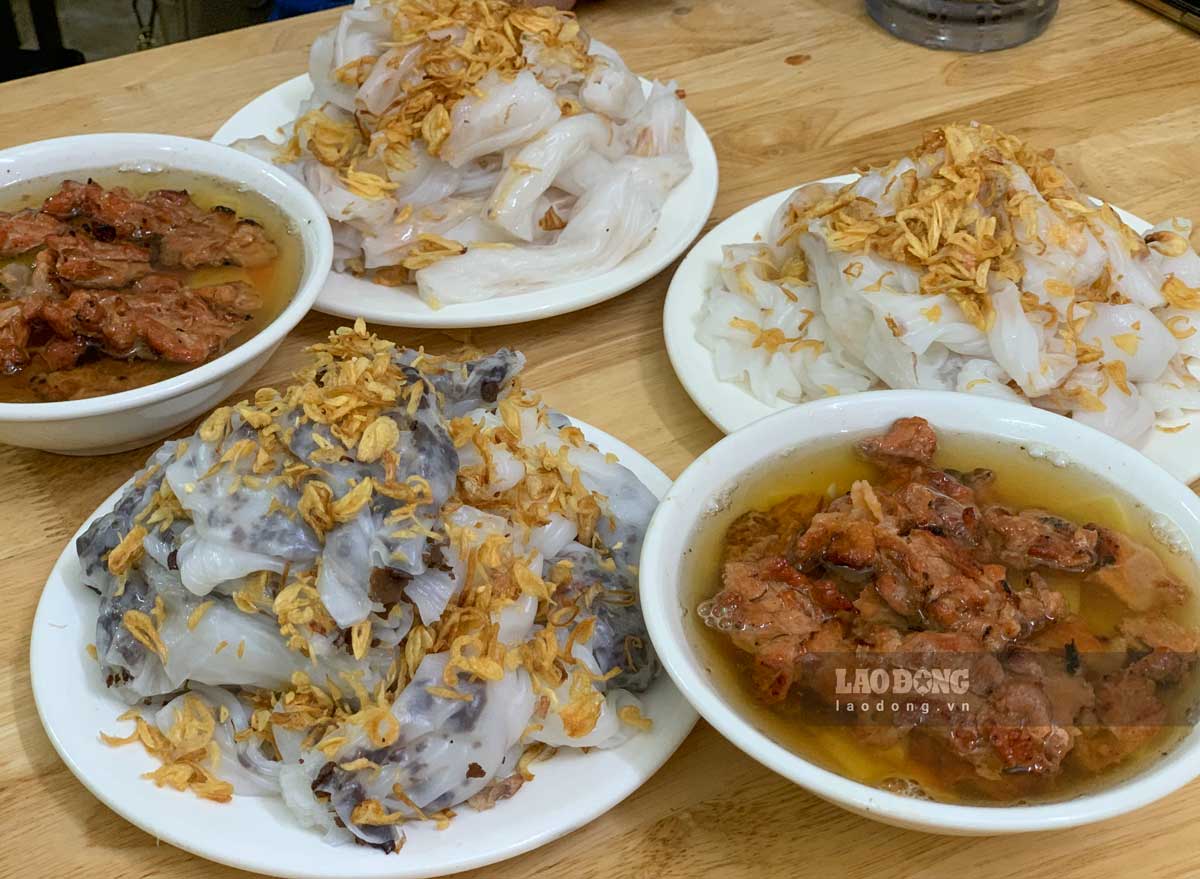
A full serving of banh cuon (including spring rolls, fried onions, fish sauce) can actually provide a not low amount of calories. If the portion is a bit "generous" or combined with many side dishes, the total energy consumed can be completely equal to a main meal.
In addition, dipping sauce is a small detail but easily overlooked. Mixed fish sauce often has added sugar, and when eating banh cuon, many people have a habit of dipping it quite thickly. This amount of sugar is not large in one meal, but if repeated regularly, it can still affect the weight. Therefore, the feeling of still feeling light in the stomach after eating is mainly due to the soft, thin texture of the dish, but does not accurately reflect the amount of energy you have consumed.
Is it easy to gain weight by eating banh cuon in the morning?
Weight gain does not come from a single dish, but depends on the total energy you consume throughout the day. Therefore, if you still control the overall calorie intake well, eating banh cuon in the morning is not a reason why you are prone to weight gain.
However, in terms of ingredients, eating banh cuon contains risk factors of excess energy consumption:
Lack of fiber and protein: Banh cuon mainly provides starch, quite lacking in fiber and protein if eaten in a traditional way. This imbalance makes you feel hungry faster after meals, thereby making it easier to eat extra meals or increase portion sizes in subsequent meals.
Rapidly increase blood sugar: Refined starch from rice flour can cause blood sugar to increase rapidly and then decrease rapidly, leading to cravings. If repeated regularly every morning, the risk of excess energy is unavoidable.
Hidden calories from side dishes: When combining banh cuon with lots of cha, fried onions or adding gio lua, the amount of fat and calories will increase significantly. At that time, breakfast that seems light can become a meal that exceeds energy needs.
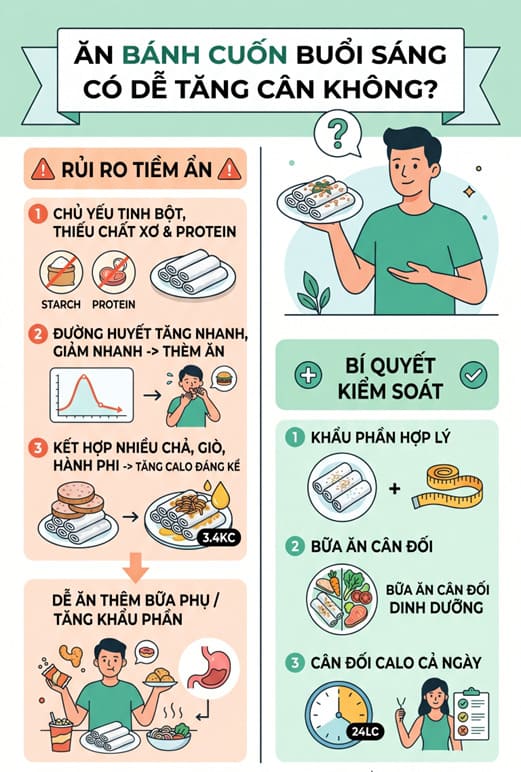
Conversely, if you keep your diet at a reasonable level and rebalance the remaining meals of the day, banh cuon can still be in the diet without directly leading to weight gain.
4 ways to eat banh cuon in the morning without worrying about gaining weight
To still be able to enjoy your favorite dish without putting pressure on your weight in the long run, apply the following principles:
Control your portion size and increase green vegetables: Instead of eating a large portion, you can reduce the amount of bread, and add more raw vegetables to eat with such as bean sprouts, lettuce, and herbs. Fiber from vegetables not only helps you feel full longer but also slows down the process of starch absorption, limiting rapid hunger.
Choose and control side dishes: Avoid adding too many spring rolls, pork sausage or fried onions - which are high in fat - which significantly increase the total energy of the meal. You should keep these dishes at a moderate level to balance protein.
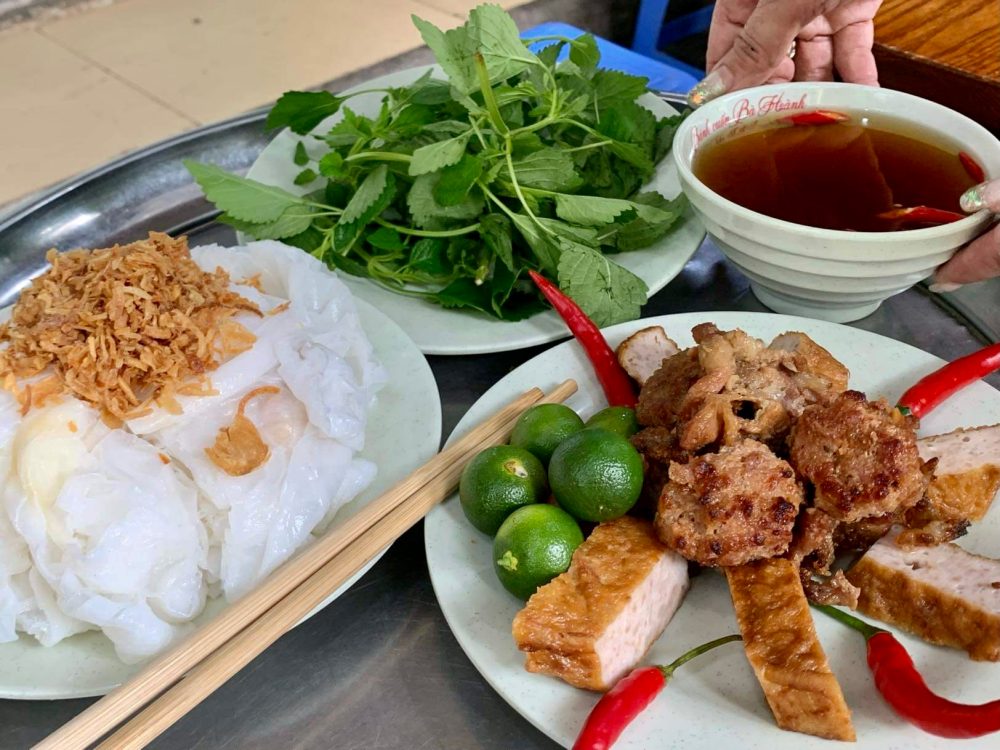
Adjust the dipping sauce: Dip lightly or dilute the dipping sauce a little to reduce the amount of sugar and spices while still retaining the flavor of the dish.
Add more protein: Combine banh cuon with external protein sources, such as a boiled egg or a glass of unsweetened milk. Enough protein helps the body maintain a feeling of fullness longer, stabilize blood sugar, and limit afternoon snack cravings.
Solution summary table: Eating smart banh cuon to control weight.
| Criteria | Habits that easily cause weight gain | Optimal eating habits (Don't worry about getting fat) | Scientific mechanism |
|---|---|---|---|
| Big portions, lots of cakes | Limit consuming too much starch that is quickly absorbed from rice flour. | ||
| Eating little or no vegetables | Fiber helps to feel full longer, slowing down the process of sugar absorption into the blood. | ||
| Many fried onions, spring rolls | Reduce saturated fat and hidden calories from fried onion fat. | ||
| Thick dipping sauce, sweet fish sauce | Cut down on refined sugar intake through spices. | ||
| Just eating cake and sausage | Protein helps stabilize blood sugar and prolong the feeling of fullness after meals. |
In short, don't just look at a single meal but consider the entire diet of the day. If breakfast has provided quite a lot of starch from banh cuon, you can proactively reduce the amount of starch at lunch or dinner, and increase physical activity.
Quick Q&A about the weight gain potential of eating banh cuon for breakfast
Why does eating banh cuon feel light to the stomach but still easily gain weight?
The feeling of "lightness" is due to the soft, thin cake texture. In fact, banh cuon is refined starch, easily causing rapid blood sugar spikes and contains the same amount of calories as a main meal if you eat enough snacks.
Should people who are losing weight eat banh cuon in the morning?
Possible. Banh cuon does not directly cause weight gain if you control the total calories throughout the day. However, you should reduce the amount of banh cuon and eat more vegetables to balance nutrition.
How to avoid feeling faint quickly after eating banh cuon?
Supplement with more protein (eggs, lean meat) and fiber. Eating only starch from rice flour will cause blood sugar to drop rapidly after eating, leading to cravings for snacks in the middle of the day.


