
Ho Chi Minh City is experiencing hot days with prolonged high temperatures, posing many health risks, including food poisoning.
Recorded at some points of sale in front of school gates during rush hour in Binh Phu and Go Vap wards,... many carts displaying skewers, fried fish balls, stir-fried vermicelli, stir-fried noodles, mixed rice paper,... Some carts do not have glass cabinets to shield, leaving food directly under the hot sun, creating a high risk of pollution.
Ms. Nguyen Hong (Binh Phu ward) said: "At rush hour, my child often wants to buy snacks outside the school gate. I am most worried about the stalls not covering them, the food is left in the sun for too long. I always remind my child to choose food carefully, or bring it from home to ensure safety.
According to the Ho Chi Minh City Department of Food Safety, hot weather is a favorable condition for bacteria and mold to develop. Food is therefore easily spoiled and degraded if not properly preserved.
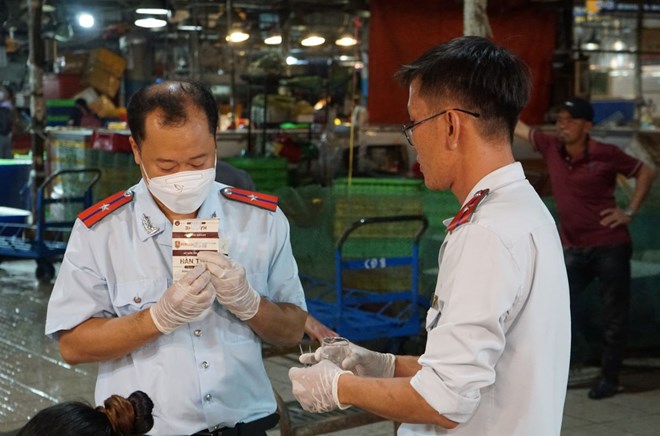
Street food areas, crowded food services such as school gates, crowded residential areas are warned to be hotspots with potential food safety risks, especially when the origin of food is unclear or the preservation stage is not guaranteed. From there, it is easy to lead to poisoning and digestive disorders, especially children and the elderly.
Assoc. Prof. Dr. Pham Khanh Phong Lan - Director of Ho Chi Minh City Department of Food Safety said that the characteristic of hot weather is high temperature and humidity, creating a favorable environment for bacteria to grow. If not stored carefully, food is easily spoiled, contaminated, causing a risk of poisoning.
Besides, many people are afraid to cook in the hot sun, so they often buy street food that does not ensure hygiene, increasing the risk of food insecurity.
To proactively reduce risks, Ho Chi Minh City has strengthened inspection and supervision of food production, processing, and business establishments, especially in collective kitchens, food services and street food. The city also promotes communication in many forms, guiding people to choose, process and preserve food safely.
People are advised to proactively report to functional agencies immediately when they detect establishments selling food that does not meet hygiene standards, does not have documents proving the origin or food shows signs of spoilage to promptly handle and protect their health as well as their legitimate rights.


