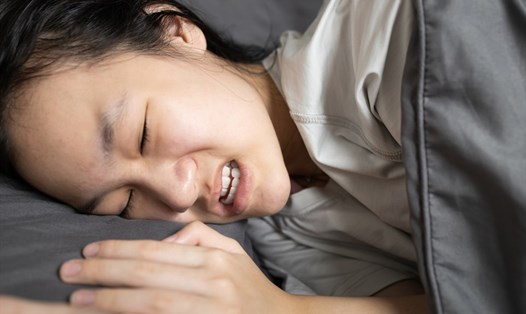
Stress keeps the jaw muscles always stiff.
According to Dr. Raghavendra BR - a dentist at Gleneagles BGS Hospital, the human body often responds to psychological pressure by creating muscle tension. For many people, tension is concentrated in the neck and shoulder area, but in some other cases, it concentrates on the jaw muscles.
He said many people have a habit of tightening or gently grinding their teeth even when working, thinking, or dealing with daily pressure without realizing it. When muscle tension is prolonged, this habit can continue even during sleep.
Sleep does not automatically eliminate the muscle tension reflexes formed during the day. On the contrary, when consciousness is lost, the force of grinding teeth at night is sometimes even stronger," explained Dr. Raghavendra.
Teeth grinding episodes often appear in the shallow sleep phase or when the brain has short awakens at night. Therefore, people who are often stressed, stay up late or sleep unstable are at higher risk of teeth grinding.
Dr. Matthew Messina - a dental expert at Ohio State University College of Dentistry - said that grinding teeth is closely related to the stress response of the nervous system. According to him, the brain can unconsciously release emotional pressure through jaw muscle contraction during sleep.
Signs that are easily overlooked but can be long-term harmful
Not everyone who grits their teeth has obvious symptoms. Some people only feel a heavy jaw in the morning, a dull headache or fleeting discomfort that then disappears on its own. This is what makes the condition easily underestimated for a long time.
According to experts, the impact of grinding teeth usually occurs gradually. Initially, it is mild wear of the tooth surface, numbness when eating or a feeling of jaw muscle tension. If prolonged, patients may experience cracking sounds in the jaw joint, pain when opening the mouth and more serious enamel damage.
In addition to psychological stress, sleep quality also plays an important role. Staying up late, using a lot of caffeine or sleeping irregularly makes sleep shallow and easily interrupted, thereby increasing the frequency of grinding teeth.
Experts recommend that people who regularly have jaw pain, toothache or signs of teeth erosion should see a doctor early to assess the condition of the bite joint and sleep health. Early intervention helps limit prolonged damage to teeth and jaw muscles.
Dr. Raghavendra emphasized that grinding teeth is not simply a dental problem but a combination of stress, sleep and body reactions. Therefore, improving the quality of rest, reducing mental pressure and adjusting living habits is a long-term solution.