
Temperatures may start to cool as fall begins, but Atlantic hurricane season isn't over yet, ABC News' latest hurricane report says.
The peak of the Atlantic hurricane season has passed, but there is still the potential for strong storms to form before the season ends on November 30, and storms could even continue to appear after the season is over.
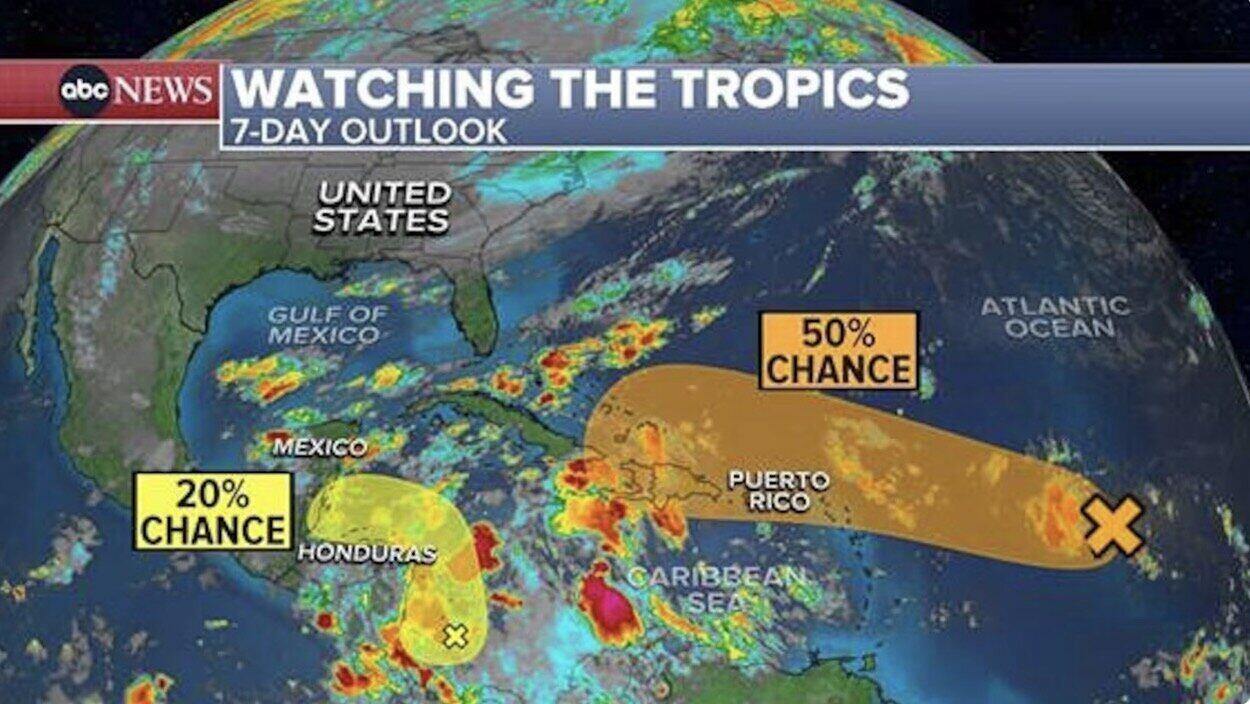
There are currently two low pressure systems being closely monitored in the Atlantic Ocean. According to the latest forecast, neither of these low pressure systems is expected to become a major hurricane that threatens the US mainland.
The forecast says the low pressure system in the western Caribbean has a 20% chance of becoming a tropical depression by the end of the week, which could bring heavy rains to Central America and parts of the Yucatan Peninsula this weekend.
A second low pressure system in the mid-Atlantic has a 40 percent chance of strengthening into a tropical depression or hurricane on October 18 and could bring heavy rain and gusty winds to the northern Caribbean, including Puerto Rico.
However, neither system is expected to become large enough to become Nadine, the next named storm of the Atlantic hurricane season, forecaster Marshall Shepherd, director of the Atmospheric Sciences Program at the University of Georgia and former president of the American Meteorological Society, told ABC News.
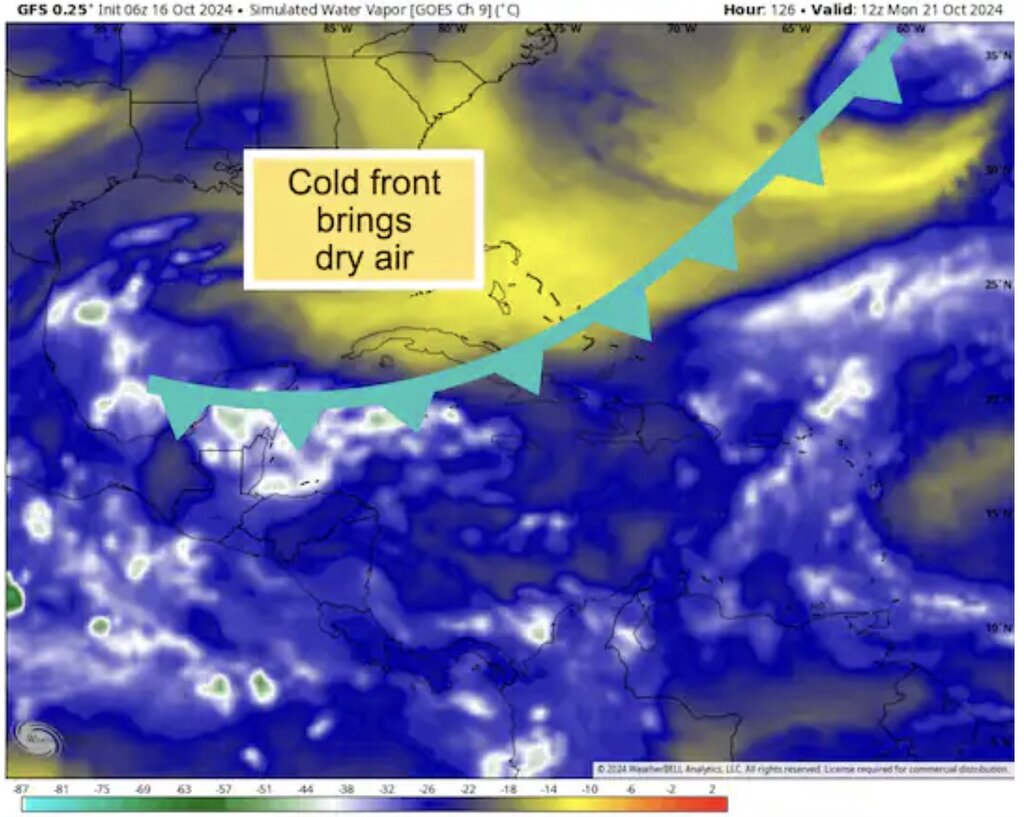
Wind shear from a cold front (the leading edge of a cold, dry air mass) over the eastern United States is preventing tropical storms from developing further south, points out atmospheric scientist Jennifer Francis at the Woodwell Climate Research Center.
“This cold air mass tends to prevent storms from forming and can tear storms apart,” she said.
According to the US National Hurricane Center, the peak of the Atlantic hurricane season is September 10, but the season's most intense activity comes later, with Hurricane Helene forming on September 24 and Hurricane Milton on October 5. Both powerful storms made landfall on the west coast of Florida.
Shepherd said the chance of a hurricane forming after this time of year is less than 5 percent, and if it does, it will most likely hit Florida. Meanwhile, Francis said, hurricanes and tropical depressions that develop in November tend to be more concentrated in the western tropical Atlantic, including the western Caribbean and the Gulf of Mexico.
However, record-warm ocean temperatures could increase the likelihood of a tropical storm forming, forecaster Francis noted. Temperatures in the Atlantic, Caribbean and Gulf of Mexico “are all rising,” the weather expert said. “So any storm that forms will have enough fuel to draw from the ocean,” she said.
The 2024 hurricane season forecast is positive for the next seven to 10 days, but conditions for a tropical storm to intensify will become more favorable in late October due to a change in upper-level winds, Francis said.
Although rare, data suggests that hurricanes can form outside the traditional hurricane season. In December 2005, Hurricane Epsilon and Tropical Storm Zeta formed in the Atlantic basin after the official hurricane season ended. Hurricane Alex in 2016 was an “unusual” tropical storm that formed in January.


