
La Nina is entering a weakening phase, paving the way for the neutral state of ENSO. This development is assessed by international meteorologists as an important signal, which could change familiar weather patterns in spring and summer, including the Tet and post-Tet periods in many regions of the world.
ENSO (Southern Oscillation - El Nino) is one of the key indicators that helps meteorologists forecast long-term weather trends. This phenomenon reflects changes in sea surface temperature and wind in the tropical Pacific region, thereby affecting rainfall, temperature and atmospheric circulation globally.
In the past winter, ENSO maintained La Nina status. The characteristic of this phase is that the sea surface temperature in the Pacific Ocean is lower than average, causing the jet stream to be pushed northward. As a result, many areas recorded prolonged drought, while some other areas had more rain than usual.
According to meteorological statistics, the period from late summer last year to early February this year is one of the driest periods ever recorded in more than a century, which is common when La Nina prevails.
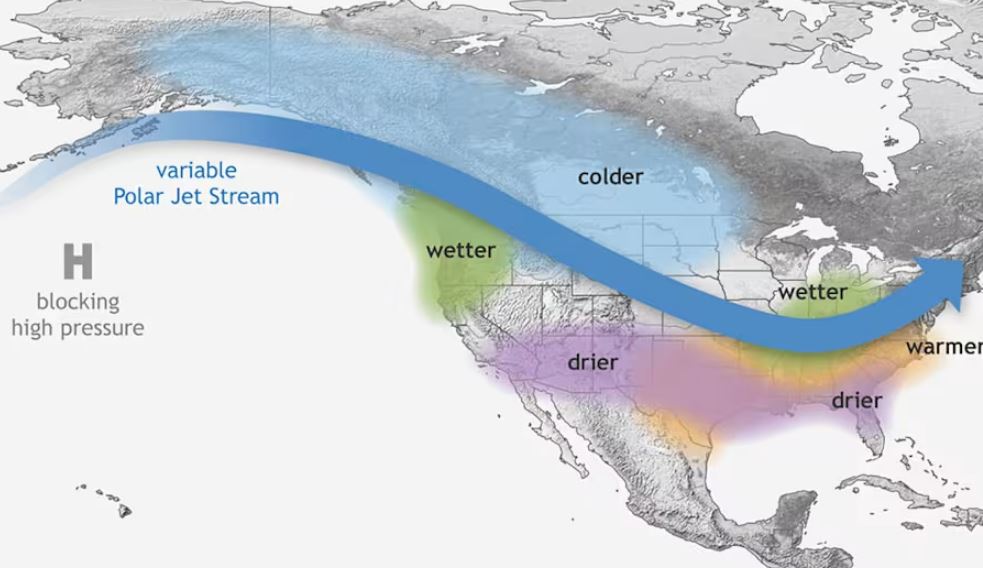
However, this picture is gradually changing. Official forecasts show a probability of about 75% that ENSO will shift to neutral at the end of spring.
When ENSO is in a neutral phase, the Pacific Ocean is no longer too hot or too cold, which means that El Nino or La Nina do not clearly dominate. In that context, weather often becomes more unpredictable, but generally tends to be "better" than extreme phases.
With the context of Tet and the beginning of the new year falling into a seasonal transition, the possibility of warmer weather spells, scattered rain or increased humidity is what forecasters are warning about.
Regarding the weather forecast in Vietnam, after 1 day of rapid warming, it is forecast that on the morning of February 11, the cold air will be weakly strengthened and deviated to the east. The North will again be cloudy and have light rain, but rain mainly appears in a short time. The afternoon is sunny.
From February 11-20 (from December 24 to the 4th day of Tet): The highest temperature in the North is 20-24 degrees C; especially in the period from February 12-17: 23-26 degrees C, the Northwest region 26-29 degrees C. The lowest temperature in the North is 16-20 degrees C, mountainous areas in some places below 15 degrees C.
Hanoi weather from February 11-20 (from December 24th to the 4th day of Tet): Some places with rain, early morning fog and light fog scattered; especially in the morning of February 11th and the period from about February 18th, there will be rain and scattered light rain. Cold at night and in the morning.
The highest temperature is 21-24 degrees C; especially the period from February 12-17 is 23-26 degrees C. The lowest temperature is 16-19 degrees C.
From February 21-22 (from the 5th to the 6th day of Tet), Hanoi will have scattered rain, the weather will turn cold. The highest temperature is 20-22 degrees C, the lowest is 14-16 degrees C.


