The rise of "heat-escape" trips
In recent summers, when many European regions experience heat waves approaching 40°C, tourists are starting to turn to the North. They are looking for places with mild climates, sea breezes, forests, lakes and most importantly, they can spend a lot of time outdoors without having to struggle to find a place to avoid the heat. Statistics in 2025 show that 81% of Europeans have had to adjust their summer travel plans due to climate change.
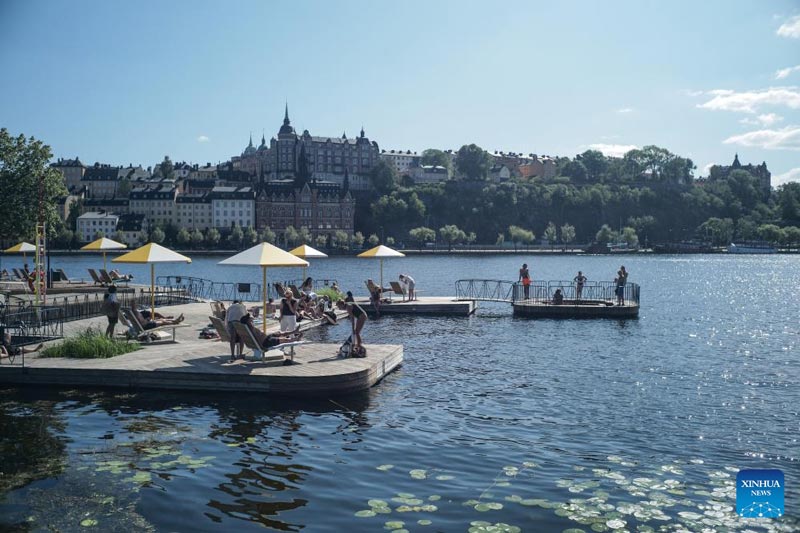
In Sweden, tour guide Terje Viblom Pedersen said that many tourists shared that they were very happy to "escape the suffocating heat in Southern Europe". Here, the daytime temperature is only below 30°C, the air is airy and less crowded. Daniel and Florence Gastaldi, a retired French couple from Marseille, also shared when they arrived in Stockholm: "It's good to get out of the heat. We are very happy to find a cooler place". That is the spirit of "coolcation" - where cool weather becomes a core part of the experience.
Talking numbers and changing trends
Data from Hotels. com (French version) shows that room searches in Copenhagen (Denmark) increased by 246% since the first heatwave in May, while Dublin (Ireland) increased by 151%. In the US, travel expert Jonna Robertson said that room bookings to Oslo (Norway) increased by 154% compared to the same period, while Helsinki (Finland) increased by 124%. These figures show that tourists are actively looking for alternatives to traditional destinations.
Coolcation" does not necessarily have to go too far to the North Pole. Tourists are starting to pay attention to cooler regions right in the heart of countries that are hot in the summer such as: Galicia (Spain), Trentino-Alto Adige (Italy) or Normandy, Alsace (France). In the Jura Mountains (France), he
Jean-Pascal Chopard from the local tourism agency found that the attractiveness of mountain resorts increased sharply thanks to the deep drop in nighttime temperatures, bringing a comfortable sleep.
However, does this trend really change the tourism map? The answer is not really clear. Professor Stefan Gossling (Sweden) said that temperature is just one of many factors, tourists do not easily change familiar destinations because "Italy is different from Denmark in culture, environment and price". The Norwegian tourism agency also said that only 1/5 of international tourists choose this country for weather reasons.
In fact, Southern Europe is still crowded with tourists. Greece and Spain both reached record tourist arrivals; tourism spending in Spain alone still increased by more than 8% in the second quarter of 2026. Therefore, "coolcation" is not a migration out of the Mediterranean, but a rhythmic adjustment: overheated areas are reserved for Spring or Autumn, while summer is for a more pleasant climate...
That way of resting also changes the experience. Glasgow, Scotland may be a summer destination not because of the sea but because of music and nightlife; Lake Saimaa is attractive because of slow days by the water; Saaremaa of Estonia is attractive because of old windmills, rye bread and Kuressaare spa treatments.
Finally, "coolcation" starts from a very normal desire: Going on vacation to enjoy a pleasant feeling. As summer gets hotter, the question "Where to go this summer?" will probably have a simple criterion: Is it cool there?
Comfortable summer vacation
What "coolcation" changes is not the tourist map, but the criteria for choosing a destination. An attractive summer tourist destination does not necessarily have to have a lot of sunshine. It can be a place where people can comfortably walk all day, sit outdoors until evening, row a boat on a calm lake or sleep soundly without turning on the air conditioner at full capacity. When intense heat becomes an unpleasant experience, "coolness" begins to be considered a valuable comfort.