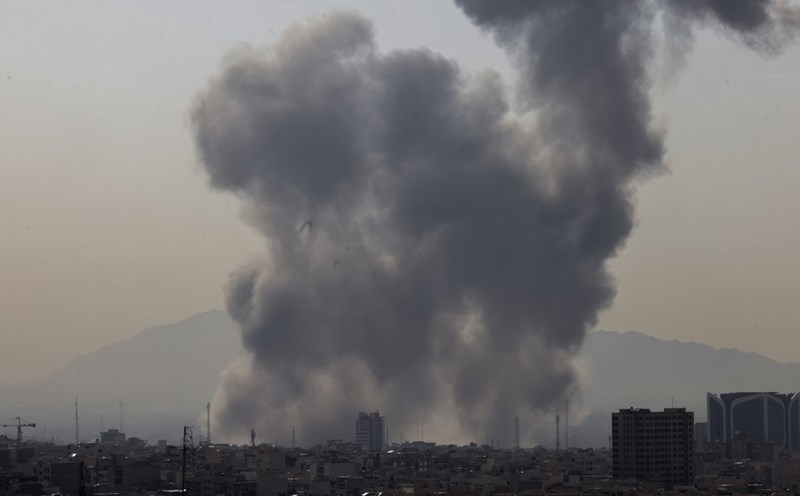
On March 2, the Israel Defense Forces (IDF) confirmed that they had attacked the most important mouthpiece of the Iranian government. The IDF argued that, for many years, Iranian National Television (IRIB) has repeatedly called for the destruction of the state of Israel and advocated for the use of nuclear weapons.
The collapse of this agency is not simply a military attack, but is also considered part of an overall strategy to neutralize the enemy's propaganda and information control systems.
Earlier on the same day, Iran also recorded 2 joint attacks between Israel and the US aimed directly at buildings located within the IRIB headquarters premises.
Although the attacks took place fiercely, Iran's live television broadcasts have not recorded any clear disruptions at the time of reporting and there is currently no accurate information about the extent of casualties. However, observers believe that this is an extremely strong psychological blow aimed at the symbol of power of the government after the death of leader Ali Khamenei.
The large-scale military campaign launched by the US and Israel since February 28 is still continuing with high intensity, targeting key Iranian cities.
The US side affirmed that these attacks are "inevitable" and necessary to thoroughly prevent nuclear threats and long-range missile systems heading towards Washington's allies.
In response to this action, the Islamic Revolutionary Guard Corps (IRGC) immediately deployed a series of ballistic missiles and drones aimed at Israeli territory.
Not stopping there, US military bases in 8 neighboring Arab countries have also become targets of retaliatory attacks from Iran. The spread of conflict hotspots is pushing the Middle East region into an uncontrollable spiral of violence.
Meanwhile, European countries are expressing deep concern about the complete collapse of information infrastructure in the Middle East, making diplomatic efforts more deadlocked than ever.