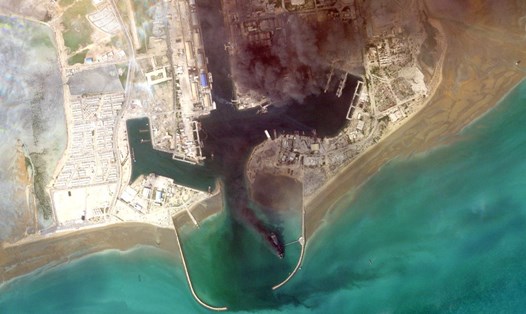
Qatar's state-owned energy corporation QatarEnergy on March 3 declared a state of force majeure for natural gas (LNG) export contracts, after operations at the Ras Laffan Industrial City plant were seriously disrupted by an Iranian UAV attack.
This move allows Qatar to temporarily not have to fulfill delivery obligations under contract, due to "out-of-control" factors.
Qatar currently supplies about 20% of global LNG exports, with main customers in Asia such as China, Japan, South Korea and India, and is also an important supplier for Europe. The disruption of gas flow from this Gulf nation immediately shook the world energy market.
Restarting is not simple
Unlike many other industries, stopping and restarting large-scale LNG plants is an extremely complex process. Ras Laffan facility currently has 14 liquefied petroleum production lines, with a total capacity of about 77 million tons of LNG per year - the largest in the world.
This facility owns a specialized port with 6 wharves receiving large LNG tankers, including QMax and QFlex types. The tank system has a capacity of about 1.88 million m3, but at maximum production speed, the entire storage can be full after only 4 days if the gas tanker cannot leave the port.
Therefore, when transportation through the Strait of Hormuz was disrupted, production was forced to stop almost immediately.
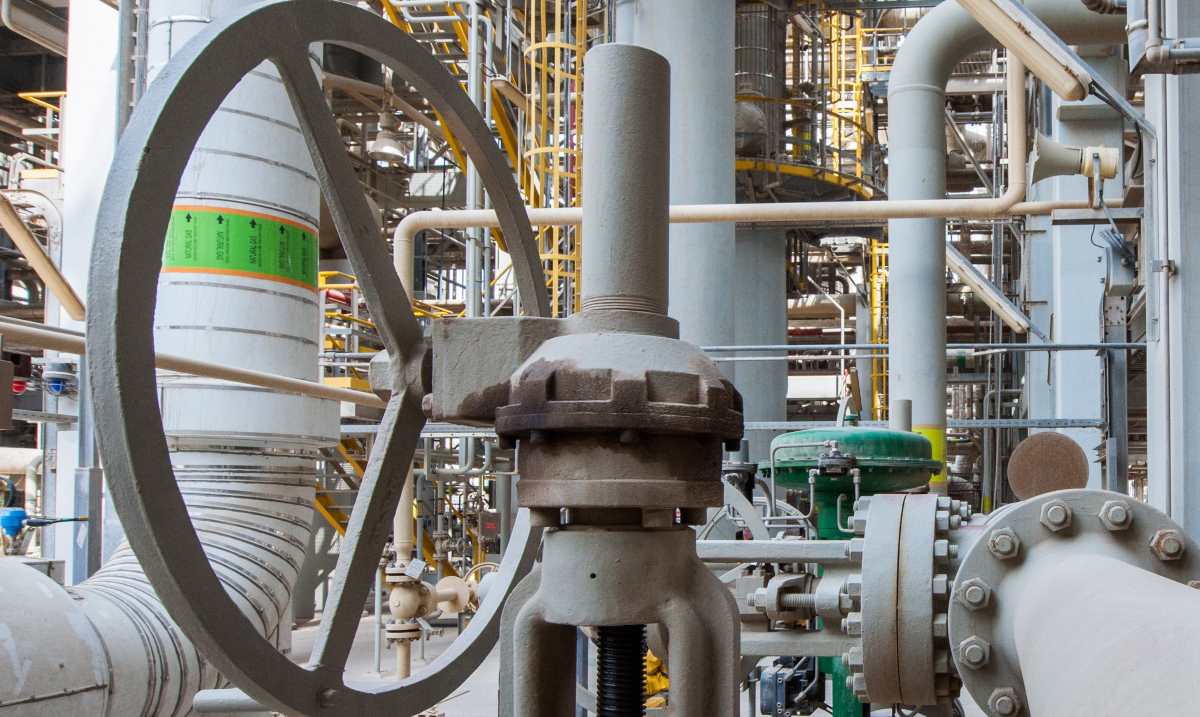
Even if security conditions allow exports to resume, restarting the entire complex will take at least 2 weeks to reach maximum capacity. The lines cannot start at the same time but must operate sequentially to ensure stability.
The reason lies in the extremely low temperature during LNG production, about minus 160 degrees Celsius. If gas is introduced into the system too quickly when the equipment is still deeply cold, metal parts may be "heat shocked", causing cracks or damage to equipment worth billions of USD.
The gas market immediately faltered
Qatar's LNG production disruption is creating a large gap in the energy market. In just a few days, gas prices in Europe and Asia have increased by nearly 50%, as importers are urgently looking for alternative sources.
According to energy analyst Saul Kavonic of MST Marquee, if the closure lasts, the market could witness a bigger shock than 2022, when Russia cut off pipeline gas supplies to Europe.
No source can completely replace Qatar's LNG. If the disruption lasts, gas prices could return to a record level seen in 2022," he said.
Meanwhile, the US has almost no room to export LNG immediately. The country's liquefied petroleum plants are operating at almost full capacity, with most of the output already bound by long-term contracts, making it difficult to compensate for the gap from Qatar.
In the context of the Middle East war not showing signs of cooling down, the temporary suspension of operations of the world's largest LNG plant is putting the global energy market into a new phase of uncertainty. If the transport route through the Strait of Hormuz continues to be blocked, the gas shock may just begin.