
Foundation after the day of unification
1975 was not only a historical milestone for the country but also opened a new era for Vietnamese sports. After the country was unified, the sports system almost had to be rebuilt from the beginning. Limited facilities, dispersed athletes, and lacking training conditions are common realities. In that context, sports are seen as a field to improve health and spirit for society.
This view was clearly affirmed at the 5th Party Congress (March 1982): "Sports and physical training (TDTT) is an important and indispensable part in the construction of a new culture, a new person. The Party and State must pay more attention to developing TDTT to contribute to strengthening the health of the people, building the good qualities of the new socialist people such as courage, willpower, dexterity, intelligence and aesthetic sense, collective spirit and honesty to meet the requirements of the cause of building and protecting the Fatherland".
Along with that, the requirement "Step by step building a balanced, national, people's and scientific socialist sports foundation" has become a consistent direction for the industry in the following years.
From this policy, school sports are identified as the core. The physical education system is widely implemented from primary to secondary school, combined with physical training movements. According to the summary of the General Department of Sports and Physical Training (now the Department of Sports and Physical Training), in the period 1975-1985, nearly 50% of schools implemented the 4-sport combined athletics movement. This is an important step to create a long-term source of athletes.
The mass sports movement has also been expanded through many programs such as "The entire Youth Union knows how to swim", "The entire unit practices running", or Phu Dong Health Festivals organized periodically. These activities are not only for physical training but also contribute to building a healthy lifestyle in society.
In rural areas - which account for the majority of the population, sports are also being implemented with the goal of eliminating "white spots" in physical activities. In the first 10 years after the reunification, more than 10,000 commune-level establishments and hundreds of district-level units have organized sports activities, although the scale is still small. The development of sports such as volleyball, athletics, swimming... at the grassroots level helps the movement spread widely.
Mr. Nguyen Danh Hoang Viet - Director of the Vietnam Department of Physical Education and Sports said that Vietnamese sports is formed on the foundation of serving society and the revolution. He emphasized: "Since the country's reunification, the Department of Physical Education and Sports of Vietnam has had conditions to develop strongly and comprehensively. The mass sports movement is widely deployed nationwide, associated with the campaign'All people practice physical exercise following the example of great Uncle Ho', becoming a sustainable social value".
Integration transition
From the late 1980s, when the country began to open up and integrate, Vietnamese sports also entered a new stage. Participating in the 1989 SEA Games marked Vietnam's return to regional arenas. In the first Games, the achievements were still modest, but this was a necessary step to accumulate experience.
In the following decade, the sports training system was strengthened. Athlete training centers were formed, and the work of selecting and training young people was given more attention. Thanks to that, Vietnamese sports gradually narrowed the gap with countries in the region.
An important turning point appeared at the 2003 SEA Games when Vietnam for the first time achieved the leading achievement in the overall team, not because we were the host, but because we had careful and methodical preparation in terms of force and development strategy. This is also a milestone affirming the position of Vietnamese sports in Southeast Asia.
In the past two decades, Vietnamese sports has continued to record many outstanding achievements. In the Olympic arena, shooter Hoang Xuan Vinh won 1 Gold Medal and 1 Silver Medal at Rio 2016, or further back, martial artist Tran Hieu Ngan brought home a Silver Medal at Sydney 2000. In the Asian arena, the achievement at ASIAD 2018 with 4 gold medals shows clear progress in key sports such as athletics, weightlifting, and shooting.
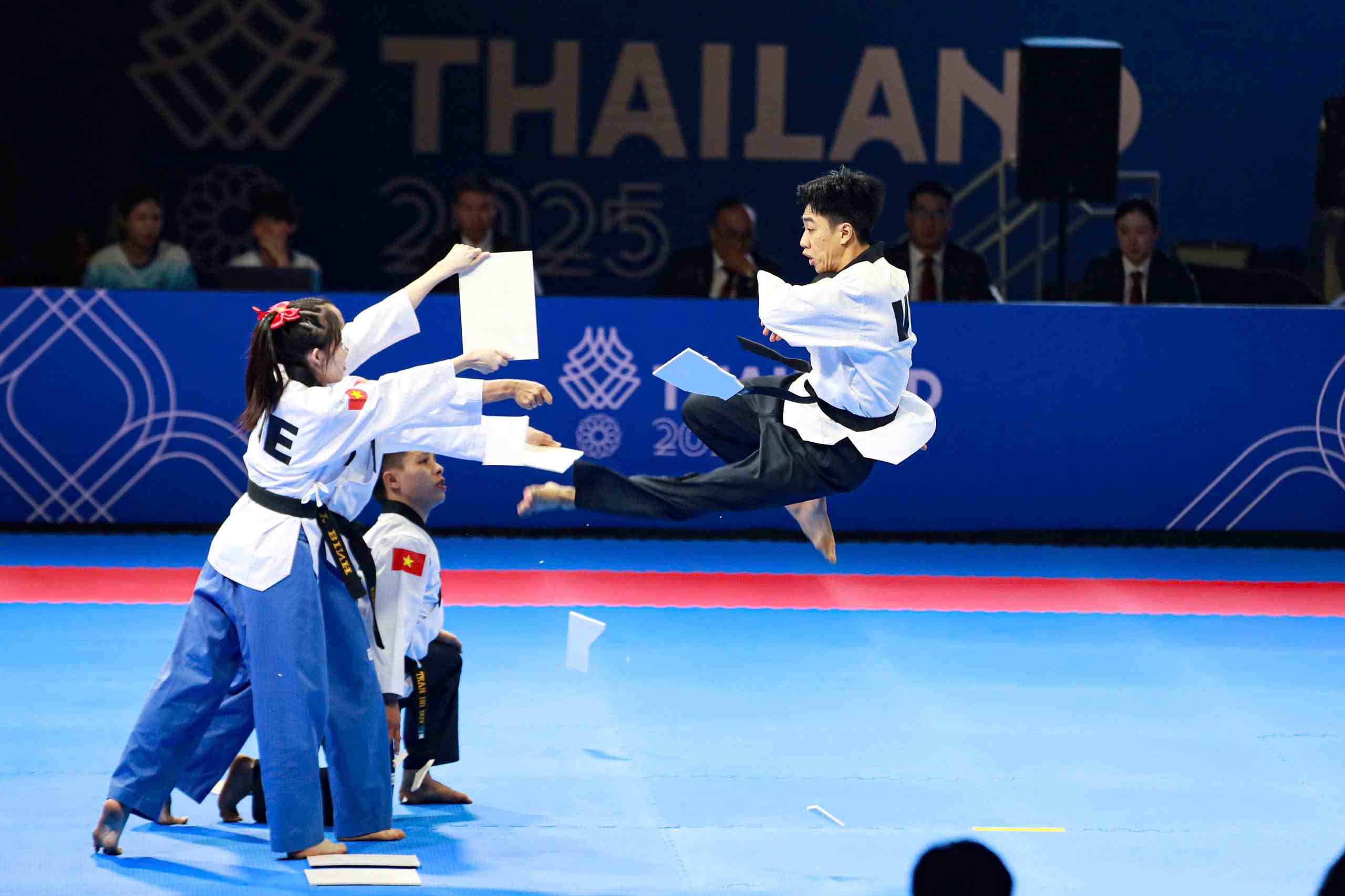
At the regional level, Vietnam maintains the leading group position with a peak of 205 Gold Medals at SEA Games 31 and continues to rank first overall at SEA Games 32. These figures reflect the stability and depth of the athletes' force.
Sports not only stop at achievements, but also play a role in spreading social values, contributing to enhancing the national image in the international arena.
Shaping the future
Entering a new stage, Vietnamese sports faces the requirement of developing in a professional and sustainable direction. The two main pillars, mass sports and high-performance sports, continue to be identified as the foundation of the development strategy.
Sports development policies also have many notable changes. Decree 349/2025/ND-CP has adjusted the remuneration regime for athletes and coaches, from salaries, nutrition to medical care and post-retirement support. This is considered an important step towards improving the quality of sports human resources.
In addition, science and technology are playing an increasingly large role in training. Director of the Department of Sports and Physical Training Nguyen Danh Hoang Viet said: "It can be said that sports science and technology have become one of the decisive factors in improving the achievements of Vietnamese athletes, especially when we aim for major arenas such as ASIAD and Olympic Games".
He also emphasized that the application of data, video analysis and artificial intelligence is being implemented step by step, helping to improve training and competition efficiency.
In the 10-year orientation, Vietnamese sports sets a goal to maintain its position at the SEA Games, while improving competitiveness at ASIAD and aiming for more Olympic medals. The development of the sports economy, promoting socialization and strengthening international cooperation are also identified as important directions.
Looking back at the journey from 1975 to now, Vietnamese sports has undergone a clear transformation, from a grassroots movement to professional development and international integration. The achievements are the result of a combination of policies, people and long-term strategies.
In the new context, maintaining the development momentum will depend on the ability to adapt to modern trends, especially the application of science and technology and the improvement of management systems. This will be a decisive factor for Vietnamese sports to continue to rise up, towards greater goals in the future.


