
On March 10, at the Government Headquarters, Prime Minister Pham Minh Chinh chaired a meeting of the Standing Committee of the Government to give opinions on the draft Project on piloting the evaluation and scoring (KPI) of law-making work (XDPL) and some other important contents.
According to the Government Office, implementing the direction of the Prime Minister, the Ministry of Justice has developed a draft Project on piloting the evaluation and scoring of legal construction work, including the evaluation and scoring of the promulgation of documents detailing laws, ordinances, and resolutions.
Some main contents of the project include criteria, groups of evaluation and scoring documents; principles of evaluation and scoring; scope of application; organization of implementation. It is expected that the scoring results according to the project will also be integrated into the scoring of the Administrative Reform Index (PAR Index).
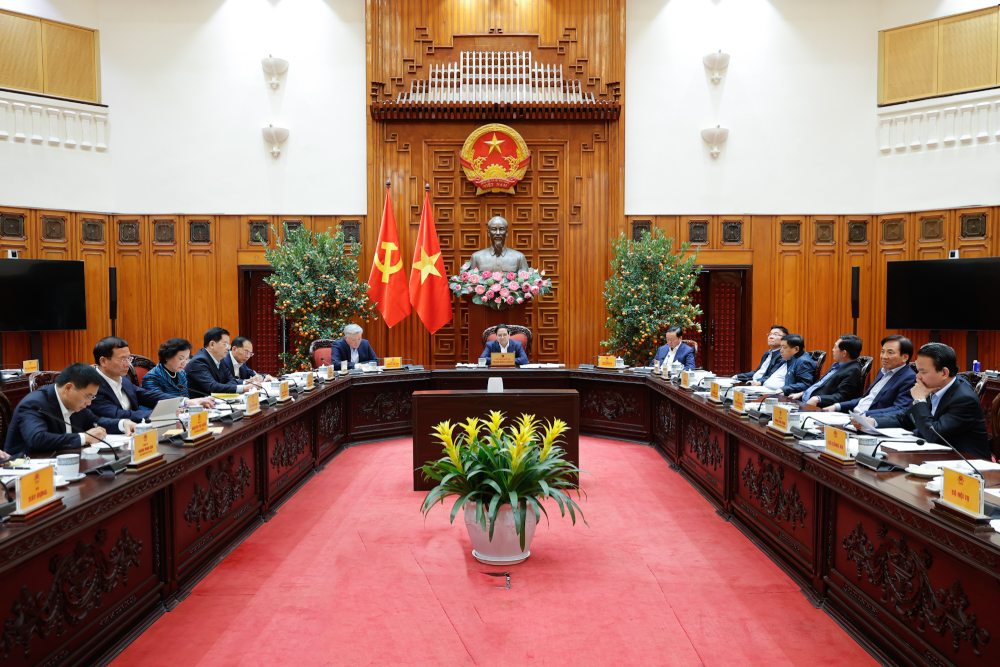
After listening to reports, opinions, and concluding speeches, Prime Minister Pham Minh Chinh directed the pilot implementation of assessment and scoring in 2 years with the spirit of both doing and learning from experience, gradually expanding, not being perfectionist, not being hasty.
The Prime Minister clearly stated the objectives when building and implementing the project are: Building a database to serve leadership, direction, and administration; evaluating, scoring, encouraging, motivating, and rewarding places that do well and criticizing and handling places that do not do well; controlling work on progress and quality, meeting the requirements of the Government, serving the leadership and direction of the Central Government, the Politburo, the Secretariat, and coordination with the National Assembly.
KPI is a tool for the Government and Government leaders to operate on the basis of data; the evaluation time is quarterly, 6-month and 1-year, with a thematic evaluation.
Evaluation subjects include: Progress; quality; detection of problems, resolution of problems; institutional and legislative initiatives; implementation results and impacts.
Regarding methods, there must be a common evaluation criterion for all agencies in the Government, updating "correct - sufficient - clean - living - unified - common use".
The Prime Minister directs agencies to receive opinions, urgently complete and submit for promulgation the Prime Minister's decision approving the project.
On the same day, the Standing Committee of the Government met to give opinions on reviewing and reviewing the promulgation of documents detailing laws, ordinances, and resolutions.
Concluding this content, the Prime Minister acknowledged and praised the efforts of ministries, branches, and agencies in law-making work in general and the promulgation of documents detailing laws, ordinances, and resolutions in particular.
Clearly stating the goal of urgently completing the promulgation of documents detailing laws, ordinances, and resolutions effective from January 1st to April 4th, 2026, the Prime Minister directed many comprehensive solutions such as submitting for promulgation according to simplified procedures, the content goes straight to the issue to be handled.
Mobilize human resources from ministries and sectors with a spirit of drastic work, "working day and night"; promote the application of artificial intelligence; have appropriate incentive measures for the contingent of officials participating in this work.
The Prime Minister assigns Deputy Prime Ministers to direct according to fields, ministers and heads of sectors are directly in charge of developing detailed regulations under their management, and the Ministry of Justice monitors and urges this work.


