
On the afternoon of May 7, in Hanoi, the Standing Committee of the Steering Committee for the general review of the system of legal normative documents (VBQPPL) held its first meeting under the chairmanship of Politburo Member, National Assembly Chairman Tran Thanh Man - Head of the Steering Committee.
Concluding the session, the National Assembly Chairwoman emphasized that this is a particularly important task, the largest-scale general review ever to serve the fundamental and synchronous completion of the legal system structure.
Over the past time, agencies have issued relatively complete documents directing, operating, and guiding implementation; organized training conferences nationwide, contributing to unifying awareness and ways of doing things.
In addition, a technology platform data system has initially been formed to serve the review work, including a legal database with hundreds of thousands of documents, creating favorable conditions for accurate lookup, comparison, and evaluation.
The work of reviewing documents has been implemented in the right direction, more substantively and gradually going deeper. However, some tasks are still behind schedule, and the implementation in some agencies and localities is not synchronized. It is noteworthy that the risk of reviewing is formalistic, only stopping at the list of documents without going into the essence of the problem.
This general review of the VBQPPL system is not a normal administrative task, but a'general inventory of institutions', a strategic preparation step for national development in the new period" - National Assembly Chairman said.
Therefore, if done not seriously, it will not only waste resources, but also miss the opportunity for institutional reform, miss the opportunity to rectify institutional bottlenecks, which are currently bottlenecks in development.
The National Assembly Chairwoman requested that the review be linked to development requirements, focusing on clarifying regulations that are hindering development, overlapping, contradictory or no longer appropriate. At the same time, the review process must ensure "correctness, accuracy, and substance", avoiding the situation of formal reports and general results.
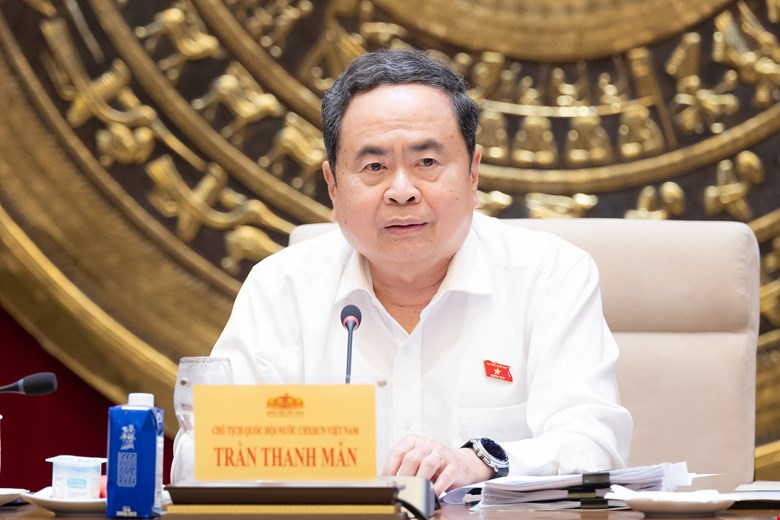
The review process needs to take people and businesses as the center, strengthen listening to reality. At the same time, solicit opinions widely, especially from directly affected subjects, considering this as the most objective measure to assess the quality of law.
Agencies should not only organize seminars and workshops, but also directly meet with people and businesses to listen to difficulties and obstacles in law enforcement.
The ultimate goal of perfecting the law is to serve the people and businesses, improve the material and spiritual quality of life of the people" - the National Assembly Chairwoman emphasized and requested that the review must be focused and key, focusing on areas with a major impact on development such as decentralization and delegation of power; science, technology, innovation; private economic development; international integration; administrative procedures; digital data.
In the review process, agencies must be objective, scientific, receptive, not evade; boldly propose amendments, supplements, replacements or abolitions of regulations that are no longer appropriate.
The review results must be accompanied by specific recommendations, clear addresses, clear contents of amendments, supplements, replacements or abolitions; avoid being general, formal, and lacking feasibility.


