
The arrangement of public non-business units (DVSNCL) is being implemented synchronously from the Central to local levels with the goal of streamlining the apparatus, increasing scale and improving operational efficiency.
According to the latest directions, the 2026-2027 period is identified as a key time to complete the institution and reorganize the public service system nationwide.
In Resolution No. 122/NQ-CP of the regular Government meeting in April 2026, the Government directed to urgently complete the arrangement of residential groups, villages, hamlets and public health stations according to the direction and guidance of the Central Government.
In the current structure of the public-private partnership system, education is the sector accounting for the largest proportion. According to data compiled in reports from the Ministry of Home Affairs and the Statistics Office, the education sector accounts for about 80.2% of public-private partnerships, with about 1.6 million workers.
Healthcare is also a field with a wide network of units, from hospitals, health centers to grassroots health stations. This is a group directly affected in the process of reorganizing according to the 2-level local government model.
Over the past time, many localities have begun to develop plans to rearrange schools, hospitals, health centers and public service units directly under them.
In Thai Nguyen, with DVSNCL as of May 2026, the whole province has 144 units, a decrease of 31 units.
The Chairman of Thai Nguyen Provincial People's Committee has assigned the Department of Home Affairs to urgently review the overall organizational structure system in accordance with the direction of the Central Government; complete the plan to continue arranging VMNCL under departments and branches of the province in a streamlined, effective, and scientific direction, and advise the Provincial People's Committee before May 30.
At the same time, coordinate with departments and branches of the province to deploy a peak period of reviewing job positions in departments and divisions to overcome the situation of personnel imbalance.
In Da Nang City, the Standing Committee of the City Party Committee has consolidated the organizational system with 5 advisory agencies, 2 VMNCLs of the Party, the City Vietnam Fatherland Front Committee agency and 14 specialized agencies under the City People's Committee. Notably, the city reduced 38 VMNCLs, from 1,239 to 1,201 units.
At the commune level, the city established many advisory agencies, socio-political organizations and VMNCLs.
This locality has requested to continue reviewing and arranging public service units to ensure streamlining, effective and efficient operation according to the direction of the Central Government.
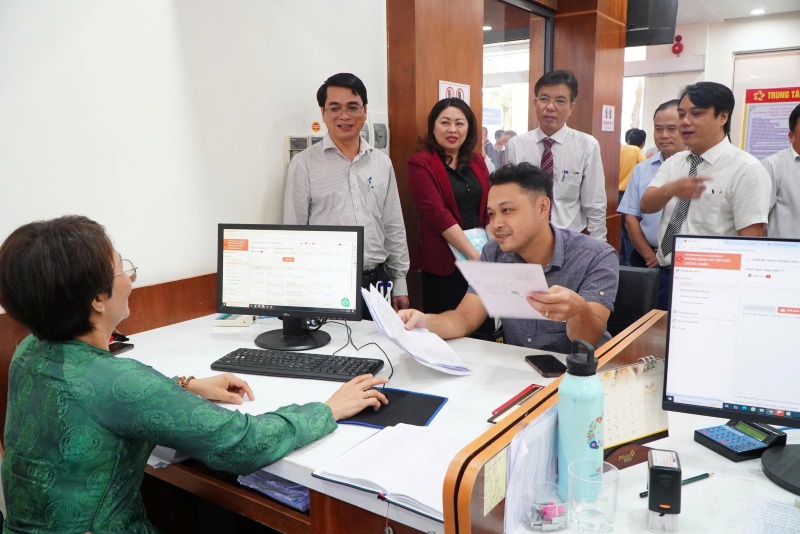
Some localities such as Ha Tinh and Gia Lai are also developing plans to transfer health stations to be under the management of commune-level People's Committees, and at the same time reorganize the health center system in a regional direction.
Previously, the Ministry of Home Affairs proposed to add many new contents such as classification and ranking by score, tightening conditions for establishment and expanding the autonomy of the organizational apparatus for VNU-CLs.
The draft for the first time establishes a framework for ranking DNCL according to a system of 5 levels, including special class, class 1, class 2, class 3 and class 4.
Ranking is carried out on the basis of scoring with a maximum score of 100. The evaluation criteria include organizational scale and workload; structure, labor level and complexity in management; infrastructure, facilities, equipment; level of application of science and technology and digital transformation; and operational efficiency of the unit.


