
On September 14, at the Ho Chi Minh National Academy of Politics, General Secretary and President To Lam exchanged and conveyed the Special Topic: "Strategic leadership in the new era: A hundred-year vision - Breakthrough thinking - Creating development - Governance implementation" to trainees participating in the training program, updating knowledge for members of the 14th Party Central Committee (Second Class), according to VNA.
General Secretary and President To Lam stated clearly that strategic autonomy is not about closing oneself, but about improving self-determination, self-strengthening, and adaptability; promoting internal strength, proactively integrating, combining national strength with the strength of the times.
Strategic leadership is not just about determining the right goals or building a long-term vision. You must look far but start from specific things; maintain principles but not be conservative; dare to break through but not be subjective; decentralize and delegate power in parallel with controlling power; issue policies and prepare conditions for implementation.
Leadership capacity must be verified by the quality of policy decisions, implementation effectiveness, development results and people's trust.
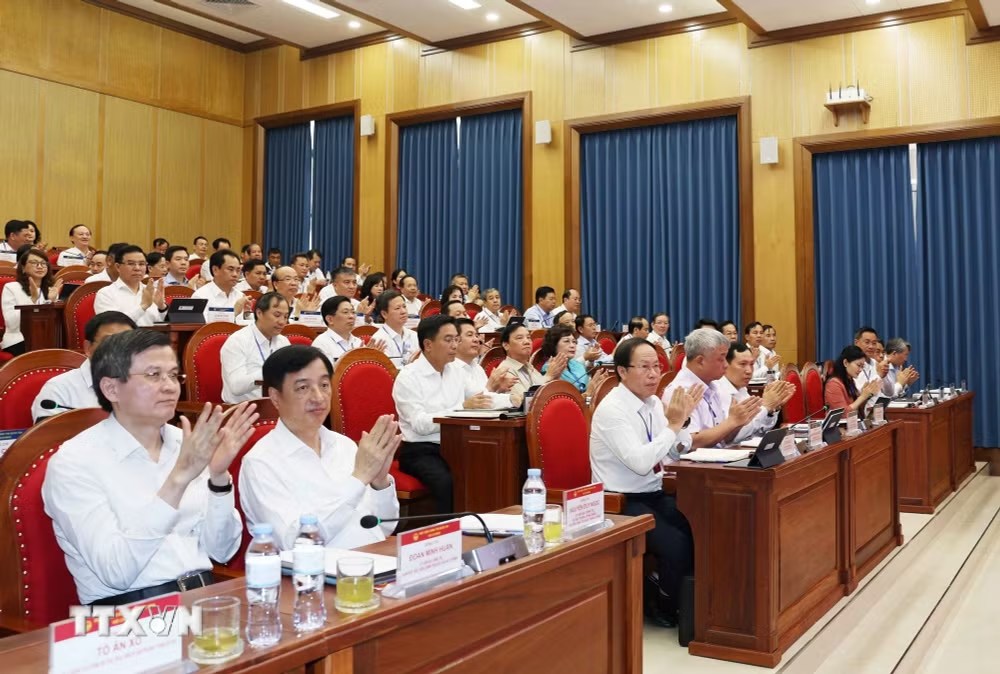
The General Secretary and President noted that the hundred-year vision is not to predict the future, but to establish a major direction and prepare capacity to be proactive in the face of all fluctuations; identify the values that must be maintained, the position the country wants to reach, and the capabilities that must start building from today.
Vision must be broad enough to cover the fundamental issues of the nation; large enough to gather the aspirations of the entire nation; lasting enough to continue responsibility through many generations; open enough to adapt to unpredictable changes.
Resolution No. 19-NQ/TW concretizes the roadmap for innovating the development model, with milestones of 2030, 2035, 2045 and vision to 2130. These milestones show the continuation between development goals and the capabilities that must be formed at each stage.
These four milestones must be linked into a unified process, each milestone both inheriting the previous results and creating a foundation for the next development step.
Do not pursue short-term achievements by depleting resources, increasing inequality, disrupting the environment or creating obligations that future generations have to bear. Do not let the term divide strategically; do not let administrative boundaries divide national interests.
Through the contents exchanged, the General Secretary and President emphasized 5 messages: First, the long-term vision must be oriented and decided today. It is necessary to clearly define the direction, the values to be maintained and the capacity to be built; each stage of development must create more foundations, resources and opportunities for the next stage.
Second, stability and development must strengthen each other. Rapid and sustainable development creates a foundation for stability; stability opens conditions for continued development. Maintaining stability must be associated with innovation, resolving conflicts and improving people's lives.
Third, breakthroughs begin with the right choice. It is necessary to identify bottlenecks, seize opportunities, focus resources, control risks and adjust promptly. The persuasiveness of breakthroughs lies in the actual changes and new capabilities created.
Fourth, development creation must unlock resources and creativity of the whole society. The Party leads; the State manages effectively and efficiently; the market operates healthily; the subjects proactively innovate and cooperate. The people are the center, the subject and the beneficiaries of development achievements.
Fifth, the effectiveness of implementation management verifies leadership capacity. Policy decisions must be linked to work, responsibilities, authority, resources, deadlines and clear results. Implementation discipline, compliance with the law and actual effectiveness must be ensured uniformly.


