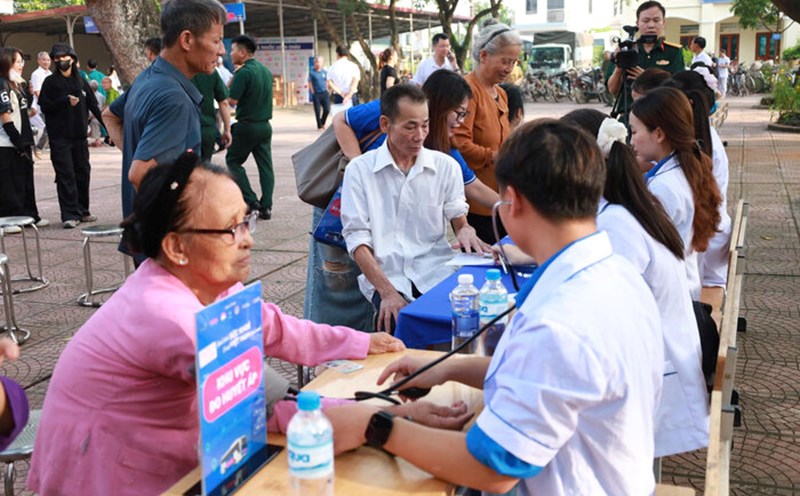
The rate of people satisfied and very satisfied reached 98.95%
From July 1, 2025, Hanoi has terminated the operation of 30 district-level administrative units, reorganized 526 commune-level administrative units to 126 communes and wards, a decrease of more than 76% in the number of commune-level administrative units.
In the past year, Hanoi has implemented the 2-level local government model in the context of the largest management requirements, scale and pressure in the country when simultaneously implementing the Capital Law, implementing the Capital Planning, accelerating strategic infrastructure projects, ensuring regular political tasks and strategic tasks of decisive significance for the future development of the Capital.
Notably, the work of decentralization, decentralization and delineation of authority has been synchronously and drastically implemented by the city; the motto "locality decides, locality does, locality takes responsibility" has contributed to shortening the processing time of work and improving the ability to meet the requirements of people and businesses. In less than a year, communes and wards have received and resolved more than 2.26 million dossiers belonging to tasks decentralized and transferred from the district and city levels previously.
The city publicly discloses 100% of administrative procedures under the jurisdiction of all levels of government; deploys 2,077 administrative procedures, of which 1,118 procedures are eligible to provide full online public services; completes the restructuring of 1,772 administrative procedures, standardizes more than 2,000 internal and electronic procedures.
In 2025, the whole city received more than 3.5 million new administrative dossiers, including more than 2.1 million online dossiers; resolved more than 619,000 dossiers regardless of administrative boundaries, contributing to reducing travel time, reducing procedure costs and creating favorable conditions for people and businesses to access public services at all locations in the area.
Along with that, the putting into operation of the City Public Administrative Service Center and the system of public administrative service points in 126 communes and wards is gradually forming a centralized, professional and modern service method. The government apparatus is gradually shifting to a service-oriented mindset, taking the satisfaction of people and businesses as a measure of operational efficiency... The iHanoi Digital Citizen Application has been effective with more than 6.2 million registered accounts, receiving and processing over 107,620 reflections and recommendations from people and businesses...
The effectiveness of the new model is clearly shown in administrative reform and the quality of service to the people. The rate of overdue dossiers decreased sharply from 44.63% in 2025 to 4.2% in the first 6 months of 2026. Survey results through real-time channels show that the rate of people satisfied and very satisfied reached 98.95%.
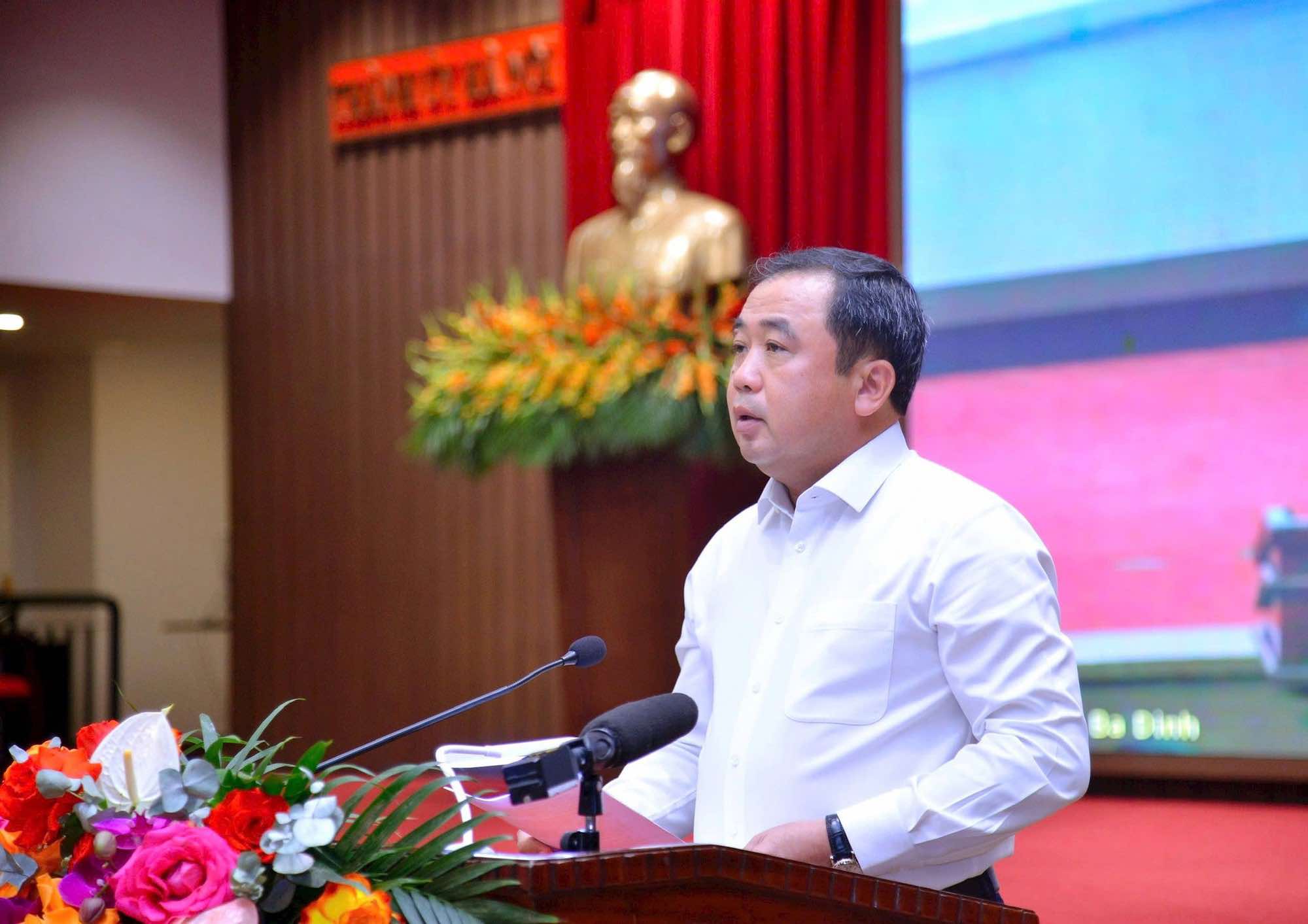
Continue to review and arrange the focal points of internal organizations in a streamlined direction
From the reality of one year of operation, Politburo Member, Secretary of the City Party Committee, Head of the National Assembly Delegation of Hanoi City Tran Duc Thang affirmed that the overall organizational model of the political system and the 2-level local government model are correct policies, initially promoting efficiency in many aspects.
Hanoi Party Secretary Tran Duc Thang said that the local government at 2 levels has performed well the assigned functions and tasks. However, for the model to truly become a development-creating center, it is necessary to continue to synchronously implement many solutions in the coming time.
In which, the city determines that it is necessary to review, evaluate and classify commune-level administrative units according to the specific characteristics of each area, including the core urban area, rapid urbanization area, suburban area and rural area far from the center to determine a suitable professional apparatus; and at the same time study the construction of key commune-level administrative units to create motivation to lead and spread.
Along with that, the continued decentralization and authorization need to be implemented based on the implementation capacity of each locality, associated with the allocation of resources, especially revenue and expenditure tasks suitable for the space and room for development.
The city will also continue to review and arrange the focal points of internal organizations in a streamlined direction, without intermediaries; complete the Party organization model synchronously with the state administrative system, and at the same time transfer some public services to businesses and social organizations to implement.
Another key task is to improve the implementation capacity of the contingent of cadres, especially grassroots cadres; encourage and protect dynamic and creative cadres for the common good; strengthen discipline, order, control of power and resolutely handle cases of delay, avoidance, shirking responsibility, causing trouble for people and businesses.
For central ministries and sectors, Hanoi proposes to focus on building and soon completing a common data platform. On the city's side, in 2026, it will complete the construction and operation of databases under the authority and responsibility of the city and management and administration systems according to the general architecture of the Government and unified data standards.
Secretary of the City Party Committee Tran Duc Thang said that after a year of implementing the 2-level local government model, Hanoi City has been proactively resolving the issues raised under the city's authority and strives to basically resolve obstacles from practice by the end of 2026.