
A country that wants to go far must have a compass on values
This morning (February 25), in Hanoi, the Secretariat of the Party Central Committee organized a national conference to study, study, thoroughly grasp and implement Resolution No. 79-NQ/TW on state economic development and Resolution No. 80-NQ/TW on Vietnamese cultural development of the Politburo.
Speaking to direct at the Conference, regarding Resolution 80-NQ/TW, the General Secretary emphasized that the cultural spirit must guide the nation, is a cultural foundation towards people, is a spiritual foundation, endogenous strength, the crystallization of Vietnamese intelligence and is a driving force leading the development of the nation, of independence, self-reliance and self-strengthening.
In the history of the nation, Vietnam's strength is not only created by resources and scale, but first of all by bravery, spirit, will and value systems forged over thousands of years of building and defending the country.
People often talk about tradition, history, and culture. That is our pride," said the General Secretary.
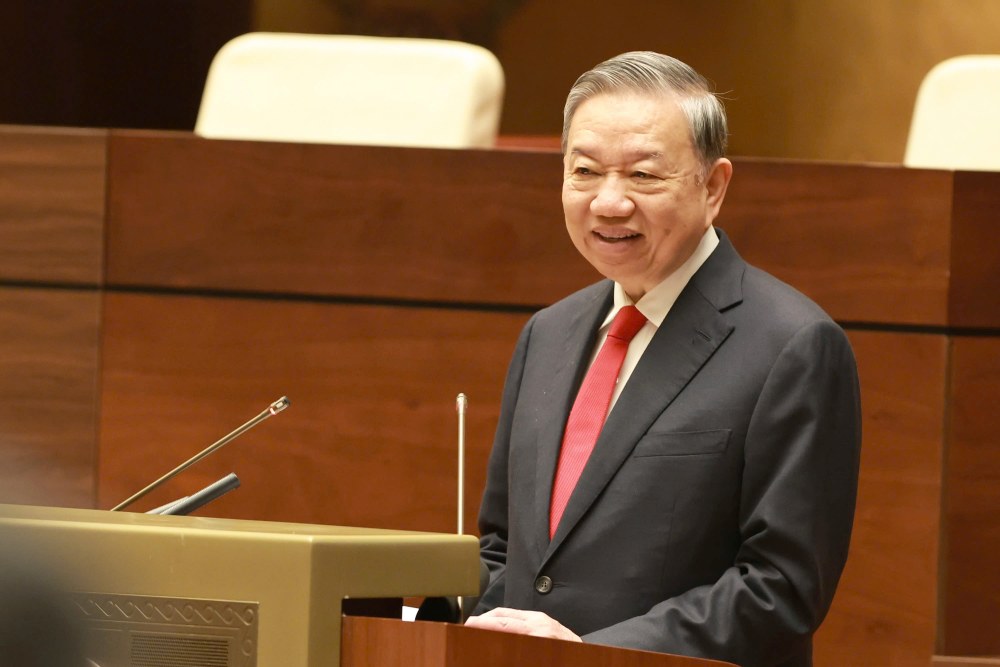
According to the General Secretary, during his lifetime, President Ho Chi Minh once said that culture must guide the nation. That teaching today clearly shows that culture not only accompanies development, culture must stand in a leading position, is the foundation that shapes the quality of people and the quality of the nation.
The General Secretary suggested that it is necessary to focus on synchronously deploying 5 key tasks for Resolution 80.
First of all, it is necessary to build and spread the national value system, cultural values, and standards of Vietnamese people of the new era.
A country that wants to go far must have a compass on values, that value must be crystallized, traditional and modern aspirations, strong enough to lead social behavior, clear enough to distinguish right from wrong, good from bad, truth from false and durable enough to fight against deviation, hybridization and manipulation in the digital environment.
In which, it is necessary to emphasize the core qualities of patriotism, fine customs and traditions, discipline, integrity, responsibility, compassion, creativity, and aspiration to rise up.
More importantly, values cannot only be written in text but must be concretized into an educational program, into a public service standard, into a criterion for evaluating civilization of the community, into a measure of development quality.
Second, building a healthy cultural environment must be considered a fundamental task. The cultural environment must truly be a combination of standards of conduct, attitudes of respecting the law, respecting the truth, respecting human dignity, respecting labor and dedication.
Especially in the new era, the digital age, the cultural environment expands to cyberspace where information spreads quickly, emotions are easily stimulated and toxic can poison and create ambiguity in perception if there is a lack of resistance.
Therefore, it is necessary to improve social immunity against fake news, bad and toxic information and build a civilized debate culture, a responsible behavior culture, resolutely eliminate verbal violence, insults to dignity, spreading hatred and division, and conflict.
Considering setting an example as the most persuasive leadership method in building culture
The third task mentioned by the General Secretary is to focus on education and human development, considering this as the axis of cultural revitalization. Schools must not only teach literacy but also teach how to be human, teach civic responsibility, teach discipline and life skills.
Family is not only a place to nurture material things but also a place to form personality, discipline and self-esteem. The community must not only create a living space but also create an environment to honor good deeds, encourage labor, encourage learning, and encourage dedication.
Cultural revitalization must start from the closest things: respect for the law, respect for others, honesty, kindness, responsibility, spirit of community service, one for everyone, everyone must be responsible to society.
Fourth, it is necessary to develop the cultural industry so that culture is both a spiritual foundation, an economic resource, and a soft power of the nation.
A strong culture is not only measured by the depth of tradition but also by creativity and the ability to produce high-quality cultural products, with spreading power and a market.
It is necessary to promote the development of cultural industries in a modern and professional direction, promote the application of science and technology, and digital transformation to create breakthrough momentum for cultural development.
At the same time, copyright must be protected, and an innovative and creative ecosystem must be built, attracting high-quality human resources. If that is done, culture will not only preserve its identity but also create new values that make practical contributions to the growth and image of the nation.
Fifth, it is to build culture in the political system and consider this the root of social trust. Culture in the Party, in the public apparatus must be a model culture of saying and doing, respecting honor, respecting discipline and dedicatedly serving the people.
Each party cadre and member is a core spreading integrity culture, standards in behavior, seriousness in performing tasks, not avoiding, not pushing, not being indifferent. It is impossible to build a social culture while the civil service culture is still formalistic, bureaucratic, and irresponsible.
It is even more impossible to talk about social discipline when enforcement discipline in some places is still loose and formalistic. People's trust must be created first of all from service attitude, from action discipline and from the exemplary role of the contingent of cadres.
The General Secretary requested that each Party Committee organizing must clearly identify its cultural situation to focus on solving, avoid spreading out, avoid formality, avoid doing it for show, and do it thoroughly. In particular, setting an example must be considered the most persuasive leadership method in building culture.
Giving example is not about saying it well but about doing it right. Giving example is not about general mobilization but about self-discipline, organizational discipline and implementation discipline.
Where cadres are exemplary, there is strong discipline. Where discipline is strong, there is strengthened social trust, then all development tasks have a foundation to break through and rise up" - the General Secretary clearly stated.


