
On February 6, Ho Chi Minh City People's Committee organized a conference with the theme "Typical overseas Vietnamese people accompanying the city in green transformation in the digital age".
This is a key activity within the framework of the Vietnamese People's Meeting abroad program to celebrate Binh Ngo Spring 2026.
Speaking at the conference, Standing Vice Chairman of Ho Chi Minh City People's Committee Nguyen Loc Ha said that 2025 marks a historical turning point when Ho Chi Minh City merges its administrative boundaries with Binh Duong province and Ba Ria - Vung Tau province, forming a megacity with an area of more than 6,700 km2 and a population of over 14 million people.
According to Mr. Nguyen Loc Ha, this is not only an expansion of administrative boundaries but also a combination of strategic advantages of the region: Ho Chi Minh City plays a role as a financial, service, science - technology and innovation center; Binh Duong is an industrial and logistics capital; Ba Ria - Vung Tau is the gateway to the marine economy of the Southern region.
In the new development space, the City has established the overall development model "3 regions - 1 special zone - 3 corridors - 5 pillars", showing long-term development thinking, clear role distribution and maximizing the advantages of each region.
This is an important strategic framework to attract investment, arrange infrastructure, develop a green economy, digital economy and innovation at the regional and international level.
Along with expanding development space, Ho Chi Minh City pays special attention to perfecting institutions. The National Assembly's approval of Resolution 260 amending and supplementing Resolution 98 has created an important legal framework, helping Ho Chi Minh City improve autonomy in financial and budget management, mobilize social resources and implement infrastructure projects and modern urban governance models.
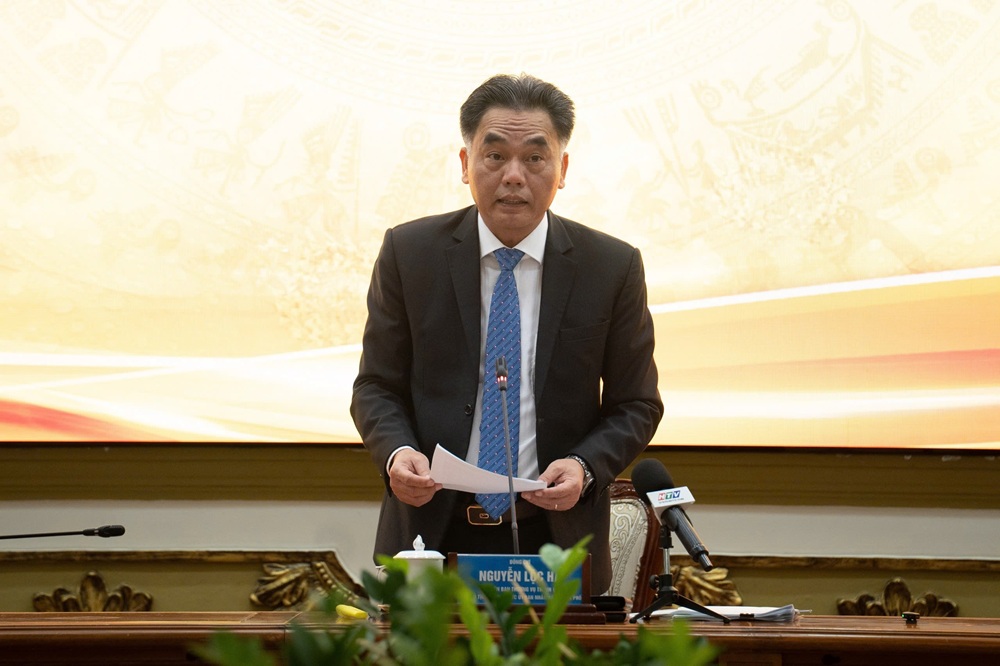
Standing Vice Chairman of Ho Chi Minh City People's Committee emphasized that science and technology, innovation and digital transformation are identified as the main growth drivers in the coming period.
Currently, Ho Chi Minh City's innovative startup ecosystem has about 2,000 businesses, focusing on fields such as artificial intelligence, financial technology, e-commerce, and high-tech agriculture.
Ho Chi Minh City aims to bring the innovative startup ecosystem into the group of 100 most dynamic cities globally by 2030.
The launch of the Ho Chi Minh City Creative Startup Center and the city's venture capital fund is expected to create a favorable mechanism for experts, intellectuals, domestic and foreign investors, including the Vietnamese community abroad, to participate and contribute.
According to Mr. Nguyen Loc Ha, there are currently more than 3 million people originating from Ho Chi Minh City living in more than 130 countries and territories. In 2025 alone, remittances to Ho Chi Minh City are estimated at 10.5 billion USD, in addition to valuable knowledge, technology, management experience and international connection networks.
Ho Chi Minh City leaders hope that the team of intellectuals, experts, and Vietnamese entrepreneurs abroad will continue to accompany more deeply and substantively in strategic consulting, policy advice; technology transfer, management experience; connecting investment, markets and international partners in key areas such as logistics, energy, smart manufacturing, green economy and digital economy.
The conference spent a lot of time exchanging and discussing between overseas Vietnamese experts, intellectuals, and entrepreneurs with representatives of departments, branches, and businesses of Ho Chi Minh City on specific mechanisms and policies; orientations for science and technology development, innovation, digital transformation and green transformation.


