
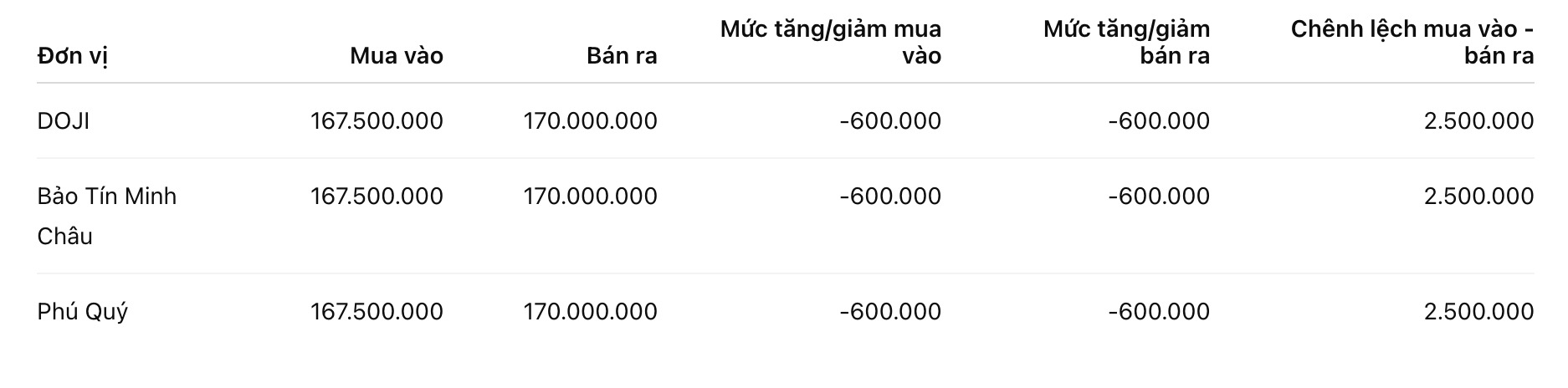
SJC gold bar price
As of 5:20 PM, SJC gold bar prices were listed by DOJI at 167.5-170 million VND/tael (buying - selling), down 600,000 VND/tael in both buying and selling directions. The difference between buying and selling prices is at 2.5 million VND/tael.
SJC gold bar price was listed by Bao Tin Minh Chau at 167.5-170 million VND/tael (buying - selling), down 600,000 VND/tael in both buying and selling directions. The difference between buying and selling prices is at 2.5 million VND/tael.
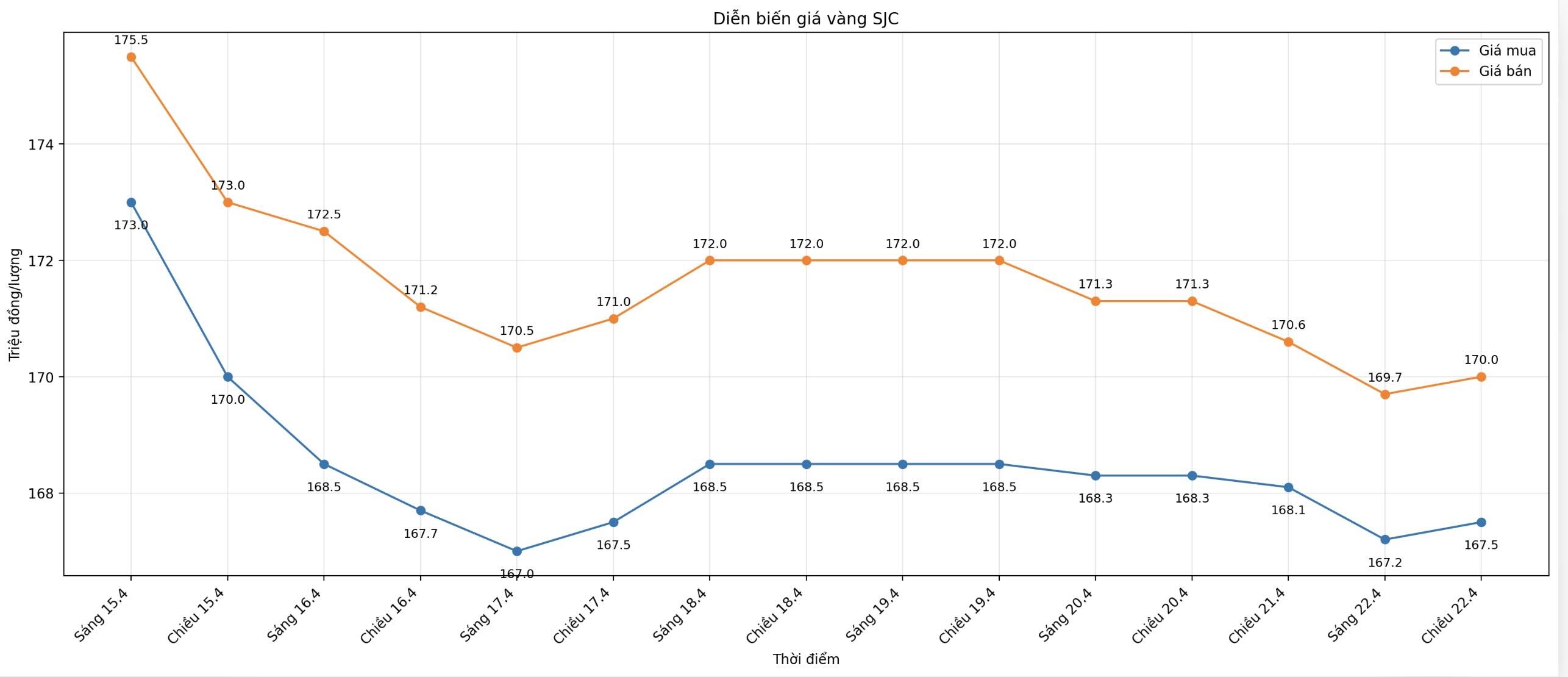
Phu Quy Jewelry Group listed SJC gold bar prices at 167.5-170 million VND/tael (buying - selling), down 600,000 VND/tael in both buying and selling directions. The difference between buying and selling prices is at 2.5 million VND/tael.
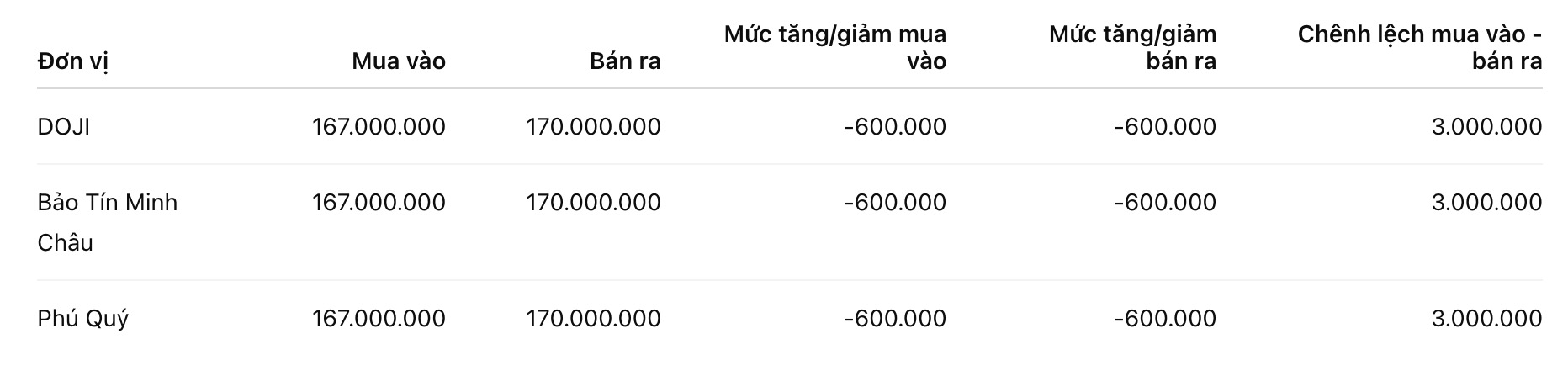
9999 gold ring price
As of 5:20 PM, DOJI listed the price of gold rings at 167-170 million VND/tael (buying - selling), down 600,000 VND/tael in both buying and selling directions. The difference between buying and selling prices is at 3 million VND/tael.
Bao Tin Minh Chau listed the price of gold rings at 167-170 million VND/tael (buying - selling), down 600,000 VND/tael in both buying and selling directions. The difference between buying and selling prices is at 3 million VND/tael.
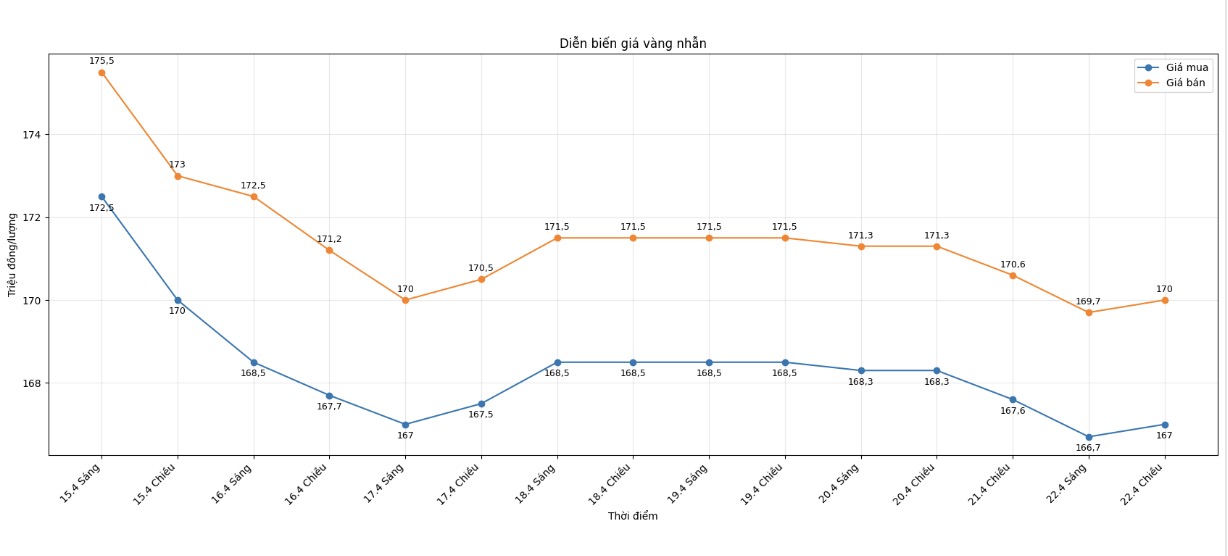
Phu Quy Gold and Gems Group listed the price of gold rings at 167-170 million VND/tael (buying - selling), down 600,000 VND/tael in both buying and selling directions. The difference between buying and selling prices is at 3 million VND/tael.
Currently, the buying - selling price difference of gold is at a very high level, around 3 million VND/tael, posing a risk of losses for investors.
World gold price
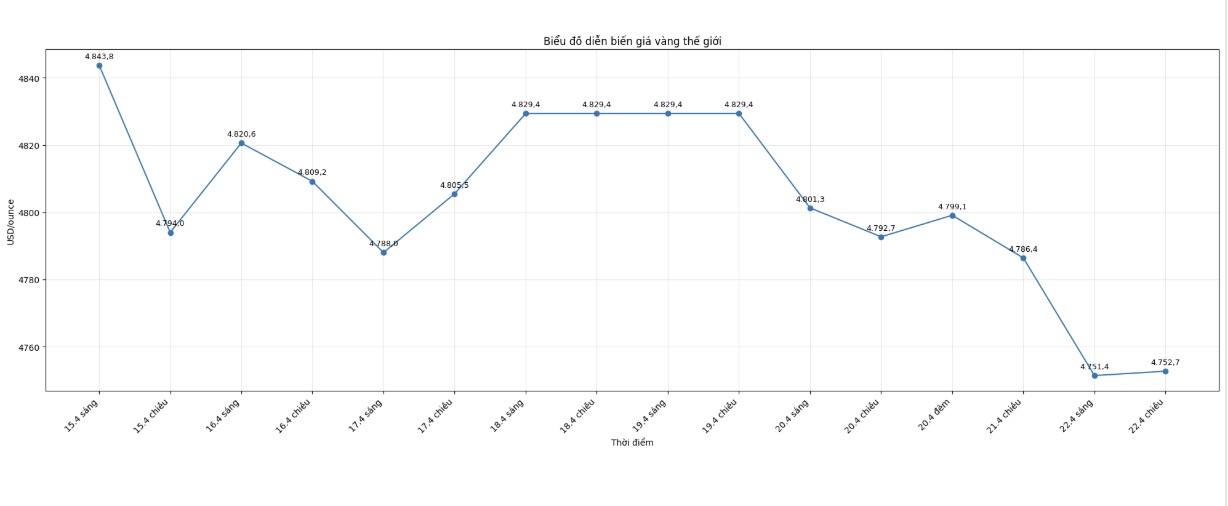
At 5:20 PM, world gold prices were listed around the threshold of 4,752.7 USD/ounce, down 33.7 USD compared to the previous day.
Gold price forecast
World gold prices recovered slightly but still recorded a sharp decrease compared to the previous day. The market reacted to the information that the US extended the ceasefire between Iran and Israel indefinitely to create more time for peace talks.
According to analysts, the temporary cooling of Middle East tensions has weakened oil prices, thereby reducing concerns about accelerating inflation. This is a supporting factor for gold in the short term, as the market expects pressure to maintain high interest rates to ease.
Mr. Edward Meir - an analyst at Marex - said that the extension of the ceasefire makes the market see geopolitical risks as decreasing. However, if conflict breaks out again, the USD may rise sharply, oil prices will rise and interest rates will be under more pressure, thereby adversely affecting precious metals.
Previously, gold had a very volatile session when losing more than 100 USD/ounce during the day. The rising USD along with concerns about inflation related to the Iranian conflict has put significant pressure on the precious metals market.
Usually, gold is considered a risk hedging and anti-inflation asset. However, when inflation forces central banks to maintain or raise interest rates, the attractiveness of gold may decline because this is a non-interest-generating asset.
Standard Chartered experts believe that gold price movements currently still largely depend on information related to the ceasefire in the Middle East as well as liquidity demand in the market. Although the recent upward momentum is still fragile and there is a risk of short-term correction, this analysis group still expects precious metal prices to recover and retest historical peaks.
In the short term, the market will continue to monitor a series of US economic data such as jobs, PMI and inflation expectations. If the data shows that price pressure is still high, the possibility of the US Federal Reserve (FED) maintaining a higher interest rate level for longer will increase, thereby creating pressure on gold prices.
In the long term, many large financial institutions still maintain a positive view of gold thanks to central bank buying demand and geopolitical instability that has not completely ended.
Gold price data is compared to the previous day.
The world gold and silver market operates through two main pricing mechanisms. The first is the spot market, where the buying and selling and immediate delivery prices are listed. The second is the futures market, where prices are set for future delivery.
Due to the impact of year-end position restructuring and market liquidity, the December gold futures contract is currently the most actively traded contract on the CME exchange.
See more news related to gold prices HERE...


