
The sharp price increase that ended at the end of January saw silver prices increase by 72% in just one month and increase by 322% since the beginning of 2025, while gold increased by 30% in one month and 115% in the same period.
After a sharp drop, silver prices recovered and hit a new peak in February, reaching a 50% recovery from the previous decline. Silver is weaker than gold, as gold has recovered about 70% of its decline. Geopolitical risks have supported precious metal prices, but whether this trend will be maintained after the Gulf conflict ends depends on the agreement reached," they said.
Experts warn that similar waves of increases ended in the 1980s and 2011 years, when silver prices approached the 50 USD/ounce mark, and were followed by years of sharp declines.
A series of extremely strong price increases in the past show that when a peak is set, prices usually decrease from 40% to 70%. After the recent peak, silver prices have decreased by 37% in just over a week, consistent with what had happened before.
However, in previous periods, it took several months, even years, for prices to hit rock bottom. The exception was in 2006, when prices fell 35% in a month - this was both the fastest and smallest decrease after a very strong increase and occurred in the middle of a prolonged market rally" - they added.
Heraeus said that although the fundamentals supporting holdings of gold and silver have not changed since January, the market's response to too rapid price increases is consistent with historical precedents.
Silver fluctuates more strongly than gold, but implications for gold are similar - it is likely that it will take more than a month or two and lower prices to eliminate excessive optimism that pushed prices up too quickly in 2025 and extended to January.
Regarding gold, analysts believe that the Iranian conflict is dominating price movements in the short term.
Geopolitical risks became a reality at the weekend when the US and Israel launched missile attacks on Iran, and Iran responded, targeting Israel and many Gulf countries" - the report wrote - "The market's initial reaction was as predicted: Oil prices soared the most, while stocks fell, with most markets losing 1-2%.
Safe haven demand has pushed gold and the USD up, other precious metals have also followed gold. The US has increased its military presence in the region in the past, so part of the risk may have been reflected in gold prices - which increased by more than 10% in February when recovering from a sharp decline at the end of January.
Heraeus said economic instability also increased after the US Supreme Court ruled that President Donald Trump was not authorized to issue most of the commercial tariffs.
Tariffs under Section 232, such as tariffs on imported cars, are still maintained. The US President immediately cited another law to impose a general tariff of 10%. This makes many trade agreements uncertain and continues to change costs for US importers.
The new tariffs will be effective for 150 days unless Congress extends them. The Trump administration can take advantage of this time to prepare alternative measures when the deadline ends" - they noted.
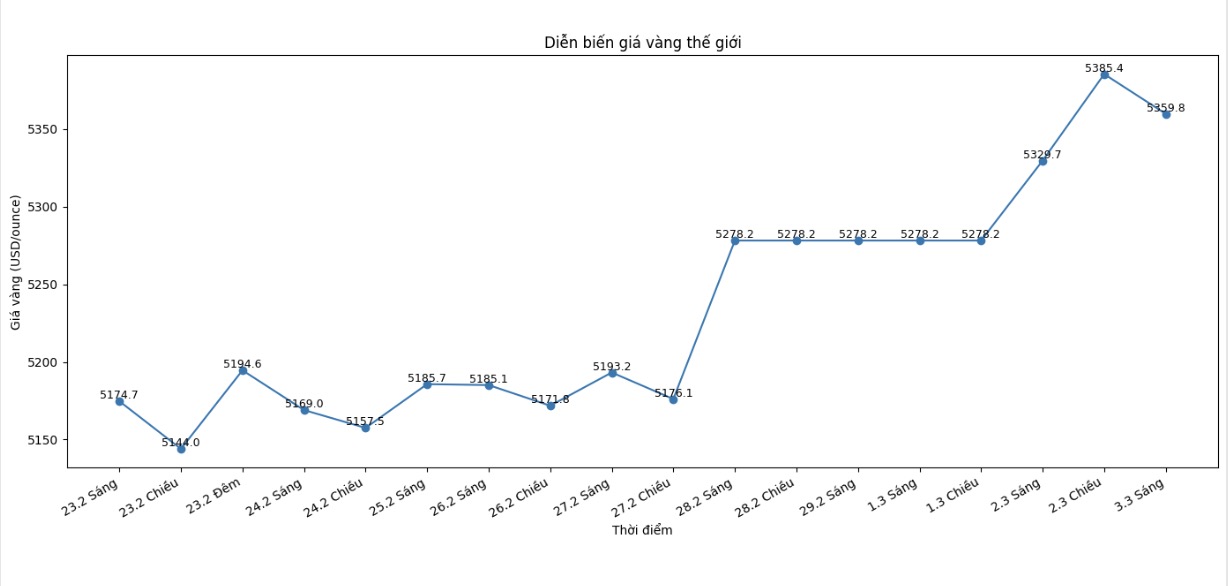
For silver, Heraeus experts said that ETF investors continue to be strongly interested.
The total silver holdings of global ETFs increased by more than 18 million ounces last week as the price recovery attracted more investors. However, at 834 million ounces, this figure is still lower than 864 million ounces at the beginning of the year and 870 million ounces at the end of December" - expert Heraeus wrote.
Experts also noted that China has lowered the margin requirement for silver trading as price fluctuations cool down. "The Shanghai Gold Exchange has reduced the silver margin to 24% from 27%, while reducing the daily price fluctuation range to 23%" - the report said.
Similarly, margin requirements and price bands for gold were also reduced by 3 percentage points to 18% and 17% respectively. This may improve liquidity, but the margin level is still high and may need to be further cut to boost stronger trading activity" - experts wrote.


