
A world real enough for viewers to step into
What I like most about Ho Linh Trang Si is that the film creates a world that I can believe in.
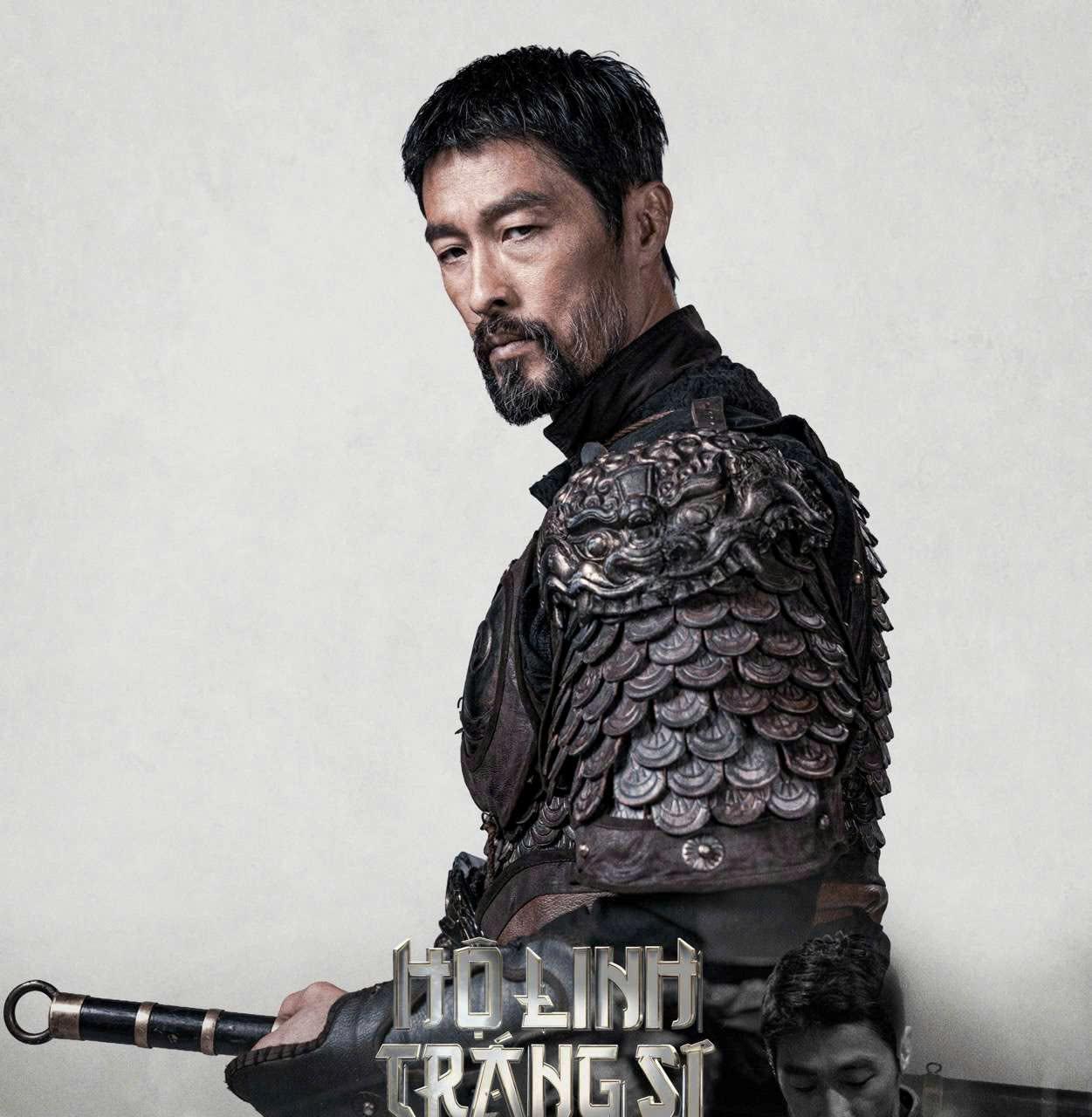
Clothes have quality, roughness, and weight. Costumes supervised by Bao Tranchi and Mai Lam's designs create a unique look. Armor, weapons, and scenery seem to belong to the character's life, not to the items brought to decorate the frame. That is the value of art design: Not making each item really beautiful, but making everything that appears in the frame tell a story.
And then there is an excellent Ninh Binh in terms of visuals on screen.
Nguyen K'Linh and the filming department not only use limestone mountains, rivers, and caves as beautiful postcards. In many frames, the landscape becomes part of dramaturgy - a dramatic structure.
Humans are often placed very small in front of giant mountains. Small, finite characters go through valleys, rivers, cliffs, vast natural spaces, seemingly infinite. The ratio between humans and the natural landscape has created a poetic feeling: Mountains that seemed to have been there for thousands of years and are still there for thousands of years, viewers have felt something greater than the fate of each character. That is when the film finds the poetic quality in images, instead of having to explain it in words.
Action scenes are also a part that I really like.
Fighting with force. The attacker must gain momentum. The hit has a counter-force. Swords and spears are not as light as performance equipment. The human body knows fatigue and pain. Mountainous terrain also really participates in the battle.
The film has 12 combat scenes; the main cast has practiced for many months, especially the final scene was filmed in 15 nights. But in fact, I only know those numbers after watching the film. And what makes me appreciate it even higher is that, without knowing the behind-the-scenes, viewers already see that effort on screen.
Johnny Tri Nguyen, Hua Vi Van... are the people who make me believe in that world. They almost have pre-existing temperament, no need to strain to "look ancient". Body, movement, and restraint in expression have done most of the work.
Quoc Trung's music is also the same. There are sections where drums and traditional sound colors just appear just enough to make the frame seem to recede a few centuries further.
After feedback from the early days of screening, the producer recorded feedback and edited the film, reducing it from 155 minutes to 135 minutes to increase the tempo and streamline the narration; the new version was released in theaters from August 30. I watched the 135-minute version myself so I no longer feel uncomfortable and lengthy, as many viewers before reviewed a lot.
The fact that a crew has completed the film but still agrees to return to the editing room after viewers' reactions, in my opinion, at least shows that they understand that the film does not end when the producer is satisfied; it only ends when the dialogue with the audience begins.
Cinema is a synthetic art
The regrettable point of the film is that the wording sometimes makes viewers jump out of that world. Some dialogues are too close to today's slogans. The script is also not really commensurate with the visuals. The filmmakers have built a very wide world, but the story inside is still not deep enough.
However, looking at it fairly, if only from a weak scenario and denying everything else, that view is somewhat one-line.
Ho Linh Trang Si has done a remarkable thing, which is to build a Vietnamese legendary space with shape, material and enough persuasiveness to convince viewers to step in. It is this ability to create a world that makes the story of Ho Linh Trang Si no longer stop at a good or bad movie.
It raises a bigger question: Why is a history as rich in material as Vietnamese history still not present commensurately in the cultural imagination of today's public?
This is the time when Vietnamese culture needs the real strength of the cultural industry, not only preserving the past, but creating a new life for the past.
At this point, the choice of Ho Linh Trang Si in a mythological direction is noteworthy.

The film does not bring political history to the screen, but takes history as the foundation for fiction, action and adventure. This is the path cinema needs to take, because historical films must first of all be films.
A child may be fascinated by a character before knowing which dynasty it belongs to; may like a battle, an armor, or an adventure story before being curious about the later era. The path to history does not necessarily start with the question "when did this event happen?", but sometimes just from very simple sentences: Who is this person? Is that true? What was the Dinh Dynasty like then?
If a movie makes viewers step out of theater and want to find those answers, cinema has done something important: Turning history from something to remember into something people want to explore.
Nguyen Phan Quang Binh and the crew dared to spend many years, many resources and a lot of effort, extremely seriously, trying to remove a slice of national history from the pages of books, giving it shape, movement, sound and emotion on the screen.
The film is commendable for its efforts. That is also the reason why Ho Linh Trang Si deserves to have as many audiences as possible.
(*Article from the author's point of view)


